The sound of a ceasefire is not a clean thing. It is a jagged, heavy silence that sits on the chest of a city like a fever. In Lebanon, that silence lasted just long enough for people to believe they might actually sleep without the vibration of glass in their window frames. They began to count the hours as if they were currency. They began to think about the laundry, the school fees, and the coffee they would drink on balconies that were no longer targets.
Then the sky opened up again.
Violence has a specific physics. It does not just destroy buildings; it shreds the social fabric of a Tuesday afternoon. When news broke that Lebanon had recorded its bloodiest day since the brokered truce began, the statistics felt like a betrayal. Numbers—the dozens dead, the dozens more wounded—are how the world tracks a conflict. But for those on the ground, the reality is the smell of pulverized concrete and the sudden, sharp realization that the "rules" of a ceasefire are often written in disappearing ink.
Consider a man named Omar. He is not a combatant. He is a shopkeeper in a village that has seen more history than any one town should have to endure. For Omar, the ceasefire was a permission slip to return to a home that had been vibrating with tension for months. He spent the morning sweeping dust from his doorstep. He thought the worst was behind him. By evening, the air turned to fire as Israeli strikes targeted what they identified as Hezbollah infrastructure.
The strategy behind these strikes is cold and calculated. Israel maintains that its operations are a response to violations of the truce, a preemptive strike against the rearming of a ghost. To the military strategist, it is a matter of "active enforcement." To the family sitting in a basement in Southern Lebanon, it is simply the end of hope.
The tragedy of a broken peace is that it is louder than the war that preceded it.
When a conflict is ongoing, there is a rhythm to the terror. You expect the strike. You anticipate the siren. But during a ceasefire, every explosion is a shock to the nervous system. It carries the weight of a broken promise. The recent escalation represents more than just a spike in a casualty chart; it represents the terrifying volatility of a region where the line between "calm" and "catastrophe" is thinner than a strand of wire.
There is a psychological cost to this back-and-forth that no treaty accounts for. It is the exhaustion of the soul. Lebanese citizens find themselves caught in a vice between the geopolitical ambitions of Hezbollah and the uncompromising security mandates of the Israeli government. Neither side seems willing to blink, and the people in the middle are the ones who pay the price in blood and brick.
The logistics of these strikes are often described in clinical terms: precision munitions, strategic assets, command centers. These words are designed to sanitize the reality. When a missile hits a densely populated area, the "precision" is a relative term. The shockwave travels through the ground, through the walls, and into the bones of children who were just starting to lose their fear of the dark.
The diplomatic efforts to patch the holes in this agreement are happening in air-conditioned rooms far from the smoke. Envoys talk about "frameworks" and "mechanisms of oversight." They debate the semantics of what constitutes a violation. Meanwhile, the hospitals in Lebanon are filling up again. Doctors who thought they had a reprieve are back to making the impossible choices of triage.
Blood. Sweat. The frantic beep of a heart monitor.
These are the real mechanics of a failed ceasefire.
We often talk about war as if it is a game of chess, but it is more like a wildfire. You can try to contain it, you can draw lines in the dirt, but if the wind changes, the fire will jump the line. The current situation in Lebanon is a masterclass in how easily a fire can restart when the embers were never truly extinguished. The political will required to keep the peace is far greater than the will required to start a fight.
The international community watches the ticker tape of casualties with a sense of growing numbness. We see the headlines about the "bloodiest day" and we categorize it as just another chapter in a long, weary book. But for the person who lost their brother, their daughter, or their home in a single afternoon of "enforcement," there is no other chapter. There is only the void.
The stakes are invisible until they are undeniable. They are found in the empty chair at the dinner table. They are found in the shaking hands of a grandmother who no longer believes the news when it says the fighting has stopped. They are found in the ruins of a street that was supposed to be safe.
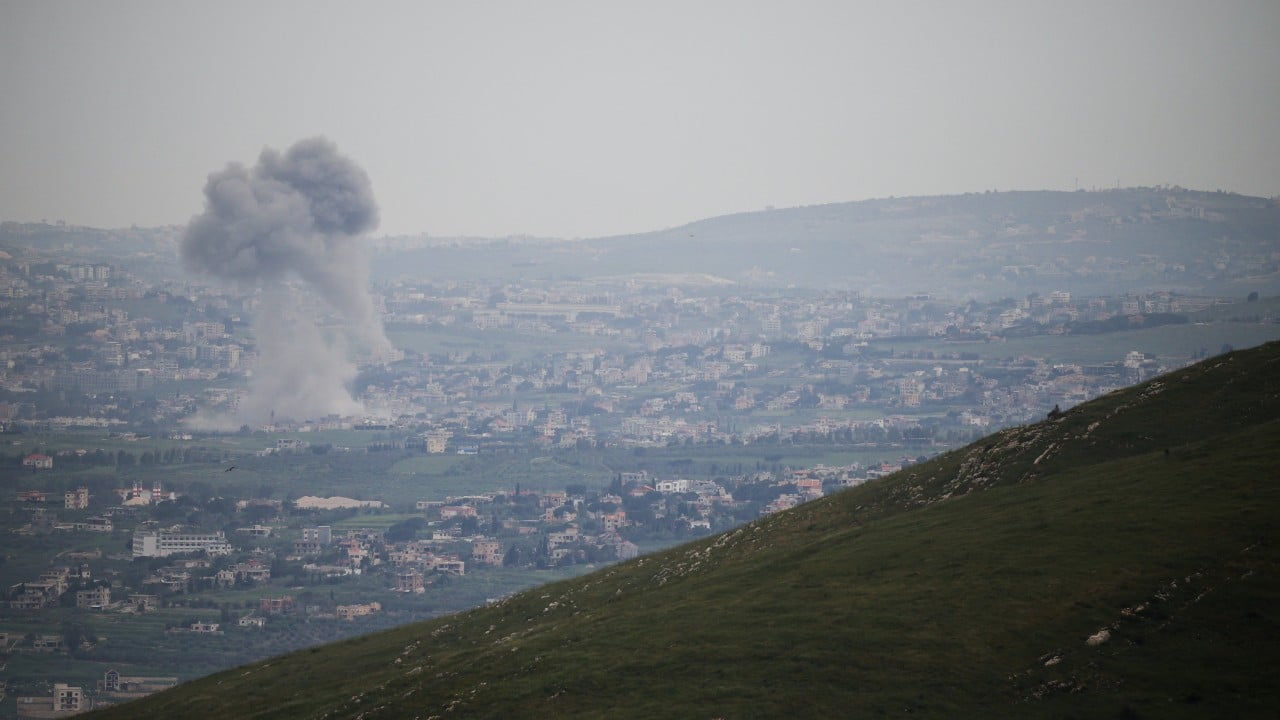
Peace is not the absence of gunfire. It is the presence of trust. And in the wake of the most recent strikes, trust is the one thing that no one in Lebanon can afford to have. The cycle of retaliation and "preemption" creates a loop that is nearly impossible to break. One side strikes to prevent a threat; the other side strikes because they were hit. Around and around it goes, while the citizens of a once-vibrant nation watch their future evaporate in a plume of grey smoke.
As the sun sets over Beirut, the city is bathed in a beautiful, deceptive light. From a distance, you might not see the scars. You might not hear the weeping. But if you listen closely, past the sound of the traffic and the wind, you can hear the sound of a million people holding their breath, waiting to see if tomorrow will bring another day of peace or another day of mourning.
The silence is back, but it is no longer heavy. It is sharp. It is waiting for the next spark to turn the world into glass once again.