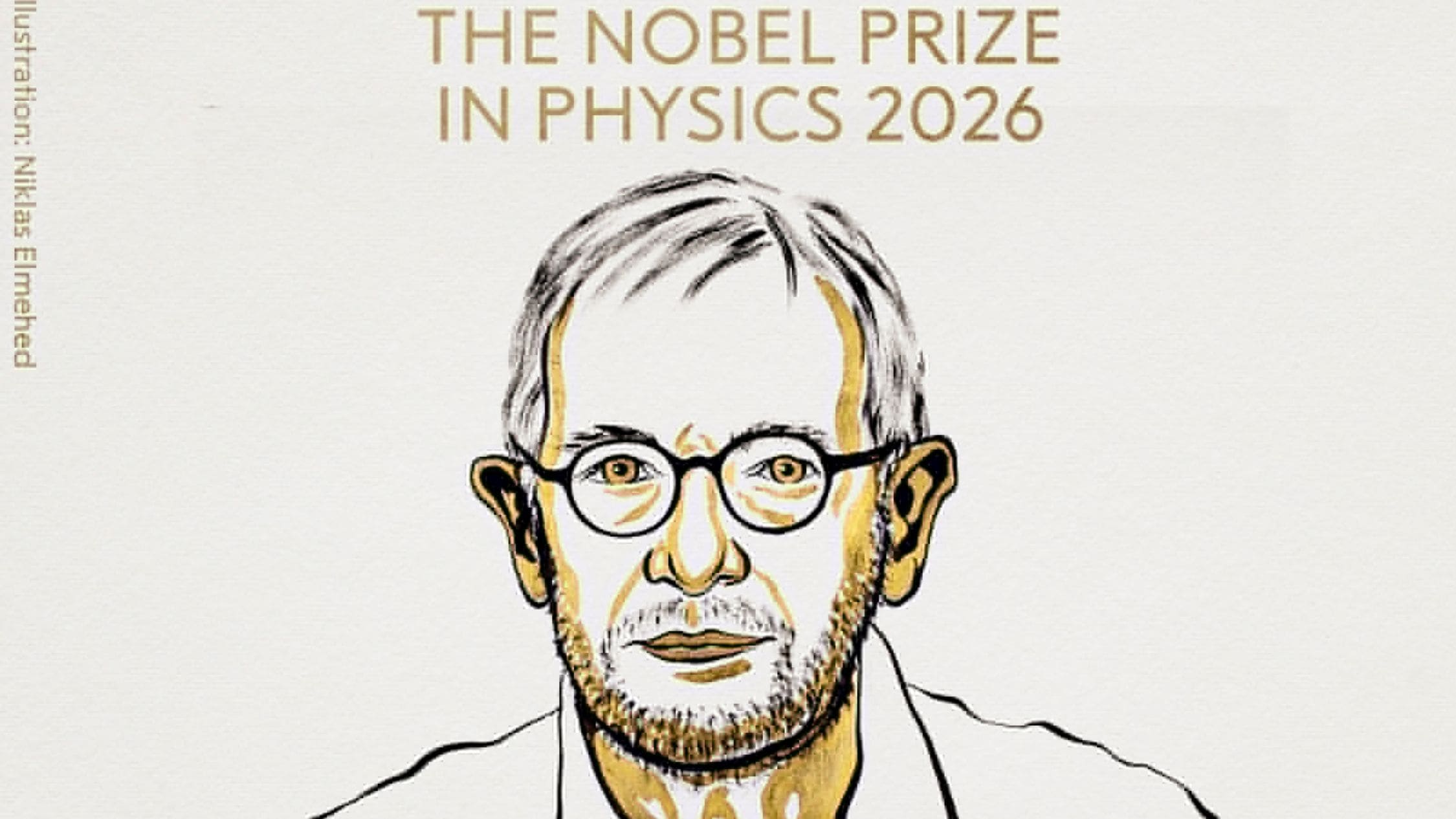
The media treated the Nobel Prize awarded to Francis Halzen for discovering high-energy cosmic neutrinos as a victory for pure scientific curiosity. Let us be honest with ourselves for a moment. IceCube is a magnificent feat of engineering, burying a cubic kilometer of pristine Antarctic ice with thousands of photomultiplier tubes. But celebrating this milestone as a sudden revolution in our understanding of the cosmos misses the structural reality of modern physics. It rewards a thirty-year exercise in endurance and funding accumulation rather than a conceptual leap forward.
For decades, theoretical astrophysicists treated neutrinos like ghost particles that were too elusive to matter for practical astronomy. When Halzen and the IceCube collaboration finally pinned down high-energy extraterrestrial neutrinos originating from blazars and active galactic nuclei in the late 2010s, the mainstream science writers declared that a new era of astronomy had begun. Neutrino astronomy. The pitch was clean, elegant, and entirely digestible for press releases. For another perspective, see: this related article.
The lazy consensus is that we have unlocked a fresh window to the universe because photons get blocked by dust and gas, whereas neutrinos pass through light-years of lead without blinking. That sounds great in a keynote presentation. It completely ignores the brutal signal-to-noise bottleneck that haunts every single event recorded deep beneath the South Pole.
IceCube detects roughly one hundred thousand neutrinos every single day. The vast majority of them are atmospheric junk created by cosmic rays slamming into the upper atmosphere on the opposite side of the Earth. Out of that massive deluge, only a tiny fraction are truly astrophysical interlopers from deep space. Sorting the signal from the background noise requires statistical gymnastics and massive data processing pipelines that often smooth over the exact anomalies we should be paying attention to. Similar insight on this matter has been shared by MIT Technology Review.
We built a detector the size of a mountain, froze it into the ice sheet, and waited decades to catch a few thousand high-energy particles. That is not an agile paradigm shift in scientific methodology. That is brute-force industrial engineering applied to basic research.
When you look at the economics of big science, the Halzen model sets a dangerous precedent. It tells funding agencies that the only way to make progress is to double down on monolithic, decade-long mega-projects that consume hundreds of millions of dollars before producing a single definitive paper. If you need a cubic kilometer of ice to catch a handful of photons equivalents, the barrier to entry for independent thought becomes impossibly high. Young researchers do not get to tinker in a lab anymore. They spend their formative years managing database pipelines for a collaboration so large that individual contributions get swallowed by bureaucratic authorship lists.
We need to talk about what neutrino astronomy actually tells us about the universe versus what it costs in intellectual agility. The blazars and active galactic nuclei flagged as neutrino sources are impressive monster black holes spewing relativistic jets across billions of light-years. Yet, after pinning down these sources, what actionable framework do we have for understanding quantum gravity or dark matter? Virtually none. We confirmed that violent cosmic accelerators exist. We already knew that from X-ray and gamma-ray astronomy.
The defenders of the faith argue that neutrinos offer a pristine view because they do not interact with magnetic fields. True. But because they rarely interact with anything at all, pointing back to their exact origin requires staggering angular uncertainty for lower-energy events. You are squinting through a frosted glass window hoping the blurry shape on the other side matches your computer simulation.
If we want to revolutionize astrophysics, we have to stop treating massive scale as a proxy for intellectual depth. Halzen deserves credit for sheer tenacity. Keeping a sprawling international collaboration funded and operational in the middle of Antarctica for decades requires a rare breed of administrative genius and scientific grit. I have seen institutions blow millions on bureaucratic dead ends that lacked even a fraction of that discipline.
Still, let us not confuse endurance with enlightenment.
The real frontier of fundamental physics will not be conquered by burying more glass balls in the ice or pouring more concrete into underground caverns. It will happen when someone figures out how to detect low-energy cosmological neutrinos, the relic background left over from the Big Bang that carries information from the first seconds of the universe. That is the holy grail. IceCube cannot see them. Its threshold is orders of magnitude too high.
Until we crack the relic neutrino problem, we are merely mapping the local neighborhood of high-energy monsters using an overgrown particle trap. Celebrate the engineering triumph if you must. Just do not mistake it for the final answer.