When a government dismantles its price-support apparatus during an acute currency crisis, the resulting shock operates less like a policy adjustment and more like a detonation. The sudden upward revision of petroleum derivatives in Syria represents a textbook case of fiscal triage colliding with an exhausted population. To understand why a localized decree on fuel tariffs ignites widespread unrest, one must examine the underlying mechanics of state rationing, foreign exchange depletion, and the cumulative decay of purchasing power over more than a decade of conflict.
The Fiscal Mechanics Of Subsidy Withdrawal
For decades, the Syrian state maintained a precarious social contract anchored by subsidized bread and energy. This mechanism functioned as a political stabilizer, trading public acquiescence for controlled living costs. However, maintaining artificially low prices requires sustained hard currency inflows, domestic production capacity, or external credit lines. By the mid-2020s, all three pillars had eroded to near-zero functionality.
Domestic crude production, once sufficient for domestic consumption and export, remains largely sequestered outside government control in the northeastern governorates. Refined products must be imported via complex, sanctioned maritime and land corridors, paid for in hard currency that the central bank lacks. Iran, which previously extended credit facilities to finance oil shipments, has faced its own domestic economic constraints and internal currency depreciation, reducing its capacity to underwrite Syrian energy imports indefinitely.
Faced with dwindling foreign reserves, the state confronted a binary choice. It could either print local currency to finance imports, accelerating hyperinflation into terminal velocity, or eliminate the subsidy burden entirely. Choosing the latter shifted the immediate cost of government insolvency directly onto the citizenry. When the price of gasoline and diesel multiplies overnight, the inflationary impulse does not stay confined to the pump. Energy is an essential input for every sector of economic activity, from agricultural irrigation to urban logistics.
The Monetary Policy Vacuum And Exchange Rate Decay
The macroeconomic backdrop of these price hikes is defined by the total collapse of the Syrian pound against hard currencies. Central bank reserves have shrunk to negligible levels, rendering market interventions ineffective. When monetary authorities lose the capacity to defend the national currency, inflation ceases to be a cyclical phenomenon and becomes a permanent structural condition.
Under hyperinflationary conditions, the pricing of goods decouples from traditional supply and demand fundamentals, shifting instead to hedging strategies against currency depreciation. Merchants price goods not on current replacement costs, but on anticipated replacement costs weeks into the future. When the state raises fuel prices by administrative decree, it provides an immediate signal to the market that the currency has lost further value. This triggers an immediate wave of speculative repricing across all consumer goods, far exceeding the arithmetic percentage of the initial fuel hike.
Remittances from the diaspora, which previously acted as an informal life support system for millions of households, face diminishing returns as inflation outpaces transfer values. Furthermore, the banking sector operates in a state of suspended animation. Lending has ceased entirely, capital controls prevent liquidity management, and citizens cannot access their savings due to strict withdrawal limits imposed by commercial banks struggling with their own liquidity crises. Therefore, the entire economy operates on a strict cash-and-carry basis, exacerbating the friction of daily transactions.
The Cascading Cost Transmission Vector
The immediate aftermath of a fuel tariff hike is a structural reorganization of economic survival costs. Transport operators face an immediate margin compression unless they pass the cost increase onto passengers and cargo owners. Because commercial transport relies entirely on diesel, inter-city shipping costs surge instantly.
This creates a severe cascading effect across basic commodities. Food items produced in agricultural hubs like the Houran or the Jazira must be trucked to urban consumption centers such as Damascus and Aleppo. Higher transport expenditures translate directly into higher retail food prices within hours of a fuel price announcement. For a population where the vast majority of households subsist below the extreme poverty line, spending upwards of eighty percent of income on basic caloric intake, any increase in food prices breaks the household budget entirely.
The state attempted to introduce electronic card systems designed to ration subsidized goods. Yet, rationing a scarce commodity does not create supply; it merely manages the distribution of scarcity. When quotas are reduced or supplies fail to arrive at distribution stations for weeks, citizens are forced onto the parallel black market, where prices reflect true market scarcity unbuffered by state intervention. The divergence between official subsidized prices and black market realities creates rent-seeking opportunities for intermediaries while deepening the destitution of the general public.
The Mechanics Of Informal Taxation And Internal Checkpoints
Logistical friction in Syria is compounded by a fragmented regulatory environment characterized by numerous security checkpoints, internal customs barriers, and informal taxation points operated by various armed factions and security affiliates. Each transit point levies unofficial fees on cargo trucks carrying agricultural produce, manufactured goods, or fuel.
When fuel prices rise, the cost of operating these transport networks increases, and security actors adjust their extortion rates upward to maintain their own purchasing power in hard currency equivalents. This creates a compounding tax burden on internal trade. A sack of flour or a crate of vegetables accumulates multiple layers of unofficial transit fees between the farm gate and the urban retailer. The removal of fuel subsidies acts as a force multiplier for these predatory supply chain costs, turning basic commerce into an obstacle course of administrative and security extraction.
The Accumulation Of Structural Grievance
Sociological analyses of uprisings frequently misidentify the triggering event as the root cause. A fuel price increase is merely the spark that enters an oxygen-saturated room. The underlying fuel is structural fatigue. Years of inflation, destruction of physical infrastructure, loss of human capital through emigration, and the collapse of the formal banking sector have left households with zero financial shock absorbers.
In functional economies, a temporary price spike can be absorbed by drawing down savings, utilizing credit, or adjusting discretionary spending. In the contemporary Syrian context, discretionary spending disappeared years ago. Savings were wiped out by successive currency devaluations. Access to formal credit is nonexistent for the working population. Therefore, any negative shock directly threatens physical survival.
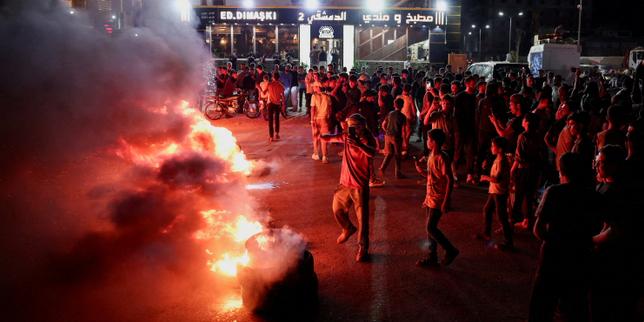
This creates a psychological threshold where the perceived cost of inaction equals or exceeds the risk of public protest. Security forces retain coercive power, but coercion loses its deterrent effect when individuals calculate that dying slowly from starvation or exposure is functionally equivalent to dying quickly from repression. The public expression of anger in southern governorates like Suwayda demonstrates that the fear barrier collapses when the baseline standard of living hits absolute zero.
Demographic Decay And Labor Market Collapse
The erosion of the social fabric is further accelerated by profound demographic shifts. A decade of conflict has driven millions of working-age citizens into exile, leaving behind an inverted demographic pyramid characterized by high dependency ratios. The elderly, public sector employees, and disabled veterans rely on fixed state salaries or pensions that have lost up to ninety-five percent of their real purchasing value.
A state employee's monthly salary now covers only a fraction of a single week of basic food requirements. This reality has destroyed the internal incentives of public administration. Civil servants, teachers, and technical staff are forced to seek secondary or tertiary informal employment just to survive, leading to acute absenteeism and institutional decay across vital state ministries. When the administrative apparatus itself is preoccupied with basic survival, policy execution becomes erratic, corrupt, and ineffective, creating a vicious feedback loop of institutional failure and public destitution.
The Administrative Impasse And Future Trajectory
The government operates within an extremely narrow operational corridor. Reinstating subsidies is mathematically impossible without external bailouts that are unlikely to materialize given international sanctions and geopolitical stalemates. Maintaining the higher prices preserves fiscal accounts on paper but guarantees chronic social instability, localized strikes, and the continued hollowing out of administrative control in peripheral regions.
Local administrations lack the budgetary autonomy to implement compensatory welfare programs. Centralization ensures that all economic pain radiates outward from the capital, while wealth extraction remains localized and opaque. As long as the monetary architecture remains dependent on cash infusions that do not exist, the state will lurch from one emergency decree to the next, treating symptoms while structural deficits compound.
The dynamic observed in recent demonstrations points to a permanent baseline shift. Social stability can no longer be purchased through modest concessions or temporary price freezes. Unless economic policy shifts toward structural stabilization of the currency and the restoration of domestic productive capacity rather than perpetual triage, fiscal contractions will continue to generate explosive social friction.