Cold.
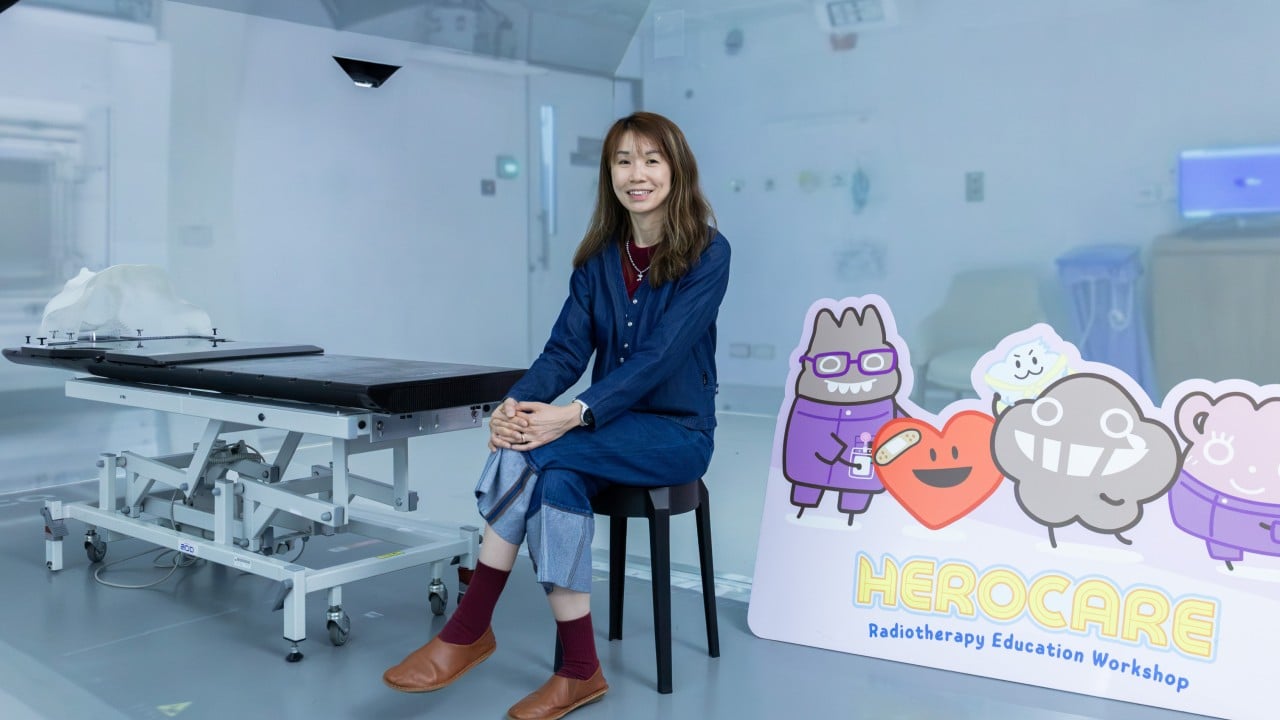
That is the first thing a pediatric radiation suite teaches a seven-year-old, long before anyone mentions photons, grays, or curative intent. The air smells faintly of floor wax and sterile nothingness. Above the treatment couch, a giant mechanical arm—the gantry—hovers like a metallic question mark. In standard oncology workflows, children are told to lie still. Sometimes they are sedated daily for weeks so their bodies will not flinch during a treatment that lasts only a few minutes.
Sedation works. It also carries weight.
A child put under anesthesia five days a week for five or six weeks faces repeated fasting windows, groggy recoveries, and a lingering sense that their own body is something handed over to strangers while they sleep. Even when sedation is not used, fear can turn a simple instruction—"stay completely still"—into an impossible demand for a nervous system already flooded by hospital sirens, blood draws, and whispered hallway conversations.
Virtual reality enters right at that fault line. Yet if you treat a headset as a shiny distraction that replaces human care, you miss the point. A headset does not comfort a frightened child by itself. A person does.
Where Fear Actually Lives Before Treatment Starts
To understand why preparation matters so deeply in pediatric radiation therapy, consider a hypothetical seven-year-old girl—let's call her Maya—who is scheduled for cranial or abdominal radiation. Maya is a composite sketch drawn from what pediatric care teams routinely observe rather than a real patient, and her story helps clarify what happens inside an anxious mind.
For Maya, the danger is not an abstract medical term like ionizing radiation. Danger is the hum of machinery when a door clicks shut. Danger is being told she cannot move while lying on a narrow table under bright lights. Danger is not knowing what the room looks like until the moment she is already on the spot where treatment happens.
Adults rationalize uncertainty with spreadsheets, timelines, and clinical explanations. Children often process uncertainty through bodily tension. Their shoulders creep toward their ears. Their breathing turns shallow. A sound that an engineer calls normal motor calibration can feel to a small child like a monster waking up behind a wall.
Consider what happens next: a parent squeezes Maya's hand in the waiting area, trying to project calm while silently wondering whether their child will panic on day one, or whether daily anesthesia will wear everyone down. Parents carry a quiet, exhausting math. Every missed school morning, every fasting rule before dawn, every tear in the hallway adds up.
Preparation is not a bonus step in pediatric care. It is the bridge between terror and agency.
I have sat in sterile waiting rooms long enough to know the exact texture of that dread—the fluorescent glare against tired eyes, the squeak of rubber-soled shoes, the way a child grips a stuffed rabbit so tightly the seams strain. You do not fix that with a brochure. You fix it by letting the child meet the scary thing on terms they can handle, while someone who cares stays right beside them.
A Headset Is Only as Warm as the Voice Beside It
When hospitals introduce virtual reality—or related immersive tools like 360-degree room tours and interactive simulations—the technology itself is only half the instrument. The other half is the clinician, child life specialist, nurse, or radiation therapist guiding the experience.
Think of it this way: if I hand you a pair of VR goggles and drop you onto a steep mountain trail without a word, your heart might race even though you are standing safely on your living room rug. Hand me the goggles while I talk you through each step, point out where the path widens, and check in on how your stomach feels, and the mountain becomes navigable. That is a metaphor for guided exposure, and it maps closely onto why human facilitation matters in pediatric preparation.
In clinical practice, virtual environments allow a child to see the treatment room ahead of time, hear familiar sounds at a manageable volume, and practice lying still or following cues in a low-stakes setting. Instead of walking blind into a room full of unfamiliar gear, the child recognizes the layout. "Oh, that's the big arm I already saw."
Recognition shrinks the unknown. Shrink the unknown, and fear loses part of its grip.
Still, technology alone can go sideways if used carelessly. A poorly timed visual cue, a headset that feels too heavy on a small head, or an adult rushing through a module just to check a box can backfire. Some children get dizzy or overstimulated. Others feel uneasy the moment the screen goes dark or a sound catches them off guard.
That is where human judgment earns its keep. A skilled child life specialist or therapist watches posture, eye contact, and breathing. They pause when a child hesitates. They let the child hold the controller, choose a calming scene, or take the headset off immediately without shame.
A child does not become brave because a screen tells them to be. A child becomes brave when a trusted adult stays steady while they try something hard.
That distinction is everything. Technology can simulate the room, but only a human being can read the room inside the child.
Why Sedation Reduction Matters So Much
One of the central questions parents and clinicians ask about virtual preparation is whether it can reduce the need for daily anesthesia or sedation during radiation therapy.
The short, honest answer is that it can help for certain children and certain procedures, though it is not a universal replacement. Whether a child can complete treatment awake depends on age, developmental stage, diagnosis, treatment site, anxiety levels, and how still the specific setup requires them to be. A toddler or a child undergoing a complex immobilization setup may still need anesthesia for safety and precision. An older child—often school-aged—who is fearful rather than physically unable to hold still may find that familiarization and coping practice make awake treatment possible.
Even when virtual preparation does not eliminate anesthesia completely, reducing how often a child needs it—or helping them feel less overwhelmed on days they do—carries real ripple effects.
Fewer fasting episodes mean less crankiness, dehydration, and morning misery for a kid who already has enough to endure. Shorter recovery windows mean less grogginess and more energy for normal childhood moments once the appointment ends. For parents, avoiding repeated sedation can ease one recurring source of worry in a schedule already crowded with appointments.
Is virtual reality a magic wand that erases cancer care's hardship? No. Cancer treatment remains grueling, complex, and emotionally heavy. Pretending a headset solves everything would be dishonest, and families facing pediatric oncology do not need rosy hype. They need clear-eyed tools that genuinely lighten the load where possible.
The Quiet History of Making Hospitals Human
This shift toward immersive preparation did not appear out of nowhere. It belongs to a longer history of pediatric medicine learning to see children not as miniature adults, nor as passive objects moved from station to station, but as whole people navigating a frightening world.
Decades ago, hospital wards were often strict, austere places where parents had limited visiting hours and children received minimal explanation about what was happening to their bodies. Over time, child life programs, age-appropriate language, play therapy, and family-centered care pushed back against that coldness. Caregivers realized that emotional distress isn't separate from medical care; fear spikes stress hormones, strains families, and makes cooperation harder for everyone in the room.
Virtual tools are a modern chapter in that same story. First came picture books, then doll demonstrations and mock scanners, then videos and interactive games. Virtual reality simply pushes spatial familiarity further, letting a child step inside a digital twin of the space before stepping into the real one.
Yet the core truth remains unchanged across every generation of pediatric care. The best tool in the room is still human presence. A warm tone of voice. Eye level instead of looming over a bed. Permission to ask "Will it hurt?" or "Can I stop for a second?" without getting a brushed-off answer.
What Families Often Wonder Before Trying It
When parents hear about virtual preparation for pediatric radiation or other hospital procedures, practical questions come up fast. Some worry it might actually scare a sensitive child by showing the equipment too soon. That fear makes complete sense. If a child has a vivid imagination and sees a large machine in virtual space without context, seeing it early could spike anxiety rather than soothe it.
Good preparation solves that by pairing visibility with control and explanation. The child sees what the machine does, learns that it does not touch them during treatment, and practices simple grounding habits—like slow breathing or squeezing a hand—while safely outside the treatment room.
Another common question is whether virtual preparation takes a lot of extra time. In busy clinics, time is always tight. Teams have to balance clinical schedules, imaging appointments, and staffing realities. When virtual preparation is built smoothly into pre-treatment visits rather than tacked on as a chaotic afterthought, it can save time later—especially if a child settles onto the couch faster or avoids a prolonged distress episode on day one.
And what if a child tries the headset and hates it?
Then you pivot. There is no single right way to prepare a child. One kid loves putting on virtual goggles and exploring the room like an astronaut; another prefers a simple story, a tour with the headset off, or holding a parent's hand while talking things through step by step. Flexibility is a sign of good care, not failure.
Building Courage One Small Step at a Time
Let's return briefly to our hypothetical Maya—again, a composite stand-in for real kids navigating unfamiliar medical spaces.
Suppose on her preparation day, Maya sits on a chair in a quiet room rather than straight onto the treatment table. A child life specialist explains how the virtual tour works, lets Maya adjust the strap herself, and keeps one hand near Maya's shoulder so she never feels cut off from the room. Inside the simulation, Maya sees the couch, the lights, and the gantry. The specialist names each part in plain, calm words and checks in after every few seconds.
Maya notices the sound first. Together, they talk about what that sound means—nothing scary, just equipment moving into position. She practices holding still for ten seconds, then twenty, while breathing slowly. When she wants a break, she lifts a finger and takes the headset off.
Nothing dramatic happens in that room. No movie-style miracle. Just a small girl discovering that a strange place can become familiar, and that she has people in her corner who will not rush her or leave her alone in the dark.
Later, when she walks toward the real treatment suite, the room is still cold. The machine is still big. Cancer is still real.
Yet the fear has lost some of its teeth, because she has already met the room with someone who cared enough to walk her through it first.
A child walking into a treatment room doesn't just need a sharper screen. They need someone holding the door open with warmth.