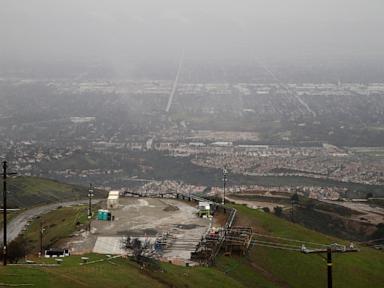
Millions of dollars extracted from the legal fallout of the worst natural gas blowout in American history are now financing home electrification across Southern California. Residents in the northern San Fernando Valley—specifically those living in the shadow of the Aliso Canyon storage facility—can claim direct financial subsidies to rip out gas furnaces, water heaters, and stoves, replacing them with high-efficiency electric alternatives.
The cash comes from a $1.8 billion legal settlement paid out by Southern California Gas Company (SoCalGas) and its parent, Sempra Energy, following the catastrophic 2015–2016 methane leak. While most of that settlement went toward individual health claims, property damage, and local government reimbursements, a dedicated slice was carved out specifically for supplemental environmental projects. Administrators are finally deploying those funds into residential basements and utility closets. For a different view, see: this related article.
It is an irony sharp enough to cut steel. A utility that built a multi-billion-dollar empire piping methane into millions of California homes is inadvertently bankrolling the permanent destruction of its own customer base in communities like Porter Ranch, Granada Hills, and Chatsworth.
The Anatomy of an Unprecedented Payout
To understand why this money exists, you have to look back at October 2015. Well SS-25 at the Aliso Canyon Underground Storage Facility ruptured. For 111 days, nearly 100,000 metric tons of methane and trace toxic chemicals spewed into the atmosphere above Los Angeles County. Thousands of families fled their homes, complaining of nosebleeds, nausea, and chronic respiratory issues. Similar coverage on this trend has been published by Business Insider.
The legal reckoning took years. Prosecutors, state regulators, and thousands of private plaintiffs cornered SoCalGas. When the dust settled on the massive civil and criminal agreements, regulators insisted that a portion of the penalty couldn't just disappear into general state coffers or corporate tax write-offs. It had to directly mitigate the environmental harm caused by the blowout.
Enter the Aliso Canyon Supplemental Environmental Project (SEP) funds.
Unlike standard utility rebates—which are usually funded by a surcharge on your monthly energy bill—this money comes directly from shareholder penalties. You aren't paying yourself back with your own ratepayer dollars. Every dollar spent on a heat pump water heater through this program represents a direct transfer of wealth from Sempra’s corporate bottom line to the physical infrastructure of a local homeowner's house.
Program administrators designed the rollout to target the communities that bore the physical brunt of the leak. Eligibility typically hinges on geographic proximity to the Aliso Canyon facility, prioritizing census tracts within a specific radius of the blowout site, alongside tiered income qualifications that offer deeper subsidies for low- and moderate-income households.
What the Money Actually Covers
Home electrification sounds clean in a press release. On the ground, it is expensive, messy, and full of hidden contracting traps.
A standard gas furnace swap might cost a homeowner $4,000 to $6,000. Transitioning that same home to an electric cold-climate heat pump—even in mild Southern California, where variable-speed inverter units are prized for efficiency rather than sub-zero survival—easily runs $12,000 to $18,000.
The Aliso Canyon mitigation funds are structured to bridge that exact financial chasm. Depending on household income and specific program tracks managed by local implementing agencies, residents can stack these settlement dollars with existing state and federal incentives.
Here is how the hardware breakdown looks for a qualifying home:
- Space Heating and Cooling: High-efficiency electric heat pumps replace both the aging gas furnace and the central air conditioner in a single machine. Instead of burning fuel to generate heat, the system uses refrigerant to move thermal energy from the outside air into the house, operating at efficiencies exceeding 300 percent.
- Water Heating: Standard atmospheric-vent gas tanks—the silent methane leakers sitting in most California garages—are swapped for heat pump water heaters (HPWH). These units pull ambient warmth from the surrounding garage air and transfer it into the water tank, cutting water heating electricity use by roughly two-thirds compared to traditional electric resistance coils.
- Cooking Surfaces: Gas ranges, which indoor air quality studies consistently link to elevated nitrogen dioxide and benzene levels inside kitchens, are replaced with magnetic induction cooktops. Induction heats the pan directly through electromagnetic fields, boiling water faster than commercial gas burners while keeping the kitchen air free of combustion byproducts.
- Electrical Panel Upgrades: This is the silent killer of electrification budgets. Many homes built in the San Fernando Valley during the 1960s and 1970s still run on 100-amp electrical service panels. Adding a heat pump, a water heater, an induction stove, and eventually an electric vehicle charger requires upgrading that main breaker box to 200 amps. A panel upgrade alone can cost $3,500 to $5,000, especially if the utility has to trench new underground conduit. Settlement-backed programs explicitly allocate funds for this behind-the-wall work, recognizing that you cannot plug modern appliances into mid-century wiring.
The Hidden Math of Stacking Incentives
The real power of the Aliso Canyon money lies in its ability to stack with other funding streams. Because these funds originate from a legal penalty rather than a federal tax credit or a standard state ratepayer program, homeowners can often combine them without triggering "double-dipping" disqualifications.
Consider a hypothetical example of a middle-income family living in Granada Hills with a failing 15-year-old gas furnace and an outdated 100-amp electrical panel.
If they went to the open market without subsidies, a comprehensive electrification retrofit—heat pump HVAC, heat pump water heater, induction range, and a 200-amp panel upgrade—would easily carry a contractor quote north of $28,000. Most families would balk at that number, spend $4,500 on a cheap replacement gas furnace, and lock in another two decades of fossil fuel combustion inside their home.
Now apply the stacked incentive math. First, the household taps into the Aliso Canyon mitigation fund, which might cover $8,000 to $12,000 of the base equipment and panel upgrade costs depending on their specific census tract and income tier. Next, they claim the federal Inflation Reduction Act (IRA) 25C tax credit, which allows homeowners to deduct 30 percent of project costs up to $2,000 annually for qualified heat pumps and another $600 for an electrical panel upgrade. Finally, if they fall below 150 percent of the Area Median Income, they can layer on California's TECH Clean California incentives or upcoming federally funded, state-administered HEEHRA rebates, which can knock another $4,000 to $8,000 off the invoice at the point of sale.
Suddenly, a $28,000 infrastructure overhaul drops to $6,000 or $8,000 out of pocket. That puts full electrification at rough price parity with simply replacing an old gas furnace and AC unit with new fossil-fuel equipment.
The Contractor Bottleneck Nobody Mentions
Money solves the demand problem. It does not solve the labor problem.
Veteran energy analysts watching this rollout see a familiar friction point emerging across the San Fernando Valley. Throwing millions of dollars into a localized zip code radius creates an immediate gold rush, and the residential HVAC industry is notoriously uneven in its technical competence.
Installing a gas furnace is straightforward. Plumbers and HVAC techs have been bolting sheet metal boxes to gas lines for eighty years. If a contractor oversizes a gas furnace by 40 percent—which happens constantly in residential construction—the unit just cycles on and off more frequently. The house still gets warm, and the homeowner rarely notices the efficiency loss.
Heat pumps do not forgive sloppy engineering.
To size a heat pump correctly, a contractor must perform a Manual J load calculation, measuring insulation levels, window orientation, air leakage, and square footage. If a contractor skips the math and installs an oversized variable-speed heat pump, the system will short-cycle, fail to dehumidify the air properly, and drive up winter electricity bills. Furthermore, existing ductwork in 1970s Valley ranch homes is often undersized and leaky. Pushing high-volume heat pump airflow through choked, unsealed ducts creates static pressure problems that can burn out expensive variable-speed blower motors in a few years.
Homeowners rushing to claim Aliso Canyon settlement dollars face a stark reality: the contractor offering the fastest turnaround time is often the one cutting corners on load calculations and duct remediation. Program administrators maintain lists of approved, vetted contractors, yet even within approved networks, technical proficiency varies wildly. Getting three quotes and explicitly asking contractors how they calculate thermal load is mandatory if you want the equipment to perform as advertised.
The Utility Rate Trap
There is another uncomfortable truth buried beneath the celebration of these electrification grants. Removing your gas appliances eliminates your monthly gas bill, aside from a minimal customer connection charge if you keep the meter active. It simultaneously increases your electricity consumption.
In Southern California, electricity is remarkably expensive.
Whether you are served by the Los Angeles Department of Water and Power (LADWP) within city limits or Southern California Edison (SCE) in surrounding unincorporated areas and neighboring cities, residential electric rates sit among the highest in the continental United States. Time-of-Use (TOU) rate structures penalize electricity consumption heavily between 4:00 PM and 9:00 PM—the exact window when families come home, turn up the thermostat, cook dinner on their new induction range, and run hot water for showers and dishes.
The financial math works decidedly in the homeowner's favor under two specific conditions:
- You already have rooftop solar. If your home generates its own kilowatt-hours—particularly if you are grandfathered into California's older Net Energy Metering (NEM 1.0 or NEM 2.0) tariffs—electrifying your home is an absolute financial slam dunk. You are essentially fueling your heating, hot water, and cooking with sunk-cost solar electricity rather than buying volatile natural gas from SoCalGas.
- You leverage thermal storage and smart controls. Modern heat pump water heaters act like thermal batteries. Homeowners can program them to superheat water to 140 degrees Fahrenheit during the midday hours when solar generation peaks and grid electricity is cheapest, using a thermostatic mixing valve to safely deliver 120-degree water to the taps during the expensive evening peak without turning on the compressor.
If you live in an uninsulated house without solar and run a poorly configured heat pump during peak evening rate windows, your combined utility bills might not drop as dramatically as the glossy program brochures suggest. You get cleaner indoor air and eliminate methane leaks, which carries immense health and climate value, but the monthly cash-flow savings require active rate management.
Why Aliso Canyon Still Operates
While millions of settlement dollars flow into neighborhood electrification projects, an elephant remains sitting directly above Porter Ranch. The Aliso Canyon storage facility is still open.
Despite years of protests from neighborhood councils, environmental advocates, and local elected officials—and despite repeated pledges from state leadership to shut the facility down—the California Public Utilities Commission (CPUC) has repeatedly delayed permanent closure. Regulators argue that the 86-billion-cubic-foot underground cavern remains necessary to prevent winter gas shortages and stabilize electricity prices, since natural gas power plants still generate a massive share of California's electricity when solar output drops at sunset.
In fact, state regulators previously voted to increase the maximum working gas capacity at Aliso Canyon to protect against winter price spikes, a decision that infuriated residents who lived through the 2015 blowout.
This creates a bizarre policy contradiction. One arm of the state apparatus is distributing settlement funds to help Valley residents sever their reliance on natural gas, while another arm maintains that the massive underground storage field right up the hill must remain pressurized with billions of cubic feet of methane to keep the broader regional grid afloat.
True closure of Aliso Canyon depends directly on demand destruction. The facility only exists to meet peak winter heating demand and gas-fired power generation surges. Every gas furnace ripped out of a San Fernando Valley home and replaced with a heat pump permanently shaves a tiny fraction off that winter peak demand curve.
How Residents Can Claim the Funds Before They Vanish
Settlement funds are finite. Unlike an ongoing federal tax credit that resets every January, Supplemental Environmental Project pools operate on a strict, closed-end budget. Once the allocated millions are reserved by approved applications, the window slams shut.
If you own a home—or rent a property with a cooperative landlord—in the northern San Fernando Valley communities surrounding the Aliso Canyon facility, waiting until your current furnace dies in the middle of a cold January snap is a guaranteed way to miss out. Emergency replacements force you to take whatever equipment a contractor has sitting in their warehouse that afternoon, usually a like-for-like gas swap that disqualifies you from electrification grants.
Start by verifying your exact address against the geographic boundary maps published by the local program administrators overseeing the Aliso Canyon mitigation funds. Gather your most recent federal tax returns to establish your household income tier, as low- and moderate-income brackets unlock substantially higher per-appliance dollar caps. Request a comprehensive home energy audit before signing a single equipment contract, and demand that every bidding contractor provide a written Manual J load calculation alongside their quote for a 200-amp panel upgrade.
The utility that poisoned the Valley's air is legally obligated to pay for your transition off its grid, so make sure you claim your share of the settlement before the ledger hits zero.