The padlock hit the gravel with a dull, heavy thud. It was brand new, gleaming silver against the dirt of the Banon Creek Forest Service Road. Less than twenty-four hours earlier, municipal workers had bolted it into place, hoping against hope that steel and combination tumblers could stand guard over an invisible treasure.
By morning, it was gone. Sawn through with surgical precision, leaving only a jagged metal stump weeping rust.
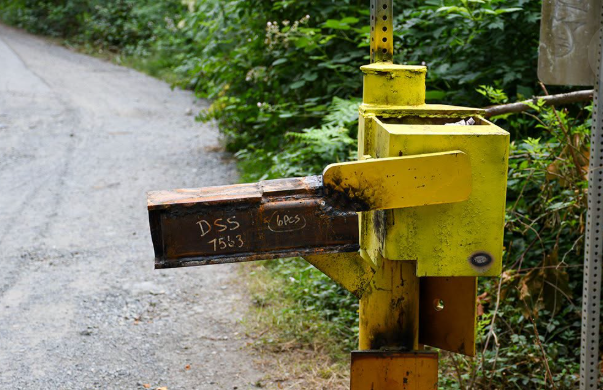
This happened six times. Then a heavier gate was built, armored and reinforced, meant to defy the most stubborn intruder. It lasted three attacks before being rendered permanently inoperable. Today, the gate stands wide open, a useless iron skeleton greeting anyone who cares to drive up into the hills.
Beyond that open gate lies Stocking Lake and Holland Lake. For twelve thousand people—residents of Ladysmith, the Stz’uminus First Nation, the Diamond Improvement District, and parts of Saltair—these high-country watersheds are the source of life. Turn a tap in the kitchen, and it is this water that rushes out clear and cold. But the people drinking it rarely look up at the map to see where it comes from. If they did, they would see a fragile ecosystem sitting entirely outside municipal boundaries, tangled in a messy web of provincial timber licenses, private forestry holdings, and an escalating human crisis.
Consider what happens when a city loses control of its own lifeline.
Up the Banon Creek road, past the broken locks, a different community has taken root. Tents, weathered tarps, and dilapidated recreational vehicles nestle into the dense timber. What began as isolated trespassing has curdled into sprawling, unmonitored encampments. There is illegal dumping of garbage, construction waste, and household refuse. There are volatile human interactions, intimidation of municipal staff trying to inspect infrastructure, and criminal activity that local RCMP struggle to police in the vast, wooded expanse.
And then, inevitably, there is fire.
On a dry afternoon in the middle of summer, a column of black smoke billowed over the canopy. It was a human-caused wildfire, ignited right along the access corridor. Fire crews scrambled, dropping water from the sky and cutting lines through the brush, managing to hold it back just in time. Weeks later, it happened again. Another brush fire, another close call, another quiet panic for a town living under the shadow of a preventable disaster.
Mayor Deena Beeston and the town council have filled out the forms, written the letters, and sounded the alarms. In late June, they wrote to the provincial government pleading for immediate emergency action. They asked for automated gates, remote electronic surveillance, and specialized legal tools to protect public health. They asked for help humanely relocating the people camping in the very basin that feeds their children's drinking water.
The response from the provincial machinery was silence. Weeks bled into months, and the second fire broke out on August eighteenth. Another urgent letter went out on August twenty-first, carrying the exhausting weight of a community running out of time.
The Ministry of Forests offers the standard institutional comfort, murmuring about multi-agency collaboration and finding the best outcomes. Meanwhile, town workers refuse to visit the watershed without police escorts because the atmosphere has grown too hostile.
Contrast this with the Capital Regional District down the island, where the Greater Victoria water supply is locked behind formidable fences, monitored by round-the-clock patrols, and guarded like the national asset it is. In Victoria, trespassing is an anomaly. In Ladysmith, trespassing is a daily battle of attrition that the town is losing because the land does not belong to them, yet the consequences belong entirely to them.
Water does not care about jurisdictional boundaries. It does not pause at the dotted line where municipal authority ends and provincial oversight begins. It simply flows down from the hills, carrying whatever it touches straight into the treatment plant and out through the taps of twelve thousand unsuspecting homes.
Every cut lock is a warning. Every brush fire is a dry run for a catastrophe that everyone sees coming except the people holding the pen.
The hills above Ladysmith remain bone-dry under the late-summer sun. The gate hangs wide and broken, letting the wind through, waiting to see what burns next.