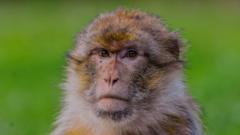
The survival of the cotton-top tamarin (Saguinus oedipus) is currently tethered to a high-risk biological bottleneck: a wild population of fewer than 6,000 individuals confined to a shrinking 5% of their original habitat in Colombia. Standard conservation methods—habitat protection and captive breeding—operate on a reactive basis, struggling to outpace the rate of genetic erosion. A superior strategy, currently being pioneered through the first-ever comprehensive genomic mapping of this species, shifts the paradigm from phenotypic preservation to information security. By treating the tamarin genome as a critical data asset, researchers are building a biological redundant array of independent disks (RAID) system. This ensures that even if local populations collapse, the blueprints for the species remain accessible for future restoration.
The Architecture of Genetic Resilience
The primary failure of traditional conservation is the reliance on a "snapshot" population. When a species becomes fragmented, the gene pool undergoes rapid contraction, leading to inbreeding depression and a reduced capacity to adapt to environmental shifts. The current initiative to sequence the cotton-top tamarin genome functions as an infrastructure project rather than a simple study.
The framework for this genetic project relies on three distinct technical pillars:
- Reference Genome Assembly: Creating a high-fidelity, end-to-end map of the tamarin DNA. This serves as the "gold standard" against which all individual variations are measured.
- Population Genomics: Sampling disparate groups—both in the wild and in global zoological institutions—to identify specific alleles responsible for disease resistance and climatic adaptation.
- Biobanking: The cryopreservation of living cells and gametes. This provides a physical backup that can be re-integrated into the population via assisted reproductive technologies.
Quantifying the Value of Genomic Mapping
The logic of sequencing a species like the cotton-top tamarin extends beyond biological sentimentality. It is a calculated move to mitigate the "extinction debt"—the time delay between habitat loss and the eventual disappearance of a species.
A high-quality genome allows conservationists to measure Heterozygosity, which is the statistical probability that an individual has different versions of a gene from each parent. Low heterozygosity is a precursor to population collapse. By identifying which specific tamarins carry the most diverse genetic material, breeders can optimize "Mean Kinship" ratings. This mathematical approach ensures that every mating pair in a captive program minimizes the loss of rare alleles, effectively slowing the rate of genetic drift.
The sequencing process also identifies Lethal Recessives. In small populations, harmful mutations that are usually hidden begin to manifest. Without a genomic map, breeders are flying blind, often pairing individuals that carry the same genetic defects. A mapped genome turns conservation into an engineering problem: you identify the structural flaws in the population and design a breeding strategy to bypass them.
The Habitat Bottleneck and the Failure of Traditional Protection
Habitat fragmentation creates "island populations." For the cotton-top tamarin, the forest patches in Northwest Colombia are often separated by cattle ranches and human infrastructure. This prevents natural gene flow.
Traditional corridors—strips of forest planted to connect patches—are slow to develop and expensive to maintain. Genomic data provides a workaround by enabling "Artificial Gene Flow." If a researcher knows that Population A has a unique set of genes for respiratory health and Population B is lacking them, they can facilitate a targeted translocation. This is more efficient than moving animals at random, which carries the risk of introducing "Outbreeding Depression," where the offspring are less fit for their specific local environment because their genes are too generalized.
Technical Constraints of Cryopreservation and Biobanking
While the creation of a "frozen zoo" is a significant insurance policy, it is not a standalone solution. The technology to turn a stored skin cell back into a living, breathing monkey via somatic cell nuclear transfer (cloning) is still in its infancy for primates.
The current bottleneck is not the storage of the data, but the Reconstitution Mechanism. We can sequence the 2.5 billion base pairs of a tamarin, and we can freeze the cells, but the bridge between a digital sequence and a biological organism remains a high-cost, low-yield endeavor. Therefore, the biobank must be viewed as a long-term hedge—a way to preserve the "software" of the species while we wait for the "hardware" of reproductive technology to catch up.
Strategic Allocation of Conservation Capital
The "World First" gene project for tamarins represents a shift in how conservation capital is allocated. Traditionally, funds are spent on land acquisition and physical security (rangers and fences). While necessary, these are recurring costs with diminishing returns as political climates shift.
Investing in a reference genome is a one-time capital expenditure with permanent utility. Once the data is secured, it can be shared globally at zero marginal cost. This creates a decentralized conservation model where a lab in Europe or Asia can contribute to the survival of a Colombian monkey by analyzing data or developing vaccines for the specific pathogens identified in the tamarin's genetic code.
The project’s utility is maximized when integrated into a Tri-Phase Conservation Model:
- Phase I: Data Acquisition. High-depth sequencing of the founder population.
- Phase II: Predictive Modeling. Using AI to simulate how the population will react to climate change or new viral threats based on their genetic markers.
- Phase III: Precision Intervention. Targeted breeding and CRISPR-based gene editing (if necessary) to remove deleterious mutations that threaten the population's viability.
The Limitations of Genomic Absolutism
It is a mistake to view the genome as a silver bullet. A perfectly mapped tamarin in a laboratory is biologically irrelevant if its ecological niche—the tropical dry forests—no longer exists. The genome provides the instructions, but the habitat provides the energy and resources.
The second limitation is Epigenetics. Genomic mapping captures the sequence of the DNA, but it does not fully capture the "on/off" switches influenced by the environment. If a tamarin is raised in a sterile cage, its epigenetic profile will differ from a wild counterpart, potentially affecting its ability to survive reintroduction regardless of its "perfect" DNA.
The focus must remain on the tamarin as a functional unit of an ecosystem. The cotton-top tamarin is a primary seed disperser; its disappearance triggers a trophic cascade that degrades the forest further. The genomic project is therefore a proxy for forest health. By saving the tamarin's data, we are indirectly saving the operational manual for the Colombian dry forest.
Final Strategic Play
The immediate requirement for the cotton-top tamarin project is the expansion of the "Reference Library" to include the microorganisms found in their gut (the microbiome). Genetic health is not limited to the host; it includes the symbiotic relationships that allow the animal to digest local fruits and resist endemic bacteria.
The most effective move for the conservation consortium is to move beyond simple sequencing and establish a Digital Twin for the species. This would involve a real-time database linking the genetic profile of every known individual to their GPS location, health records, and reproductive history. This level of granularity transforms conservation from a reactive rescue mission into a proactive, data-driven management system. By the time a physical population begins to show signs of decline, the genomic data will have already flagged the underlying cause, allowing for intervention weeks or months before the crisis manifests in the field.