Structural Realignment in the High North
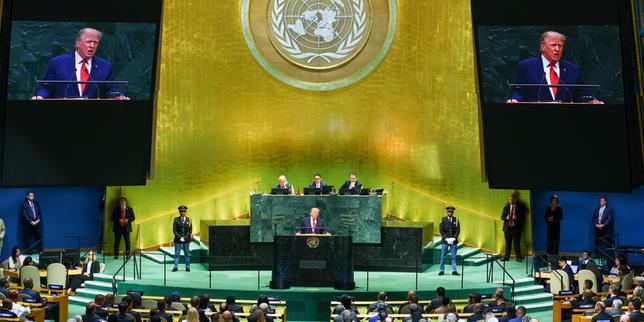
The signing of the September 2026 trilateral security agreement between the United States, the Kingdom of Denmark, and Greenland marked a watershed moment in Arctic statecraft, shifting the strategic architecture of the polar region from a Cold War-era bilateral framework into an assertive, multi-tiered containment structure. Beneath the diplomatic choreography at the United Nations Headquarters in New York, the accord codified American military expansion and established rigid barriers against non-allied presence in the world's most rapidly thawing strategic theater. Far from a routine diplomatic update, the pact revealed the hard mechanics of asymmetrical power dynamics, where economic coercion, sovereign friction, and great power competition intersect across brittle ice shelves.
To understand the true weight of the 2026 accord, one must deconstruct the baseline it supersedes. The foundational 1951 Defense of Greenland agreement operated under mid-century assumptions of strategic priority, primarily anchoring American forward defense through what was then Thule Air Base. For decades, that bilateral instrument served as a functional mechanism for mutual defense under the umbrella of the North Atlantic Treaty Organization, leaving internal administrative control firmly within Copenhagen's domain while granting Washington specific operational permissions. However, the acceleration of polar ice melt, the opening of trans-Arctic maritime trading routes, and the aggressive probing of northern domains by non-NATO actors rendered the 1951 parameters structurally obsolete. Meanwhile, you can read similar developments here: Diplomatic Architecture of the Russo-Ukrainian War The Mechanics of US-Russia High-Level Engagement.
The Expansion Matrix and Operational Footprint
The updated 2026 framework does not merely patch holes in an aging treaty; it establishes an intensive operational matrix across the island's geography. The agreement authorizes three distinct pillars of military positioning that fundamentally alter the strategic depth of North American defense.
First, the formalization and expansion of activities at the Pituffik Space Base solidify its function as a critical node for ballistic missile early warning and space surveillance networks. Second, the creation of new defense areas at Narsarsuaq in southern Greenland and Mestersvig in the east extends operational reach far beyond the historical northwest enclave. These locations are not arbitrary points on a map; they command critical choke points and provide logistical staging grounds capable of monitoring both the Denmark Strait and the broader North Atlantic approaches. Third, the explicit codification of unrestricted overflight, landing rights, and subsurface naval access throughout Greenlandic territorial waters grants the United States military an operational fluidity that bypasses historical bureaucratic friction. To understand the full picture, we recommend the recent report by Al Jazeera.
Embedded within these physical provisions is the integration of advanced defense architecture. The preamble of the text explicitly references the integration of the proposed Golden Dome missile defense system, signaling a technological pivot toward comprehensive shield coverage in the northern quadrant. By securing these geographic and technological concessions, Washington has effectively bounded the northern approaches of the North American continent against emerging missile threats from Eurasian competitors.
The Economic Vetting and Investment Wall
Security in the twenty-first century is inextricably linked to resource access and supply chain control. The 2026 accord recognizes this reality by erecting a strict economic perimeter around Greenland's vast, largely untapped deposits of critical minerals and rare earth elements.
Under the terms of the agreement, nations outside NATO, official NATO partners, or the European Union are systematically barred from establishing persistent military installations or unmanned military infrastructure on the island. Crucially, the framework extends this defensive logic into the economic sphere, empowering the signatories—with significant American input—to scrutinize and restrict foreign investment in sensitive sectors. This provision acts as an institutional firewall against predatory capital acquisition by geopolitical rivals seeking to establish dual-use footholds under the guise of commercial mining ventures.
This economic gating mechanism alters the development trajectory of Greenland itself. While local authorities have long pursued economic diversification as a necessary precondition for eventual financial self-sufficiency, the investment screening mandates mean that all commercial extraction projects must clear rigorous security vetting. The trade-off is stark: Greenland gains access to preferential contracting opportunities for local firms and heightened environmental safeguards, but surrenders a degree of economic non-alignment. The island's subterranean wealth is thus firmly conscripted into the service of Western grand strategy.
The Coercive Mechanism and Transatlantic Fallout
The path leading to the September 2026 signing ceremony was defined by overt diplomatic friction and coercive signaling. Months prior, public threats from Washington regarding sovereign control over the territory fractured the diplomatic decorum traditionally governing intra-allied relations.
In game-theoretic terms, the administration utilized maximum pressure tactics to shift the reservation points of Danish and Greenlandic leadership. By introducing existential uncertainty regarding territorial integrity and security guarantees, Washington altered the cost-benefit analysis of Copenhagen and Nuuk. The European Union's contemplation of anti-coercion trade instruments highlighted the systemic risk posed to broader multilateral norms, yet the ultimate outcome demonstrated the limits of collective European deterrence when faced with bilateral security dependencies.
For Denmark, the agreement represents a salvage operation—preserving constitutional sovereignty and territorial integrity on paper while absorbing strategic subordination in practice. For Greenland, the dynamic is equally complex. Prime Minister Jens-Frederik Nielsen's administration navigated the crisis by securing language affirming the right to self-determination, yet the permanence clause of the treaty binds future generations, casting a long shadow over the constitutional trajectory of an independent state. Domestic opposition within the Inatsisartut, particularly from factions warning against permanent strategic encumbrance without guaranteed financial compensation, underscores the unresolved domestic friction generated by the deal.
Constitutional Permanence and the Independence Paradox
A critical legal innovation of the 2026 agreement is its structural durability. Unlike prior iterations that remained vulnerable to shifting political winds, the text establishes a permanent operational baseline that survives constitutional evolution.
Specifically, the treaty dictates that should Greenland exercise its legal right under Danish law to transition from home rule into a fully sovereign, independent nation, the defense arrangements and military access rights remain entirely binding. This clause resolves a long-standing strategic anxiety in Washington: the fear that a newly independent, economically fragile Arctic state might alter its security alignment or evict American forces in pursuit of neutral status or alternative partnerships.
By locking in the security architecture ahead of potential independence, the treaty creates a profound constitutional paradox for Greenlandic nationalists. True political sovereignty entails the unconstrained authority to determine foreign policy and military stationing. Yet, the 2026 framework preemptively strips an independent Greenland of those exact prerogatives, ensuring that national defense remains anchored to Washington's strategic perimeter regardless of future domestic democratic mandates.
Strategic Trajectory
The long-term equilibrium established by the trilateral accord relies on the suppression of geopolitical competition in the High North at the expense of local strategic autonomy. As Arctic ice continues to recede, opening new corridors for maritime commerce and resource extraction, the military infrastructure established at Pituffik, Narsarsuaq, and Mestersvig will function as the primary arbiters of regional stability. Future friction will not center on whether American forces operate in Greenland—that question has been definitively settled—but rather on the distribution of economic rents from mining projects and the degree of consultation afforded to Nuuk as the security environment intensifies. Policymakers must now manage the residual diplomatic scar tissue left by the coercive birth of the treaty, ensuring that tactical security gains do not permanently erode the political cohesion of the alliance.