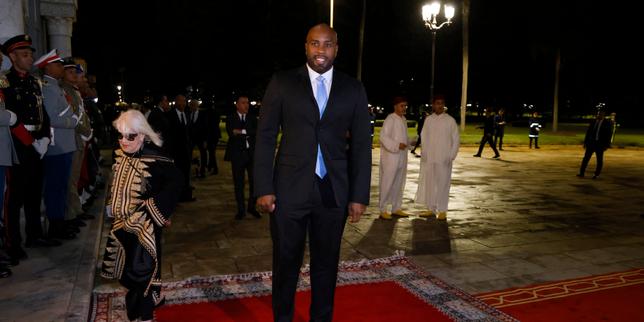
Elite athletic stardom rarely converts directly into institutional equity within sovereign markets without a structural intermediary. In the case of French judoka Teddy Riner, the conversion mechanism is a documented personal proximity to King Mohammed VI of Morocco, transforming cultural popularity into commercial positioning across North Africa. Standard media coverage treats Riner’s Moroccan ventures as a collection of celebrity endorsements and lifestyle appearances. That framing misses the underlying economic architecture. Riner operates not merely as a brand ambassador, but as a soft-power conduit bridging French athletic prestige, Moroccan state-aligned development goals, and private capital allocation.
To understand how an Olympic heavyweight champion constructs an economic footprint in Rabat and Casablanca, one must separate public spectacle from institutional mechanics. The intersection of royal patronage, sports diplomacy, and commercial infrastructure forms a specific operational model.
The Architecture of Royal Proximity and Soft Power
In centralized political economies where the monarchy anchors both state policy and major capital flows, proximity to the sovereign functions as the ultimate de-risking mechanism. Public reporting has repeatedly highlighted the personal rapport between Teddy Riner and King Mohammed VI. This relationship is visible through regular stays in the kingdom, attendance at private royal events, and high-profile appearances alongside members of the royal family.
From an institutional standpoint, this proximity alters Riner's risk profile for local conglomerates and state-backed entities. In emerging or transitioning markets, foreign athletes typically face high friction: opaque regulatory environments, partner selection risk, and rapid dilution of brand equity once initial promotional campaigns conclude. Direct association with the palace neutralizes these barriers. Local actors view alignment with a figure favored by the sovereign as both commercially safe and politically signals-compliant.
This dynamic operates on a principle of reciprocal utility. For Riner, Morocco provides a secondary home market insulated from the intense media scrutiny of Paris, alongside access to long-term commercial ventures that outlast an active competitive career. For the Moroccan state, Riner represents an asset in its broader soft-power strategy. Morocco has spent over a decade positioning itself as a premier African hub for international sports, diplomacy, and tourism—a trajectory culminating in its co-hosting rights for the 2030 FIFA World Cup. Integrating global icons of Francophone culture into the kingdom’s social fabric reinforces its image as a stable, cosmopolitan destination for foreign direct investment and elite tourism.
Three Pillars of the Commercial Footprint
Riner’s operational presence in Morocco divides into three distinct functional categories, each carrying different capital requirements and strategic returns.
1. Institutional Sports Diplomacy and Youth Infrastructure
The most visible layer of Riner’s engagement involves the promotion of judo and athletic infrastructure. Morocco possesses a structured martial arts federation, yet elite-level technical transfer remains a bottleneck. Riner’s clinics, masterclasses, and public appearances with young Moroccan judokas serve a dual purpose. First, they fulfill corporate social responsibility mandates for sponsoring entities. Second, they establish Riner as an institutional stakeholder within the Moroccan sporting ecosystem rather than an extractive foreign celebrity.
By embedding himself in youth development and federation-adjacent events, Riner builds durable goodwill with the Ministry of National Education, Preschool and Sports. This institutional capital is non-monetary at the point of creation, yet it forms the foundation for securing future facility partnerships, training camp contracts, and advisory roles ahead of major international sporting events hosted in the kingdom.
2. Corporate Sponsorships and Telecom Alignment
Commercial monetization in Morocco relies heavily on alignment with national champions—large domestic corporations that dominate sectors like telecommunications, banking, and real estate. Riner’s visibility in the Moroccan market has intersected with major corporate entities, most notably through promotional campaigns and brand ambassadorships tailored to North African consumers.
The economic logic here relies on cross-border demographic reach. Riner commands near-universal name recognition across France and the Francophone world, including the vast Moroccan diaspora in Europe. For a Moroccan telecom operator or financial institution, sponsoring Riner yields simultaneous domestic prestige and diaspora resonance. Unlike local athletes whose appeal stops at national borders, Riner offers a unified marketing asset across both shores of the Mediterranean.
3. Hospitality, Real Estate, and Lifestyle Positioning
Beyond active sports and traditional endorsements, high-net-worth athletes transition into asset ownership through hospitality and real estate. Marrakech and Casablanca serve as primary magnets for French celebrity capital, driven by favorable tax treaties, geographic proximity to Europe, and established luxury tourism infrastructure.
While the exact financial stakes of private holding companies often remain shielded from public registries, the strategic pattern is clear. Riner’s frequent presence in Marrakech’s luxury hospitality circuit positions him within the exact social networks where private equity, real estate development, and club ownership deals originate. In this environment, social capital precedes financial deployment. Presence at high-profile openings, private dinners, and charity galas acts as deal-flow generation, allowing an athlete to co-invest alongside established Franco-Moroccan business families rather than taking unhedged solo positions.
The Economics of Reputation Arbitrage
The financial viability of Riner’s Moroccan strategy rests on reputation arbitrage—taking an asset valued at one level in a saturated market and deploying it in an adjacent market where its scarcity multiplies its value.
In France, Teddy Riner is an athletic institution, yet he competes for corporate marketing budgets against football stars like Kylian Mbappé, rugby icons, and entertainment figures. Furthermore, the French regulatory and media environment imposes strict scrutiny on athletes' commercial ties and political alignments.
In Morocco, the competitive field for global, non-football Francophone icons is vastly less crowded. By concentrating time and visibility in the kingdom, Riner captures an outsized share of executive attention. The marginal cost of his time—a week spent in Marrakech or Rabat—generates significantly higher institutional access than an equivalent week in Paris.
This arbitrage requires careful management of public perception. Critics and investigative journalists periodically scrutinize the intersection of French celebrities and foreign autocracies or monarchies, framing such relationships as image-laundering for the host state. Riner’s positioning avoids this trap through consistency and cultural framing. Because his ties to Morocco are long-standing, visibly personal, and anchored in athletic mentorship rather than purely transactional state contracts, his presence registers with the general public as authentic affinity rather than paid political advocacy.
Operational Limitations and Structural Risks
Despite the durability of this model, relying on personal proximity and soft-power alignment carries inherent structural vulnerabilities. Practitioners analyzing celebrity-sovereign business models must account for three primary risk vectors:
- Concentration Risk: When commercial access depends heavily on the goodwill of a single sovereign or inner circle, the entire portfolio is exposed to shifts in royal priorities or palace personnel. Unlike contractual rights enforced through independent commercial courts in the European Union, relationship-driven advantages lack formal legal recourse if political winds shift.
- Bilateral Diplomatic Friction: Franco-Moroccan relations experience cyclical periods of severe diplomatic tension—historically triggered by disputes over visa restrictions, Western Sahara sovereignty, and espionage allegations. A prominent French figure deeply embedded in Moroccan royal circles walks a narrow diplomatic tightrope. During bilateral freezes, overly visible alignment with Rabat can draw backlash from French political commentators, while distancing oneself risks alienating Moroccan partners.
- Post-Retirement Valuation Decay: An active Olympic champion commands immediate media gravity. Once an athlete steps off the competitive mat, their cultural currency naturally depreciates unless it has been successfully converted into hard equity—such as ownership stakes in operating businesses, real estate assets, or formal institutional governance roles. Endorsement contracts expire; equity endures.
Strategic Execution for Athlete-Led Market Entry
For athletes, agents, and private wealth managers attempting to replicate cross-border market entry into state-influenced economies, the Riner case provides a clear operational sequence. Relying solely on traditional sports marketing agencies will fail in these jurisdictions. Instead, market entry must follow a disciplined progression:
- Establish Non-Transactional Cultural Anchors First: Enter the market through grassroots athletic clinics, charitable foundations, or federation partnerships before pitching commercial entities. State and corporate gatekeepers test foreign talent for genuine commitment before unlocking capital.
- Align with National Infrastructure Priorities: Map your personal brand onto the host country’s ten-year economic vision. If the state is investing heavily in tourism, youth sports, or renewable energy, structure commercial proposals to solve specific visibility or technical bottlenecks within those exact sectors.
- Co-Invest Through Local Operating Partners: Never deploy capital into real estate, hospitality, or consumer ventures as a standalone foreign entity. Structure joint ventures with established domestic family offices that manage local regulatory compliance, permitting, and labor relations while you provide brand equity and international network access.
- Convert Endorsement Fees into Equity Warrants: As active athletic career timelines shorten, renegotiate standard cash endorsement deals with regional corporate champions into hybrid structures featuring equity participation or revenue-sharing agreements, locking in cash flow independent of future podium finishes.


