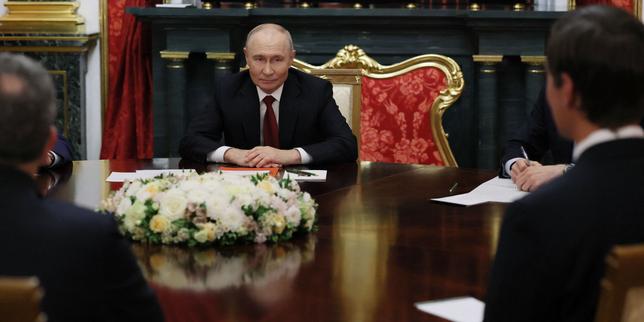
Diplomatic communication during high-intensity state conflict operates under asymmetric incentives. When state actors transmit verbal assurances through backchannels or bilateral exchanges, the primary objective is rarely the conveyance of ground truth. Instead, these signals function as strategic instruments designed to alter adversary calculus, manage domestic friction, or buy operational time. The reported communication between Vladimir Putin and Donald Trump, wherein the Russian leadership disavowed aggressive designs toward Europe, demands a mechanical breakdown rather than a surface-level reading of diplomatic theater. Analyzing this exchange requires separating stated intent from structural reality by examining military logistics, economic constraints, and the game-theoretic parameters governing great power competition.
The Structural Mechanics of Diplomatic Signals
State actors engaged in protracted conventional warfare operate within strict resource and political boundaries. When a belligerent power offers non-aggression assurances to third parties, the statement must be evaluated against ongoing materiel consumption, industrial mobilization rates, and strategic doctrine. Meanwhile, you can explore related stories here: Why Everyone is Wrong About Khamenei London Flats and State Wealth.
The Cost-Capability Disconnect
Verbal assurances cost nothing to transmit, making them infinitely scalable instruments of statecraft. In contrast, force posture projection requires massive capital expenditure, supply chain integrity, and personnel allocation.
- Resource Allocation: Russian defense manufacturing has shifted heavily toward sustaining the immediate operational theater in Ukraine. The rate of armor attrition and artillery consumption prevents the simultaneous build-up of a viable second offensive vector directed at Western Europe without complete national mobilization.
- Deterrence Equilibrium: NATO conventional superiority across the European theater remains structurally intact. Any near-term horizontal escalation toward NATO member states would trigger an asymmetric economic and military response that exceeds current strategic risk tolerances.
- Information Warfare Dynamics: Publicizing these assurances via state-aligned channels serves to fracture Western coalition cohesion. By introducing plausible deniability into diplomatic discourse, the signaling state attempts to encourage risk-averse factions within allied governments to reduce military aid provisions to Ukraine.
The divergence between diplomatic rhetoric and hard operational data exposes the core mechanism at play. The assurances reported are not policy shifts; they are tactical variables introduced to manipulate the political economy of Western support mechanisms. To explore the bigger picture, we recommend the detailed analysis by Al Jazeera.
Game Theory and the Prisoner's Dilemma of Peace Negotiations
Negotiation dynamics in modern conflict theory resemble an iterative prisoner's dilemma with high verification costs. For any security assurance to hold structural weight, both parties must evaluate the enforcement mechanisms available in the absence of a global sovereign.
The Verification Deficit
In international relations, trust is an inefficient proxy for verification. Without verifiable force reductions, demilitarization of border zones, or independent third-party monitoring, verbal commitments lack credibility.
- Information Asymmetry: Neither party possesses complete visibility into the adversary's long-term strategic reserve planning or covert industrial surge capacity.
- Commitment Problems: A belligerent state cannot credibly commit to permanent non-aggression while its core security demands remain unmet through current military operations.
- Domestic Audience Costs: Leaders who pivot away from stated maximalist war aims risk internal regime instability, forcing a reliance on ambiguous diplomatic signals that preserve hardline credentials while testing external resolve.
Consequently, any communication bypassing institutional diplomatic channels—such as direct leader-to-leader readouts—tends to bypass standard verification protocols. This allows both the sender and the receiver to interpret the message through self-serving lenses. For domestic audiences, it signals strength or openness to de-escalation; for international partners, it creates strategic uncertainty.
Evaluating the Secondary Effects on European Security Architecture
The introduction of direct bilateral messaging regarding European security outside of traditional multilateral frameworks—such as the European Union or formal NATO structures—accelerates institutional friction within the alliance.
Strategic Autonomy vs. Transatlantic Dependency
European capitals face a dual-track analytical problem when evaluating assurances transmitted through external intermediaries.
- Intelligence Fusion: European defense ministries cross-reference diplomatic statements with satellite telemetry, electronic intelligence, and signals intelligence. If force postures along the Baltic or Finnish borders remain static or show defensive consolidation rather than offensive staging, the diplomatic rhetoric is categorized as low-threat noise.
- Political Vulnerability: Populist and opposition factions within European democracies often weaponize these reported assurances to challenge the sustainability of long-term economic sanctions and military aid packages. This creates a domestic political vulnerability that external actors actively seek to exploit.
The secondary effect is an erosion of consensus. Even if the military threat profile remains mathematically unchanged, the cognitive footprint of the diplomatic signal alters political decision-making horizons. Governments forced to manage domestic anxiety regarding horizontal escalation often adopt defensive political postures, even as their military planners continue long-term deterrence preparations.
The Strategic Play
To evaluate the operational reality behind high-level diplomatic messaging during active conflict, decision-makers must ignore rhetorical framing and focus exclusively on verifiable indicators.
Monitor structural capital deployment rather than diplomatic readouts. Track defense industrial base output metrics, logistics node activation in western military districts, and force rotation patterns. If industrial mobilization rates remain pegged solely to current consumption models in the primary theater, broader territorial ambitions remain logistically constrained, regardless of verbal commitments exchanged at the executive level. Operational reality is written in logistics, not transcripts.