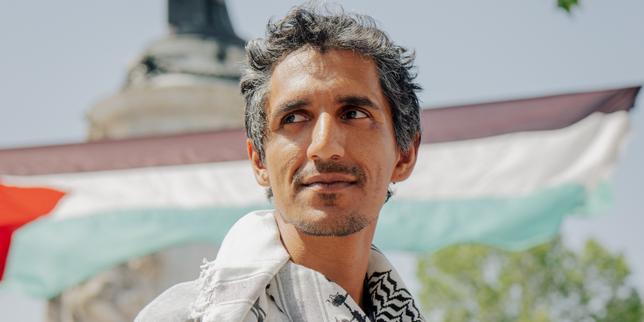
The headlines want you to believe a legal revolution is underway in Paris. France’s National Anti-Terrorism Prosecutor’s Office (PNAT) has opened a preliminary investigation into "torture" and "war crimes" following the arrest of French activists aboard a Gaza-bound aid flotilla by Israeli forces. The media is treating this as a massive shift, a defining moment where domestic courts finally hold foreign military operations accountable.
It is nothing of the sort.
This investigation is a textbook exercise in bureaucratic performance art. It is a cynical misuse of domestic legal machinery designed to satisfy activist pressure while offering zero chance of a tangible judicial outcome. By treating a highly complex maritime interdiction in international waters as a standard domestic criminal matter, commentators are ignoring the stark reality of international law, state immunity, and geopolitical friction. The assumption that this probe will lead to French arrest warrants for foreign commanders is a fantasy.
The Jurisdictional Illusion of Universal Competence
The foundational flaw in the public enthusiasm surrounding the PNAT probe lies in a fundamental misunderstanding of universal jurisdiction and the mandate of specialized prosecutors. French courts do possess the authority to investigate serious international crimes committed abroad if a French victim is involved. Passive personality jurisdiction is a real legal mechanism. But jurisdiction on paper does not equal enforcement power on the ground.
To build a credible case for war crimes or torture, investigators require access to the scene, forensic evidence, military command logs, and the ability to interview the personnel involved in the operation. None of this will happen. Israel is not a member of the International Criminal Court (ICC) and consistently rejects the jurisdiction of foreign domestic bodies investigating its defense forces. France cannot compel cooperation, extradite suspects, or send investigators to interview command structures in Tel Aviv.
Every seasoned international lawyer knows how this script ends. The PNAT will gather testimonies from the French activists. They will document allegations of psychological distress, rough handling, and unlawful detention during the interception. They will pile up paperwork. Then, after months or years of quiet administrative processing, the case will be shelved or left in permanent stasis because the targets of the investigation are entirely out of reach. It is a judicial dead-end masquerading as an active pursuit of justice.
The Flotilla Strategy and the Weaponization of Domestic Law
Activists organizing these maritime campaigns understand the legal landscape perfectly. The goal of the flotilla was never purely logistical; it was a calculated provocation designed to force a confrontation that could then be leveraged in Western courtrooms. By entering a contested maritime zone under blockade, the organizers knew an interception was inevitable.
This is the "lawfare" playbook in action. Lawfare is the use of legal systems as a weapon of war to achieve political and public relations objectives. The activists did not expect to break the blockade; they expected to be arrested so they could file complaints in Paris, London, or Brussels upon their return.
By opening a preliminary inquiry, the PNAT has unwittingly validated this strategy. It allows advocacy groups to issue press releases claiming that a major Western power is officially investigating war crimes, creating a public perception of guilt long before any evidence is tested in an adversarial setting. This distorts the purpose of anti-terrorism and war crimes units, turning them into a PR megaphone for interest groups rather than impartial arbiters of statutory violations.
Realities of Maritime Blockades and Sovereign Immunity
To understand why the PNAT investigation will crumble under serious legal scrutiny, one must look at the actual framework governing maritime warfare. Under the San Remo Manual on International Law Applicable to Armed Conflicts at Sea, a state engaged in an armed conflict can establish a maritime blockade if it is declared, notified, and applied impartially.
If a vessel attempts to breach that blockade after receiving explicit warnings, the blockading power has the legal authority under international maritime law to intercept, board, and detain the vessel and its crew.
[Activists / Flotilla] -> Attempts to breach declared blockade -> [Intercepting State]
                                                                        |
                                              Lawful boarding & detention under San Remo Manual
                                                                        |
                                              [Domestic Courts (PNAT)] -> Lacks enforcement capability
When French prosecutors attempt to characterize the standard tactics used in a military boarding operation—such as zip-tying detainees, blindfolding, and forced transfer to a detention facility—as "torture" or "war crimes," they run headfirst into the reality of military protocols. What an activist describes as psychological torture, a naval boarding team defines as standard security measures to neutralize potential threats on a non-compliant vessel.
Furthermore, the doctrine of sovereign immunity protects state officials and military personnel from being prosecuted in the domestic courts of foreign nations for actions taken in their official capacity. While international tribunals like the ICC have mechanisms to bypass certain immunities, domestic prosecutors operating under national law enjoy no such luxury. French judges cannot simply strip away the immunity of foreign soldiers acting under state orders during a military operation.
The Hypocrisy of Selective Probes
If the PNAT is committed to investigating every instance where French citizens are caught in foreign military crossfires or subjected to harsh treatment by state actors, the docket should be overflowing. French nationals are regularly detained, interrogated, or deported by authorities in Beijing, Moscow, and Ankara under conditions that violate Western standards of due process.
Yet, we rarely see the PNAT rushing to open war crimes files against Turkish commanders in northern Syria or Chinese officials in Xinjiang based solely on the complaints of returning activists. The selective enthusiasm for this specific case betrays its political nature. It is an easy, low-risk way for the French judicial apparatus to signal compliance with human rights rhetoric without risking the severe diplomatic fallout that would occur if they attempted to enforce actual arrest warrants against an ally.
This selective enforcement degrades the credibility of universal jurisdiction. When international law is applied as a tool of political convenience rather than a uniform standard, it ceases to be law and becomes mere theater.
Stop Misusing the Courts for Geopolitical Point-Scoring
The hard truth that nobody wants to admit is that domestic criminal courts are entirely unsuited for resolving international geopolitical conflicts. A prosecutor in Paris cannot resolve the legal status of the Gaza blockade, nor can they dictate the rules of engagement for foreign navies.
Using the criminal code to fight foreign policy battles via proxy complaints is a disservice to victims of actual, verifiable war crimes where accountability is structurally possible. It clogs the judicial system with performative filings, wastes specialized resources, and creates false expectations for the families involved.
If France wants to challenge the legality of foreign military actions, it has diplomatic channels, bilateral leverage, and international forums like the United Nations or the International Court of Justice to do so. Dragging these disputes into a domestic criminal court through the back door of a preliminary investigation is a weak, cowardly compromise. It gives the illusion of action while guaranteeing a result of absolutely nothing.
Stop celebrating the opening of investigations that have an operational survival rate of zero. The PNAT probe will not change the reality on the water, it will not change the behavior of foreign militaries, and it will never result in a conviction in a Paris courtroom. It is time to stop treating judicial performance art as if it were justice.