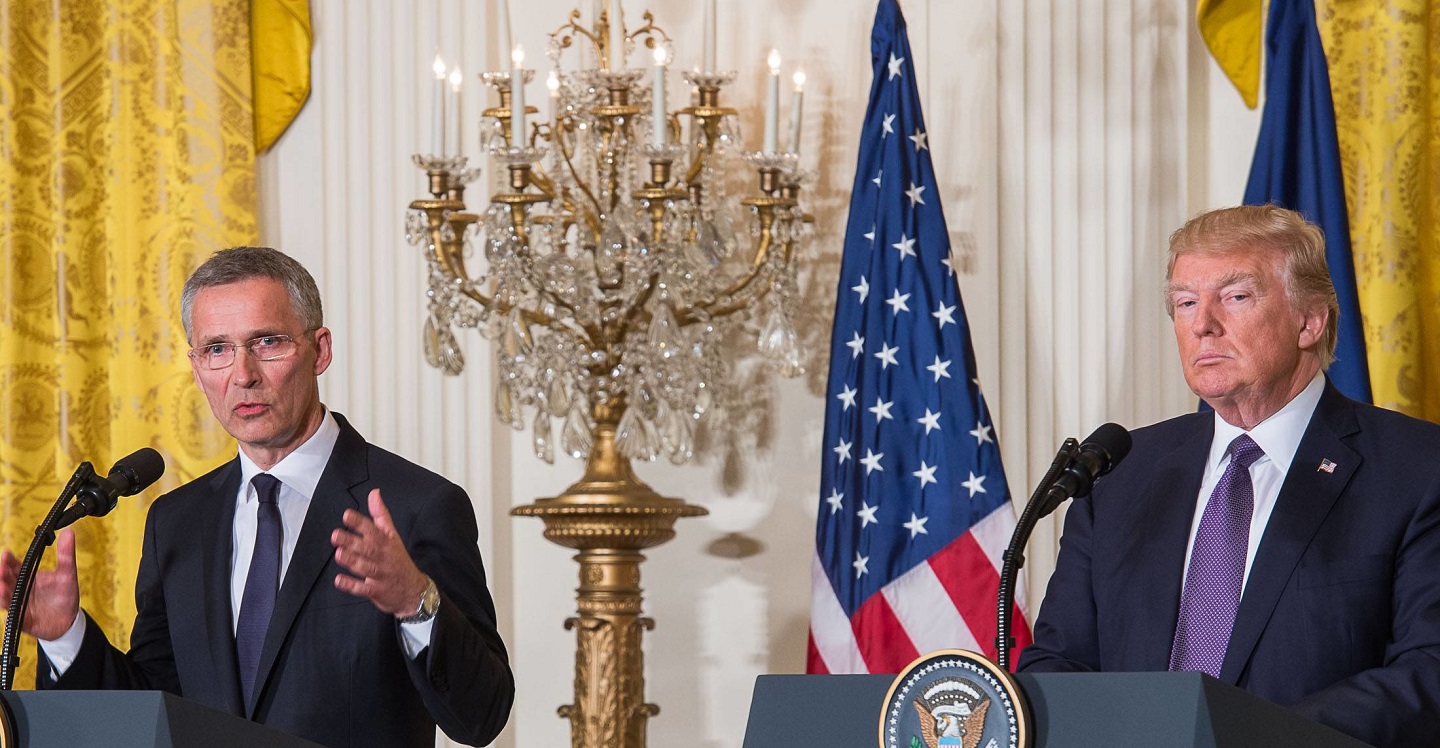
The global maritime energy corridor is currently undergoing a structural realignment driven by unilateral diplomacy and the asymmetric threat of non-state actors. Donald Trump’s recent assertion regarding a "permanent" reopening of the Strait of Hormuz—contingent upon a diplomatic exchange with Chinese President Xi Jinping—attempts to shift the security burden of the Persian Gulf from traditional Western naval dominance to a shared Sino-American equilibrium. However, the validity of this claim must be measured against the material reality of Iran’s simultaneous warnings regarding the Red Sea. The stability of these waters is not a binary state of "open" or "closed," but a complex function of insurance premiums, naval escort capacity, and the specific kinetic capabilities of regional proxies.
The Strategic Logic of the Hormuz-Xi Exchange
The Strait of Hormuz functions as the world's most critical energy transit node, facilitating the flow of approximately 21 million barrels of petroleum per day. Traditional security models relied on the U.S. Fifth Fleet to ensure freedom of navigation. The proposed shift toward a negotiated settlement involving China introduces a new variable: The Buyer’s Leverage Model.
China consumes nearly 75% of Iranian oil exports, despite international sanctions. By engaging Xi Jinping as a primary guarantor, the Trump administration seeks to weaponize China’s role as Iran's sole economic lifeline. The logic dictates that if Beijing secures the transit route, Tehran’s ability to disrupt the Strait is neutralized by its own financial dependence on Chinese demand. This creates a tripartite constraint:
- Economic Self-Preservation: Iran cannot sabotage the waterway through which its only consistent revenue stream flows.
- Great Power Accountability: China assumes the role of a regional stabilizer, a responsibility that carries significant diplomatic overhead and potential friction with Iranian hardliners.
- U.S. Resource Reallocation: A "permanent" solution allows for the pivoting of naval assets away from the Gulf and toward the Indo-Pacific.
The limitation of this framework lies in its reliance on "permanent" assurances in a region defined by tactical fluidity. A letter or a verbal agreement does not dismantle the infrastructure of disruption—mines, fast-attack craft, and coastal missile batteries—that Iran maintains.
The Red Sea Disconnect and Proximal Escalation
While the Strait of Hormuz remains the primary target for state-level maritime leverage, the Red Sea and the Bab al-Mandab Strait represent a distinct, decentralized theater of conflict. Iran’s warnings regarding this corridor highlight a fundamental divergence in maritime security: The Asymmetric Veto.
Unlike the Hormuz scenario, where a state-to-state agreement with China might exert pressure, the Red Sea is governed by the actions of the Houthi movement (Ansar Allah). Even if the Strait of Hormuz is politically "reopened," the Red Sea remains subject to a different set of kinetic variables:
- The Cost-to-Interdiction Ratio: Using low-cost loitering munitions (drones) and anti-ship cruise missiles (ASCMs), proxy forces can impose massive costs on global shipping. The expense of a naval interceptor missile (e.g., the SM-2 or SM-6) far exceeds the cost of the threat it neutralizes, creating a fiscal attrition trap for defending navies.
- The Insurance Barrier: Formal "reopenings" are meaningless if the London insurance market (Lloyd’s) does not see a corresponding reduction in risk. War risk premiums for the Red Sea have remained elevated despite various naval task forces, effectively serving as a private-sector blockade.
- The Geographic Bottleneck: The Bab al-Mandab is narrow enough that even primitive coastal artillery can threaten the 12% of global trade passing through the Suez Canal.
Defining the Energy Choke Point Vulnerability Index
To analyze the impact of these developments, one must look at the Vulnerability Index ($V_i$) of a maritime passage. This is calculated by assessing the density of transit, the proximity of hostile land-based batteries, and the presence of alternative pipelines.
$$V_i = \frac{T \times K}{A}$$
Where:
- $T$ = Daily Tonnage/Barrels.
- $K$ = Kinetic Presence (number of active missile/drone launch sites within range).
- $A$ = Availability of bypass infrastructure (e.g., East-West Pipeline in Saudi Arabia).
The Hormuz settlement focuses on reducing $K$ through diplomatic pressure on the patron state (Iran). However, the Red Sea’s $V_i$ remains high because $A$ is limited—the Suez Canal has no viable high-volume alternative for goods traveling from Asia to Europe. The Iranian warning serves as a reminder that securing one node in the energy chain does not immunize the entire system.
The China Factor: Guarantor or Opportunist?
China’s role in this "permanent" reopening is fraught with strategic ambiguity. By accepting a lead role in Hormuz diplomacy, Beijing gains significant leverage over global energy prices. This creates a Monopsony Risk for the West. If China is the primary guarantor of the Strait, they effectively hold the "kill switch" for global energy markets.
This transition from U.S. hegemony to a Sino-influenced security architecture changes the incentives for regional players. Saudi Arabia and the UAE, observing this shift, are compelled to accelerate their own "hedging" strategies—strengthening ties with the BRICS bloc while maintaining security cooperation with Washington. The result is a multipolar maritime environment where the rules of engagement are negotiated rather than enforced.
Operational Constraints of Naval Presence
The Indian Express report touches upon the warning issued by Iran, but it misses the technical constraints of modern naval warfare in these environments. The shift from blue-water operations to littoral combat has exposed several flaws in current fleet architectures:
- Saturation Thresholds: Modern destroyers have a finite number of Vertical Launch System (VLS) cells. In a high-intensity engagement involving hundreds of drones, a ship can be "mag-dry" within hours, necessitating a withdrawal for rearming.
- Sensor Degradation: The high heat and humidity of the Gulf and the Red Sea affect radar performance and thermal imaging, reducing the detection window for low-flying ASCMs.
- The Proxy Buffer: Because the Houthi and other groups operate with a degree of autonomy, Iran can maintain plausible deniability. This renders state-level agreements (like the one Trump claims) vulnerable to "accidental" escalations that serve Iranian interests without technically violating the terms of a deal with China.
Strategic Recommendation for Global Shipping and Energy Stakeholders
The claim of a "permanent" reopening of Hormuz must be viewed as a tactical stabilization effort rather than a resolution of regional tensions. The following actions are necessary for institutional actors to navigate this environment:
- Decouple Hormuz and Red Sea Risk Assessments: Do not assume that stability in the Persian Gulf translates to safety in the Red Sea. These theaters operate under different command structures and threat profiles.
- Institutionalize "Dark Fleet" Monitoring: As China’s role grows, the volume of oil moving via non-monitored, sanctioned tankers will increase. This "shadow" market will increasingly dictate the actual supply levels, regardless of official OPEC+ or U.S. projections.
- Invest in Directed Energy Defense: To solve the Cost-to-Interdiction problem in the Red Sea, naval assets must transition toward laser-based or high-power microwave systems that offer a "near-zero" cost per shot.
- Recalibrate Just-in-Time Logistics: The maritime environment is entering an era of persistent volatility. Organizations must shift toward "Just-in-Case" inventory models, factoring in a permanent 10-15% increase in transit times for sensitive cargo.
The move toward involving China in Middle Eastern maritime security represents the first major abandonment of the Carter Doctrine, which held that the U.S. would use military force to defend its interests in the Persian Gulf. By outsourcing this security to Beijing, the U.S. is not merely "opening" a waterway; it is ceding the foundational role of the global maritime hegemon. This shift will inevitably lead to a re-pricing of global risk, as the security of the world's energy supply becomes a commodity traded in the halls of Beijing and Tehran rather than enforced by the presence of a carrier strike group.