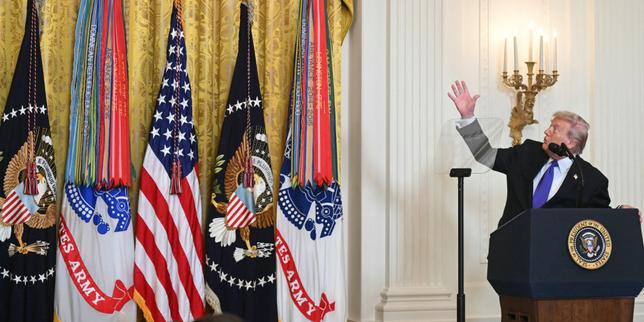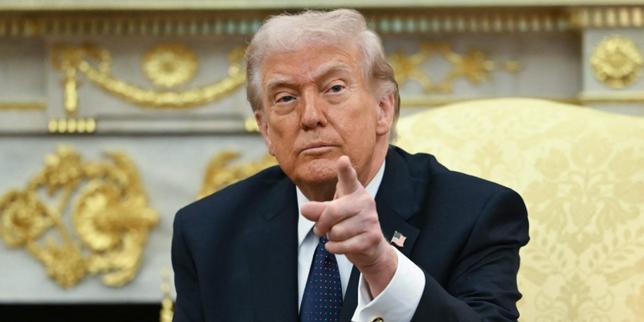
The friction between the United States and Spain regarding Iran policy is not a mere diplomatic disagreement; it is a fundamental clash between unilateral maximum pressure and multilateral institutionalism. When Donald Trump criticized Spain for its lack of support on the Iran file, he was highlighting a failure in the transatlantic "security-for-compliance" exchange. To understand this tension, one must move beyond political rhetoric and examine the structural divergence in how both nations calculate risk, economic exposure, and regional stability.
The disconnect is rooted in three distinct friction points: the mechanisms of the Joint Comprehensive Plan of Action (JCPOA), the maritime security architecture in the Strait of Hormuz, and the secondary effects of U.S. extraterritorial sanctions on European sovereign policy.
The Cost-Benefit Divergence of the JCPOA
The U.S. withdrawal from the JCPOA in 2018 shifted the American strategic objective from containment via monitoring to containment via economic strangulation. For Washington, the "flaws" in the original deal—specifically the sunset clauses and the omission of ballistic missile development—rendered the agreement a net negative for long-term U.S. interests.
For Spain and the broader European Union, the calculus remained rooted in the Security of Proximity.
- Nuclear Non-Proliferation: From a European perspective, a flawed but verified agreement provides a more stable intelligence floor than a complete vacuum.
- Migration and Regional Stability: Any escalation in the Persian Gulf has a direct, non-linear impact on Mediterranean security. Spain, situated at the gateway of North Africa and the Mediterranean, views military escalation in the Middle East as a precursor to refugee surges and regional destabilization that the U.S. is geographically insulated from.
- Economic Sovereignty: The use of the U.S. dollar as a weapon of foreign policy creates a "chokepoint" for Spanish firms. When the U.S. Treasury Department imposes secondary sanctions, it effectively dictates the trade policy of the Spanish Ministry of Economy.
The Naval Escort Dilemma: Operation Sentinel vs. European Alternatives
The specific "reproach" toward Spain often centers on maritime security. When the U.S. launched Operation Sentinel (now the International Maritime Security Construct) to protect tankers in the Strait of Hormuz, Spain’s refusal to participate was a tactical decision based on avoiding provocation cycles.
The U.S. logic follows a deterrence model: a visible, massive naval presence discourages Iranian interference with shipping. Spain, aligning with France and Germany, pursued a de-escalation model. Their concern was that joining a U.S.-led coalition would be interpreted by Tehran as an endorsement of the "Maximum Pressure" campaign, thereby making European vessels targets rather than protected entities.
This led to the creation of EMASOH (European-led Maritime Awareness in the Strait of Hormuz). By basing this mission in Abu Dhabi and keeping it operationally distinct from the U.S. Navy, Spain and its partners attempted to provide security without adopting the American political baggage. This creates a redundancy in maritime patrolling that Washington perceives as a lack of solidarity, while Madrid perceives it as a necessary firewall against unwanted conflict.
The Friction of Extraterritoriality
A primary source of Spanish hesitance is the Extraterritorial Application of U.S. Law. Spain’s foreign policy is built on the principle of "Effective Multilateralism." When the U.S. imposes sanctions that penalize Spanish companies for trading with Iran—despite that trade being legal under UN and EU law—it creates a sovereignty crisis.
The technical mechanism at play is the U.S. Financial Clearinghouse system. Since almost all global oil and gas transactions are cleared through the SWIFT system and involve U.S. correspondent banks, the U.S. exerts a "de facto" veto over Spanish energy and infrastructure contracts.
Spain’s refusal to vocally support the U.S. on Iran is a form of Passive Resistance. By maintaining a neutral or critical stance, Madrid signals to Tehran that it is an unwilling participant in the sanctions regime, attempting to preserve what little diplomatic capital remains to prevent a total collapse of regional dialogue.
Structural Constraints on Spanish Compliance
Spain cannot simply align with the U.S. position due to internal and external constraints that the Trump administration’s transactional approach often ignored:
- The EU Common Foreign and Security Policy (CFSP): Spain is bound by the collective decisions of the European Council. Unilaterally breaking away to support U.S. Iran policy would undermine Spain’s influence within the EU, which is its primary theater of power.
- Energy Diversification: While Spain is not as dependent on Iranian crude as other nations, it is highly sensitive to global price volatility. A conflict in the Strait of Hormuz, triggered by a more aggressive posture, would spike energy costs, threatening the Spanish industrial sector.
- The "Middle Power" Identity: Spain’s diplomatic brand is built on being a bridge-builder, particularly in the Mediterranean and Middle East. Aligning 100% with a disruptive U.S. policy would erode decades of Spanish "Soft Power" in the Arab world.
The Logical Failure of Transactional Diplomacy
The U.S. critique of Spain assumes that NATO allies should provide "all-domain" support in exchange for the U.S. security umbrella. However, this fails to account for the Asymmetry of Risk.
In a hypothetical conflict with Iran:
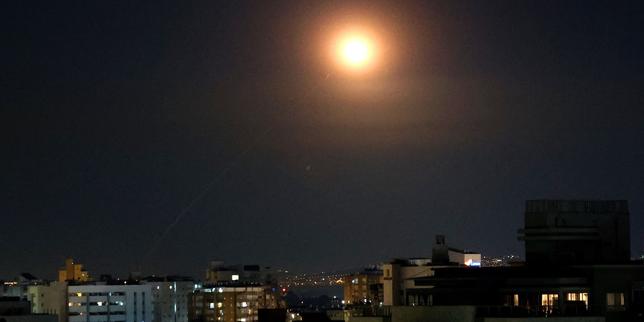
- The U.S. risks military assets and prestige, but its domestic economy remains largely shielded due to energy independence.
- Spain risks immediate economic contraction, a surge in Mediterranean migration, and the potential for domestic security threats.
The "Maximum Pressure" campaign lacked a Cooperative Incentive Structure. By withdrawing from the JCPOA without offering a multilateral alternative that protected European economic interests, the U.S. effectively asked Spain to subsidize an American strategy that increased Spanish risk.
Strategic Forecast: The Shift Toward Strategic Autonomy
The tension over Iran has served as a catalyst for what European leaders call "Strategic Autonomy." For Spain, this means developing financial and military mechanisms that are independent of U.S. control.
- INSTEX and Beyond: While the Special Purpose Vehicle (INSTEX) failed to facilitate significant trade, the logic behind it persists. Spain is increasingly looking for ways to insulate its economy from the weaponization of the dollar.
- European Defense Fund: Spain is a major proponent of integrated European defense. The goal is to move from being a "junior partner" in U.S. missions to being a core participant in European missions that prioritize European regional interests.
- Diplomatic Bifurcation: Expect Spain to maintain a "Dual-Track" policy. It will remain a committed NATO ally on the "Eastern Flank" (regarding Russia) while continuing to assert independence on the "Southern Flank" and Middle East policy.
The "reproach" from Washington is a symptom of a shifting global order where traditional alliances no longer guarantee automatic policy alignment. The U.S. must recognize that for a middle power like Spain, the cost of compliance with unilateral mandates often exceeds the benefits of the security relationship. Future cooperation will require a framework that accounts for localized economic impact and regional security externalities, rather than a top-down demand for ideological parity.
The most effective path forward for Spanish-U.S. relations on the Iran file is not forced alignment, but a coordinated division of labor. The U.S. maintains the hard-power deterrence, while Spain and the EU maintain the diplomatic backchannels. This "Good Cop/Bad Cop" dynamic is the only way to prevent Iran from exiting the Non-Proliferation Treaty entirely while ensuring that the global energy market remains insulated from sudden geopolitical shocks. Strategies that attempt to force Spain into a unilateralist box will only accelerate the fraying of the very alliance structures the U.S. seeks to lead.