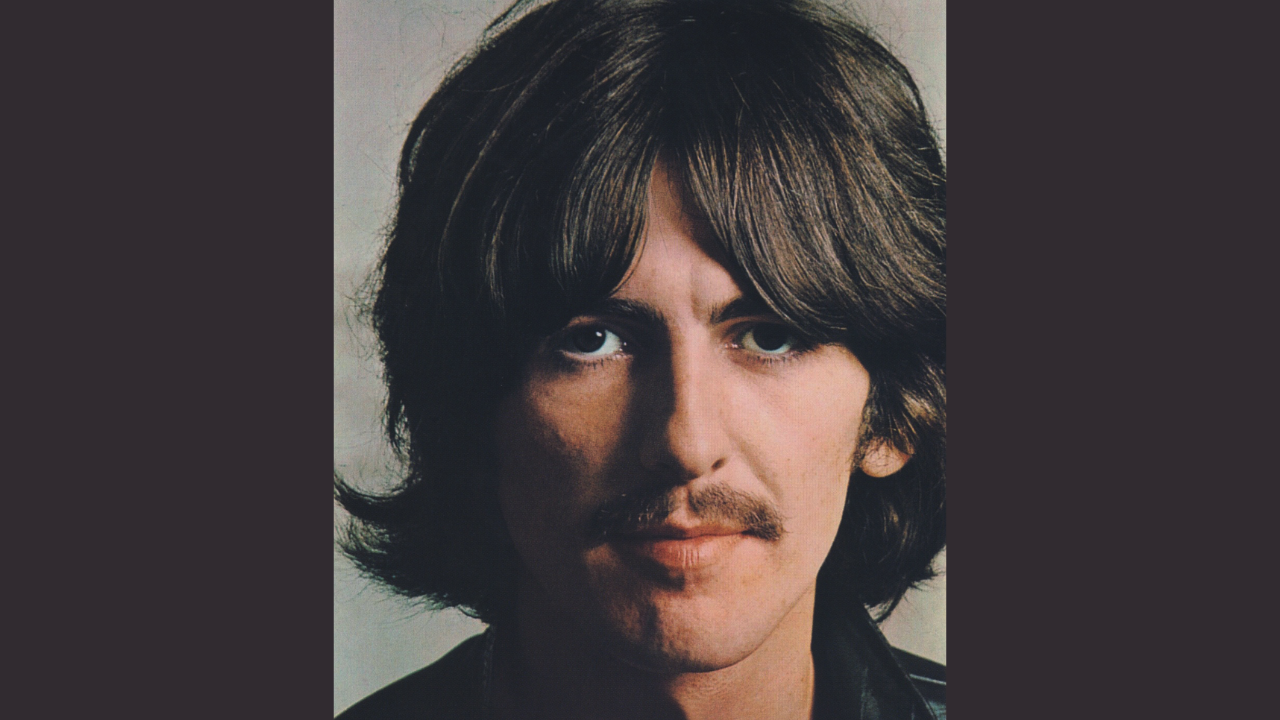
More than two decades after his death, George Harrison’s music continues to generate substantial wealth, and a massive slice of those ongoing earnings flows directly into global philanthropy. In 2024, the Material World Foundation—the charitable trust Harrison established in 1973—distributed £573,221 across arts, educational, and humanitarian initiatives. While headlines routinely focus on the astronomical valuations of legacy music catalogs sold to private equity firms, the financial architecture Harrison built operates on a completely different model. He permanently decoupled his personal creative output from private family accumulation, locking future album royalties into a perpetual funding mechanism that outlives the artist.
Most celebrity foundations function as pass-through vehicles reliant on annual galas, wealthy donor networks, or occasional one-off endowment checks. Harrison’s structure is fundamentally different because it is anchored to intellectual property. When a musician assigns specific publishing or recording royalties to a registered charity, every radio spin, vinyl reissue, and streaming play acts as a recurring micro-donation. The money never touches a personal bank account before being taxed and gifted; it is routed at the source through royalty collection societies and record label accounting departments straight into the foundation's ledger.
The Architecture of the Material World Foundation
To understand why the 2024 disbursement figure of £573,221 matters, you have to look back at the chaotic tax and music industry environment of early 1970s Britain. Top marginal income tax rates in the United Kingdom exceeded 90 percent during that era, pushing rock stars into aggressive offshore shelters or bizarre corporate arrangements. Harrison took a different route in April 1973. Ahead of releasing his chart-topping solo album Living in the Material World, he formally established the Material World Charitable Foundation.
He made a binding legal commitment. Harrison assigned his songwriting royalties from the majority of the tracks on Living in the Material World—including the massive hit single "Give Me Love (Give Me Peace on Earth)"—directly to the trust in perpetuity. This was not a promotional stunt tied to first-week sales. By transferring the underlying copyright income streams rather than just cutting a check from his personal tour profits, Harrison ensured that as long as people listened to the record, the foundation would have liquid capital to deploy.
Over the ensuing fifty years, the foundation’s asset base expanded beyond that single 1973 LP. Under the stewardship of his widow, Olivia Harrison, and their son, Dhani Harrison, the trust has absorbed additional catalog windfalls, special project proceeds, and investment returns generated by its core endowment. Because the foundation is registered with the Charity Commission for England and Wales, its annual accounts are a matter of public record, offering a rare, unfiltered look at how legacy rock money actually moves behind closed doors.
Breaking Down the £573,221 Disbursement
Public filings for the 2024 financial year reveal a disciplined, targeted approach to grant-making rather than sprawling bureaucratic overhead. Spending £573,221 in a single calendar year puts the Material World Foundation in a specific tier of UK arts and humanitarian trusts—large enough to fund transformative capital projects for mid-sized organizations, yet lean enough to avoid the administrative bloat that plagues billion-dollar institutional philanthropies.
The grants reflect a dual mandate that mirrors Harrison’s own life and worldview. On one side sits direct humanitarian relief and medical research; on the other sits music education, cultural preservation, and support for working artists.
Humanitarian Aid and Crisis Response
Harrison’s connection to international disaster relief began in earnest with the 1971 Concert for Bangladesh, an event that essentially invented the modern rock benefit concert while simultaneously exposing the legal nightmares of moving charity money across international borders. Those early legal battles with the Internal Revenue Service and British tax authorities taught Harrison and his advisors a hard lesson about compliance. Today, the Material World Foundation channels humanitarian funds through vetted, established operational partners capable of deploying aid immediately without getting bogged down in customs or tax disputes.
In recent cycles, allocations under this pillar have supported everything from emergency medical supplies in conflict zones to clean water infrastructure and children's hospital initiatives. Rather than trying to build its own field operations from scratch, the trust acts as a liquidity provider for organizations that already have boots on the ground.
Music Education and Cultural Preservation
The second major pillar of the 2024 expenditure focuses on keeping independent art and music alive. Harrison famously bankrolled Monty Python’s Life of Brian through HandMade Films simply because he wanted to see the movie get made, establishing a lifelong pattern of backing creative projects that traditional studios deemed too risky.
Within the foundation’s current grant-making, that ethos translates into funding youth music programs, providing instruments to underfunded public schools, and supporting archival film restoration. By backing grassroots music education, the trust directly addresses a widening economic gap in the arts: the reality that rising instrument costs, venue closures, and slashed public arts budgets are steadily pricing working-class kids out of the music industry.
Why Royalty-Backed Philanthropy Beats Traditional Endowments
In the traditional non-profit world, foundations rely on an endowment invested in public equities and government bonds. Typically, a foundation aims to spend roughly 4 to 5 percent of its total asset value each year so the principal continues to grow alongside inflation. When the stock market tanks, charitable grants inevitably shrink the following year.
A royalty-backed foundation operates with an entirely different risk profile. Music copyrights have historically demonstrated low correlation with traditional stock market swings. People listen to classic rock during economic booms, and they listen to it during recessions. In fact, streaming consumption of catalog music—defined in the industry as tracks older than 18 months—has grown steadily every single year for the past decade, now accounting for more than 70 percent of total music consumption in major Western markets.
Consider how the mechanics work in practice. Every time "Give Me Love" is synced in a film, played on terrestrial radio, pressed onto 180-gram vinyl for an anniversary box set, or streamed on Spotify, mechanical and performance royalties are generated. Because those rights sit inside the foundation’s ecosystem, the trust benefits from two distinct compounding engines:
- Inflation-adjusted streaming payouts: As subscription prices for digital service providers rise globally, the per-stream payout pool expands, lifting the baseline annual income of high-performing catalog tracks without requiring any new studio recording costs.
- Physical reissue premiums: Legacy vinyl buyers routinely pay £30 to £100 for remastered editions and deluxe box sets, generating far higher per-unit mechanical royalties than standard compact discs ever did in the 1990s.
While a traditional endowment manager has to worry about bond yields and interest rate cuts, the trustees of a music royalty foundation simply have to ensure the catalog remains culturally visible, properly remastered, and vigilantly protected against copyright infringement.
The Hidden Friction of Legacy Music Charities
It is easy to romanticize a posthumous royalty pipeline, yet running a charity tied to intellectual property involves significant operational friction. The music industry’s accounting infrastructure was never built for seamless charitable distribution, and trustees face constant hurdles ensuring every penny owed actually arrives.
Global royalty collection is notoriously fragmented. A single stream in Brazil, a radio broadcast in Germany, and a television synchronization in Japan each pass through different Performance Rights Organizations (PROs), mechanical licensing agencies, and sub-publishers before reaching the rights holder. Each intermediary takes an administrative commission, and accounting lags can stretch anywhere from six months to two years. For a charity trying to budget annual grants like the £573,221 spent in 2024, cash flow timing requires careful reserve management.
Furthermore, tax law remains a minefield. Assigning royalties to a charity does not automatically shield every revenue stream from international withholding taxes. When royalties cross borders—say, from a US record label to a UK-registered charity—bilateral tax treaties have to be invoked properly, or else up to 30 percent of the gross income can be withheld at the source before the charity ever sees it. Maintaining clean audit trails across dozens of territories requires specialized legal and accounting counsel, which eats into the net funds available for actual grant-making.
There is also the question of governance and mission drift. When an artist dies, the people left running their foundation face competing pressures. Record labels want to maximize commercial exploitation through aggressive licensing, while family trustees have to balance commercial viability against the artistic integrity of the deceased founder. Licensing a George Harrison track for a fast-food commercial might generate a quick £250,000 windfall for the foundation, yet doing so would violate the core ethos of the man who wrote the song. Protecting the brand long-term means turning down easy money, a discipline that requires trustees who are financially secure enough not to chase every licensing check.
Comparing Celebrity Philanthropy Models
To appreciate the durability of Harrison’s setup, it helps to contrast it with how other major musicians handle charitable giving. Most high-net-worth entertainers rely on one of three standard models, each with distinct vulnerabilities.
| Philanthropy Model | Primary Funding Source | Longevity Outlook | Key Vulnerability |
|---|---|---|---|
| Royalty Assignment (Harrison Model) | Perpetual copyright income from specific works | Indefinite (runs for life of copyright + 70 years) | Catalog streaming fatigue or global royalty accounting leaks |
| Event-Driven Charity | Ticket sales, auctions, and corporate sponsorships | Short-to-medium term; fades when founder retires | High overhead costs; vulnerable to economic downturns |
| Donor-Advised Fund (DAF) | Lump-sum cash or appreciated stock transfers | Limited to the size of the initial capital injection | Zero public transparency; no legal requirement to distribute funds annually |
| Brand Partnership Split | Percentage of merch, tour, or product line revenue | Tied strictly to active touring or commercial cycles | Stops generating cash the moment the artist leaves the road |
The Donor-Advised Fund (DAF) has become the default choice for modern celebrities because it offers immediate tax deductions without the regulatory headache of running an independent public charity. However, DAFs face mounting criticism from watchdog groups because money can sit inside them indefinitely without ever reaching a working non-profit. Harrison’s registered UK trust operates under strict statutory oversight. Its trustees must file annual reports detailing exact expenditure, governance decisions, and grant recipients, ensuring accountability long after the founder’s passing.
The Catalog Buyout Boom and What Harrison Avoided
Over the past five years, the music business has been defined by massive catalog acquisitions. Investment giants like Blackstone, Apollo, and Sony Music have spent billions buying up the publishing and master recording rights of Bob Dylan, Bruce Springsteen, Queen, and Pink Floyd. For aging artists, selling a catalog for $300 million or $500 million makes cold financial sense: it converts decades of uncertain future royalty checks into immediate, upfront capital taxed at favorable capital gains rates, while sparing their heirs from fighting over intellectual property rights.
Yet that corporate consolidation comes with an inevitable trade-off. Once a catalog is absorbed into a private equity portfolio, the sole mandate of the new owner is maximizing internal rate of return. Songs are aggressively pushed into advertisements, video games, and algorithmic playlists to recoup the acquisition price.
Because Harrison locked key copyrights into the Material World Foundation half a century ago, those assets are effectively insulated from speculative buyouts. The trustees do not answer to institutional shareholders demanding quarterly yield growth. They answer to a charitable charter written in 1973. The £573,221 distributed in 2024 proves that when intellectual property is structured as a public good rather than a speculative financial asset, a single album can quietly sustain real-world humanitarian and educational work for generations without ever being sold off to the highest bidder.
Auditing the Real Impact of Legacy Trusts
Financial figures in charity filings only tell half the story. Spending £573,221 is commendable, yet seasoned charity analysts always look closely at two critical ratios: the expense-to-grant ratio and the reserve-to-spending ratio.
In smaller celebrity foundations, it is alarmingly common to see 30 to 40 percent of annual revenue consumed by executive salaries, travel expenses, and gala production costs. Because the Material World Foundation operates with a tight governance structure led by family trustees who do not draw inflated executive compensation packages from the trust, an exceptionally high percentage of incoming royalty revenue flows directly out the door to external grantees.
At the same time, maintaining healthy financial reserves ensures the trust is never forced to slash funding during years when no major Beatles or solo Harrison archival box sets hit the market. Legacy music revenue is naturally cyclical—spiking around major anniversaries, documentary releases like Peter Jackson’s Get Back, or remastered vinyl campaigns, and leveling off in quieter years. By smoothing out those revenue peaks through disciplined reserve management, the foundation maintains steady, predictable grant cycles year after year.
For artists, estate planners, and entertainment attorneys watching the current wave of billion-dollar catalog deals, Harrison’s 1973 blueprint offers a compelling alternative to cashing out. You do not need a massive corporate infrastructure or an army of fundraisers to build a lasting philanthropic engine. You only need a clear legal mandate, a body of work that endures, and the discipline to lock the doors before the private equity bidders arrive.