The humidity in Dakar doesn’t just sit in the air; it clings to your skin like a second shirt, thick with the scent of salt from the Atlantic and diesel exhaust from passing car rapides. It was exactly like this twenty-four years ago. I was sitting on a plastic jerrycan outside a neighborhood boutique, swatting at flies, watching a tiny cathode-ray television powered by a sputtering car battery.
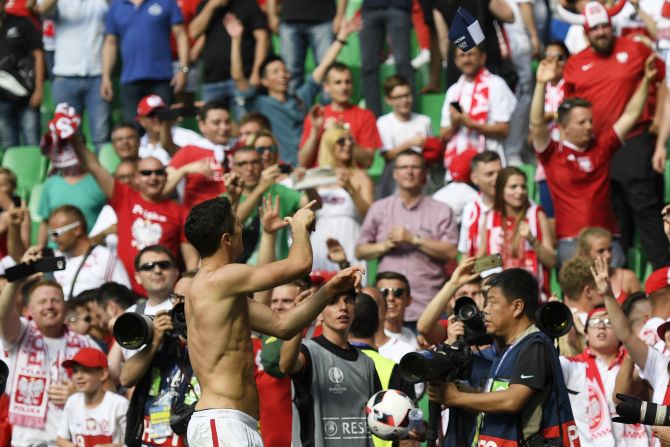
Papa Bouba Diop scored. The world cracked open.
That single goal against France in the opening match of the 2002 World Cup wasn't just a sports highlight. It was an eviction notice served to our former colonial masters on a patch of grass in Seoul. For weeks, the entire nation of Senegal lived in a collective, waking fever dream. We didn’t just walk; we floated. When you have felt that specific brand of lightning strike your life, you spend the rest of your days looking at the sky, waiting for the clouds to turn grey again.
Now, on Day 6 of the tournament, the calendar has looped back on itself. The fixture is set. Senegal versus France.
The sports networks are treating this like a math problem. They line up the data points, the market values of the squads, the expected goals metrics, and the tactical heat maps. They call it a "clash of styles." They talk about schedules, rest windows, and Group Stage permutations. But they are analyzing a ledger while ignoring the ghost that stands right next to the calculator.
To understand what happens when these two teams step onto the pitch, you have to look past the pristine white lines of the stadium and into the living rooms of Paris and the dusty streets of Pikine. This is not a game. It is a family argument played out with a leather ball.
Consider the composition of the modern French team. Half the squad carries Africa in their surnames, their skin tone, and their cadence. They are the children of immigrants who grew up in the banlieues—the concrete housing projects ringing Paris—where football is the only reliable passport out of poverty. For these players, representing Les Bleus is a complicated dance of loyalty, identity, and relentless pressure to prove they belong to a republic that often eyes them with suspicion.
On the other side stand the Lions of Teranga. Many of them were born in Senegal but polished in the academies of Europe. They speak French with the same Parisian accents as their opponents. They share agents, hair stylists, and Champions League dressing rooms.
When they face each other, the tactical boards melt away. It becomes a mirror match where every player knows his opponent’s favorite feint, his weaknesses, and his fears.
The dry previews will tell you that France enters this match as the heavy favorite. They will point to a terrifyingly deep roster, a midfield that functions like a Swiss watch, and an attacking line that can turn a half-chance into a goal before the stadium announcer finishes breathing. That is the reality on paper.
But football has a strange way of bending under the weight of collective memory.
Imagine a young boy in Dakar right now. Let’s call him Moussa. He is ten years old, wearing a faded Sadio Mané shirt that hangs past his knees. He has heard the story of 2002 so many times it feels like a religious text. He wasn’t alive when Diop danced around the corner flag, but he can tell you exactly how the ball bobbled before it hit the net. For Moussa, and for millions like him, the match on Day 6 is not an underdog story. It is a destiny fulfillment seminar.
That psychological weight is a double-edged sword. It can elevate a team to do things their lungs and muscles should logically refuse. It can make a defender stretch an extra two inches to block a shot, or give a goalkeeper the supernatural reflex to tip a ball over the crossbar.
But history is a heavy backpack to wear while trying to sprint.
The danger for Senegal is that they aren't playing the France of 2002. That French team was complacent, aging, and bloated on their own past successes. The current iteration of Les Bleus is a cold, efficient machine run by an establishment that treats sentimentality like a virus. They do not look at Senegal and see a romantic narrative. They see three points required to clear the group stage early so they can rest their stars for the knockout rounds.
If you look at the schedule, the timing of this match adds another layer of slow-burning tension. It is Day 6. The initial adrenaline of the tournament's opening ceremonies has evaporated. The fatigue of travel and intense training is beginning to pool in the players' calves. The group standings are starting to harden into permanent shapes. A mistake here isn't just a bad afternoon; it's a plane ticket home.
The pundits like to ask if Senegal can stun France again. The very question contains a trap. It suggests that victory requires a miracle, a cosmic glitch that happens once every few decades.
But miracles are poor tactical strategies. Relying on them is like trying to pay your rent with lottery tickets.
To win this time, Senegal cannot rely on the spirit of Papa Bouba Diop or the nostalgic energy of a nation. They have to match the cold, clinical execution of the French. They have to survive the first twenty minutes, where France traditionally tries to suffocate their opponents with high possession and aggressive pressing. They have to accept that they will spend long stretches of the match without the ball, suffocating under the tactical discipline required to close down spaces.
The real game will be won in the quiet, untelevised moments. It will be decided when a midfielder decides to make a sixty-yard recovery run when his lungs are burning. It will be decided in the split-second of hesitation when a French defender looks at a roaring Senegalese attacker and sees, for a fraction of a moment, the ghost of a defeat his older brothers told him about.
The sun is going down over the Atlantic now, casting long, purple shadows across the beaches of Dakar where hundreds of kids are still kicking mismatched balls into goals made of driftwood. The televisions are being tuned. The plastic chairs are being lined up in front of the boutiques.
We know the odds. We have read the charts. We know that logic dictates a French victory, smooth and corporate, celebrated with polite applause in Parisian bistros.
But as the referee blows the whistle to start Day 6, nobody in Dakar is looking at the logic. We are looking at the sky, waiting for the lightning to strike twice in the exact same place.