The screen flickers in a darkened living room. A local candidate stands at a podium, hair neatly combed, eyes bright with earnest promise. She is talking about clean water, better schools, lower taxes. Her voice is steady, rich with conviction. But she never existed. Not quite like this, anyway.
Welcome to the newest era of campaigning, where the most persuasive person in the race is a collection of pixels and mathematical weights.
Consider a hypothetical voter named Marcus. Marcus sits on his worn couch after a twelve-hour shift at the warehouse, phone in hand. He scrolls through his feed, thumb moving in that rhythmic, zombie-like twitch we all know too well. A video pops up. A smiling politician looks straight into the camera, acknowledging Marcus’s exact neighborhood, noting the potholes on Main Street, promising a fix by autumn. It feels personal. It feels intimate. It is entirely synthetic.
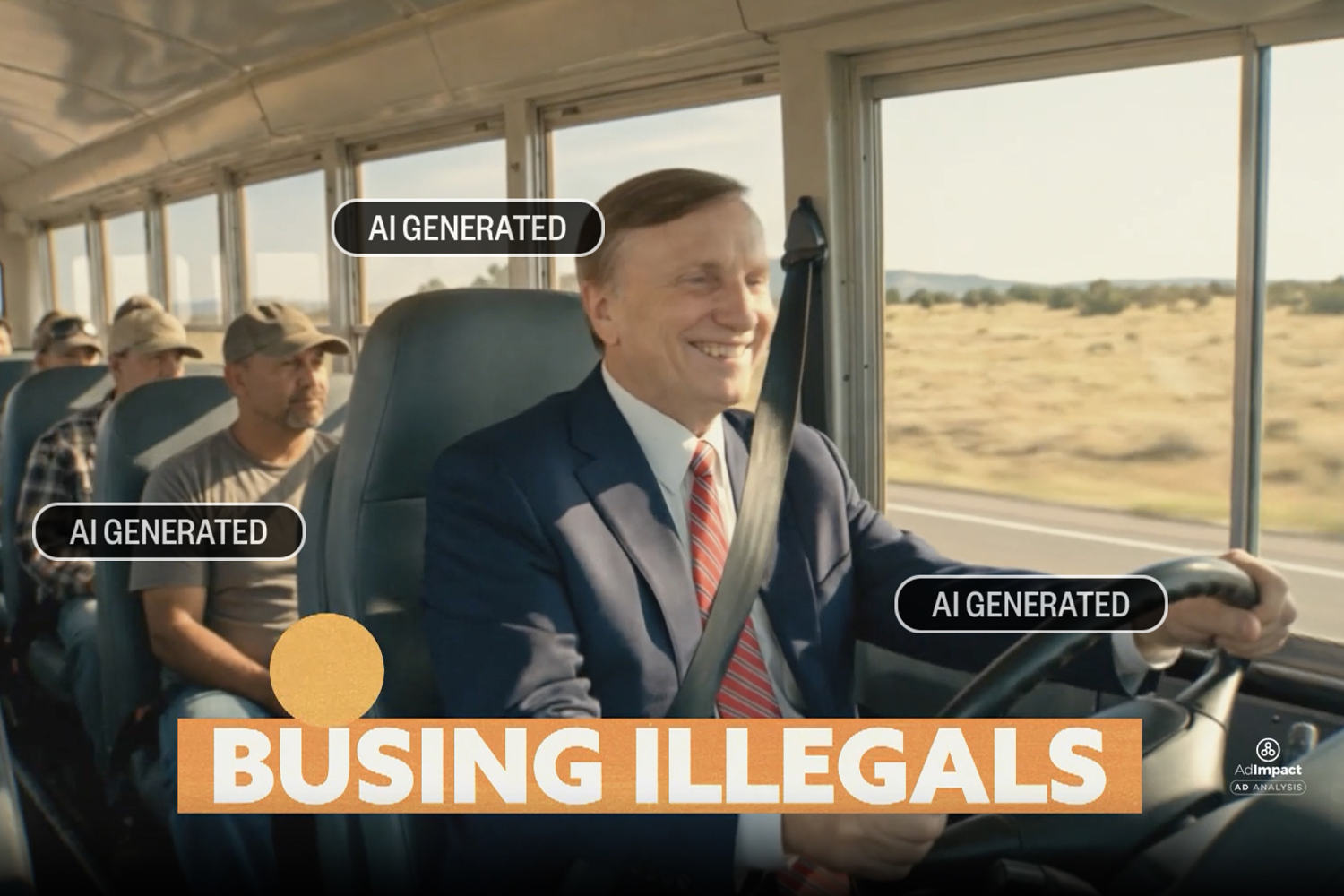
Generative artificial intelligence has slipped past the velvet ropes of political advertising. Campaigns are no longer just hiring speechwriters and focus-group coordinators; they are renting server time. With a few text prompts, political action committees and candidates can generate hyper-realistic video ads featuring flawless speeches, simulated crowds, and fabricated endorsements.
The appeal from a campaign strategist's desk is obvious. Why spend ten thousand dollars renting a production crew, booking a venue, and coordinating schedules when an algorithm can render a broadcast-quality ad in ninety seconds? Why risk a candidate stumbling over a difficult question when you can synthesize a pristine delivery where every pause is calculated to maximize emotional resonance?
Efficiency is the siren song of modern technology. Yet, efficiency comes with a steep, hidden tax.
To understand the weight of this shift, we have to look at how we process trust. For generations, human beings have relied on sensory cues to evaluate leaders. We listen for the crack in a voice, watch for the nervous blink, judge the awkward pause. These biological markers told us, however imperfectly, that a real human being was standing behind those words, accountable to reality.
Synthetic media strips away those guardrails. It creates a frictionless illusion of authenticity.
Let us walk through a common scenario. A mid-tier congressional campaign is trailing in the polls three weeks before election day. The war chest is nearly empty. Traditional television buys are out of reach. The campaign manager turns to an inexpensive video generation tool. Within hours, they produce dozens of micro-targeted variations of an ad. To young voters on TikTok, the candidate appears casual, speaking in slang with a lo-fi filter. To older voters on Facebook, the same candidate appears in a crisp, traditional broadcast format, speaking formally about fiscal responsibility.
Every version is tailored to exploit specific psychological triggers, playing on existing fears or localized grievances. None of them represent a single, unified message delivered by a real person to a public square.
Instead, politics fractures into a million personalized Truman Shows. We no longer share a common reality of what our candidates said, promised, or looked like.
Some defenders argue that political ads have always been heavily curated. Airbrushing, spin doctors, selective editing, and dramatic voiceovers are ancient traditions in campaigning. From the infamous "Daisy" ad of 1964 to the slickly produced biographical spots of the modern era, campaigns have always sold versions of a candidate rather than unvarnished truth.
That argument misses the fundamental leap we have just made.
There is a vast gulf between putting lipstick on a pig and inventing a pig out of thin air. Editing an existing video bends reality; generative AI conjures a completely new reality from nothing. When a voter can no longer trust that a video showing a candidate committing a gaffe—or conversely, delivering an inspiring speech—actually happened, the baseline for public discourse shatters.
We enter what information theorists call the liar's dividend. When everything can be faked, anything authentic can be dismissed as a deepfake. If a politician is caught on tape saying something indefensible, their team can simply shrug and claim it was generated by their opponents. Truth becomes a matter of partisan preference rather than verifiable fact.
The psychological toll on the electorate is exhausting. Walk down any suburban street a week before an election and you can feel the civic fatigue hanging in the air like humidity before a storm. People have stopped answering their phones. They flip past commercials with a grimace. They assume the worst of everyone asking for their vote.
When you make the medium entirely malleable, you teach people to believe in nothing.
And that cynicism is dangerous. Democracy requires a stubborn, messy kind of faith. It requires believing that your vote connects to a shared outcome, that the people asking to lead you are bound by the same physical laws and moral consequences as you are.
When a campaign relies on a ghost to make its case, that bond frays.
We are standing at a peculiar crossroads. The tools of creation have outpaced our cultural vocabulary for truth. Regulatory bodies are scrambling to draft disclosure rules, requiring watermarks or disclaimers on synthetic political ads. Tech platforms are testing detection algorithms. But regulation always plays catch-up with innovation. By the time a law passes to ban a specific type of digital deception, the technology has already evolved three generations past it.
The real defense will not come from Washington committee rooms or Silicon Valley software patches. It will come from a renewed skepticism among voters.
Next time you stop scrolling to watch a political ad, pause for a beat. Notice the lighting. Listen to the cadence. Ask yourself not just whether the message makes you angry or hopeful, but whether the person speaking to you has ever had to weather an awkward pause in a real, unscripted room where they couldn't hit undo.
The ghost in the ballot box only has power as long as we pretend we cannot see the wires.
A cold autumn wind rattles the dry leaves against the windowpane. Down the street, a solitary yard sign leans slightly to the left in the damp grass, bleached by the sun, battered by the rain, completely ordinary, and undeniably real.