Silence.
If you have ever stood near the catchfence at Daytona International Speedway during the final laps of a pack race, you know that silence is not a word that belongs anywhere near Volusia County. When forty stock cars draft past at two hundred miles an hour, the air does not merely move; it punches you in the sternum, vibrates the fillings in your teeth, and smells sharply of scorched rubber and high-octane racing fuel. Yet for more than a decade, if you listened closely beneath the thunder of Chevy small-blocks, Ford Yates engines, and Toyota TRD powerplants, there was a specific, unmistakable frequency missing from the chorus.
The Hemi was gone.
When Dodge officially announced its return to the NASCAR Cup Series, slated to roar back onto the high banks beginning at the Daytona 500, the press releases arrived dressed in the sterile, predictable language of corporate boardrooms. Executives spoke of market alignment, brand heritage, and OEM competition. Industry analysts immediately pulled out their spreadsheets to calculate wind-tunnel hours, charter valuations, and manufacturer points. Those numbers matter, of course. In modern motorsports, nothing moves without nine-figure budgets and aerodynamic simulations.
To treat this moment as a mere business transaction, however, is to miss the entire point of why people show up to a race track in the first place.
This is not just about sheet metal and sponsorship decks. It is about a fractured love affair between a blue-collar American automaker and a fanbase that spent fourteen years feeling like it had been left standing at the altar.
The Empty Stall in the Garage
To understand why the news of Dodge’s return hit the NASCAR garage like an electrical shock, you have to rewind to November 2012.
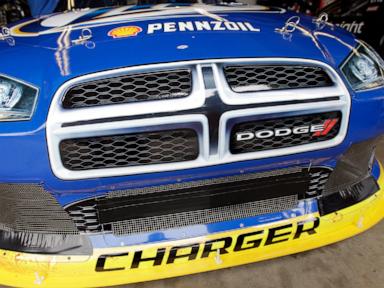
Brad Keselowski had just wrestled his No. 2 Miller Lite Dodge Charger to the Sprint Cup Series championship at Homestead-Miami Speedway. It was a triumph of grit, speed, and mechanical defiance—a storybook ending that had only one flaw. Everyone in the garage already knew the book was being slammed shut before the champagne dried on the roof of the car. Penske Racing had signed a deal to switch to Ford for 2013, and Dodge, still bruised from the financial fallout of the 2008 automotive collapse and its subsequent restructuring under Fiat, couldn't find another top-tier partner willing or able to carry the banner.
So they walked away. At the absolute peak of the mountain, the Pentastar packed its tools and went home.
Consider a hypothetical character—let’s call him Earl—who has worked as a chassis fabricator in Mooresville, North Carolina, since the late nineties. Earl isn't a millionaire team owner; he’s the guy with permanent grease embedded under his fingernails who spent fifteen years hanging Dodge bodies, learning the exact quirks of how air spilled over the nose of an Intrepid, a Charger, or an Avenger. When Dodge left after 2012, Earl didn't lose his job—he simply walked into the shop on a Monday morning and began stripping red-and-white decals off toolboxes, replacing them with blue ovals or bowties.
"You adapt because you have to eat," Earl would tell you over lukewarm coffee in a breakroom overlooking a shop floor. "Motorsports doesn't wait around for your feelings. Still, for years after, whenever we unloaded at Talladega or Daytona, it felt like someone had left a chair empty at Thanksgiving dinner. You had three manufacturers fighting it out, and everybody knew there was a fourth seat that belonged to Mopar."
That empty chair created an invisible imbalance across the entire sport. For over a decade, the NASCAR Cup Series operated as a three-manufacturer ecosystem: Chevrolet, Ford, and Toyota. While the racing remained fiercely competitive, the tribalism that fuels stock car racing—the glorious, irrational devotion to a badge on a grille—lost one of its fiercest tribes. Fans who drove Ram trucks to the campground or parked Challengers in the infield had nowhere to direct their loyalty on Sunday afternoons. Some drifted away from the television broadcasts. Others grudgingly adopted a secondary driver, though their hearts were never fully in it.
Why Returning Now Makes Mechanical and Financial Sense
If the emotional pull to return never truly vanished, the cold, hard math kept the doors locked for years. Entering the NASCAR Cup Series is not like deciding to sponsor a local dirt track; it is closer to launching a mid-sized aerospace program.
Historically, a new or returning manufacturer faced a terrifying financial cliff. Under older generations of NASCAR stock cars, OEMs had to invest staggering sums into bespoke chassis development, proprietary suspension geometry, and endless bespoke body templates just to avoid getting lapped by teams with twenty years of institutional memory. For a company navigating the brutal transition toward electrification and shifting global automotive markets under the Stellantis umbrella, writing a blank check for old-school stock car development looked like financial malpractice.
Then NASCAR changed the architecture of the sport.
Think of the difference between building a custom-tailored suit from raw wool versus buying a spec-cut frame that every tailor in town is legally required to use. That, in simple terms, is what the Next Gen race car did to NASCAR’s economic barrier to entry. Introduced in 2022, the Next Gen platform standardized the chassis, suspension components, transaxle, and aerodynamic underbody across every single team in the garage.
Suddenly, a returning manufacturer did not need to spend three years and hundreds of millions of dollars reinventing the wheel—or the control arm. The playing field had been leveled at the foundational mechanical layer. To compete at the highest level, Dodge’s engineering division now needs to focus primarily on three critical areas:
- The Engine: Developing and homologating a robust, reliable 358-cubic-inch pushrod V8 capable of surviving five hundred miles of wide-open throttle at Daytona without turning its internal components into metallic confetti.
- The Aero-Body: Sculpting a composite body shell—most logically modeled after the muscular, wide-shouldered silhouette of the modern Dodge Charger—that hits NASCAR’s strict downforce and drag windows in the wind tunnel.
- Team Alignment: Securing a competitive anchor team—and the elusive NASCAR charters required to guarantee entry into every race—so the cars don't show up to Daytona just to fill out the back of the grid.
I will admit, looking at the sheer complexity of modern NASCAR homologation, there were moments over the past five years when a Dodge return felt like pure vaporware. Every winter, rumors would swirl through the Daytona infield like coastal fog. Someone saw a Stellantis executive in Charlotte. Someone heard an engine dyno humming in Auburn Hills. And every February, the green flag would drop on the Daytona 500 with only Chevys, Fords, and Toyotas on the track. After a while, even the most optimistic observers grew tired of crying wolf. Skepticism became the safest posture in the press box.
Yet beneath the surface, the corporate logic was quietly clicking into place. Dodge’s brand identity has always been built on unapologetic American muscle, loud exhaust notes, and visceral performance—even as the automaker experiments with electric muscle platforms alongside internal combustion. In an era when automotive marketing often feels sanitized and indistinguishable, there is no sharper megaphone for raw performance than having a brand emblem leading a 40-car pack down the backstretch at Daytona in front of millions of viewers.
The Crucible of February
Which brings us to the venue itself. Dodge could have chosen a quieter soft-launch—a mid-season debut at a mile-and-a-half intermediate track like Charlotte or Kansas, where teams can test setups in relative privacy and quietly work out the inevitable mechanical gremlins.
Instead, they chose the Daytona 500.
There is no hiding at Daytona. None. The season opener is not a warm-up act; it is the Super Bowl of stock car racing happening on Week One. Every camera lens in motorsports is pointed at the 2.5-mile tri-oval. Every flaw in engine cooling, every millimeter of miscalculated drag in the composite nose, every pit-road communication hiccup is magnified under the glare of national television and a sold-out grandstand of over a hundred thousand people.
To truly grasp the stakes of that debut, imagine a young engine builder—let’s call her Maya—standing on pit road during Daytona Speedweeks. Maya grew up watching archival footage of Richard Petty’s Petty Blue Plymouth Superbird and Bobby Allison’s red-and-gold Matador, though she cut her teeth in modern computational fluid dynamics and valve-train telemetry. For the past eighteen months, her entire existence has revolved around dyno cells in Michigan and wind-tunnel sessions in North Carolina. She has missed birthdays, eaten dinner out of vending machines, and stared at cylinder-head temperature graphs until the numbers blurred behind her eyes.
When the command is given to start engines before the Daytona 500, Maya won't be thinking about Stellantis’s quarterly earnings report or market share in the Midwest. She will be holding her breath, listening through her headset for the unmistakable bark of an engine she helped breathe life into, praying that a gasket holds at 9,000 RPM when the draft sucks the pack into Turn 1 at 202 miles per hour.
That is the human reality behind every press release. A manufacturer doesn't return to NASCAR; people build a program from nothing and throw it into the deepest water in American racing.
What Changes on the Track
For fans and competitors alike, Dodge’s arrival is far more than a nostalgic victory lap. It fundamentally alters the competitive physics of Sunday afternoons.
Superspeedway racing at Daytona and Talladega is governed entirely by manufacturer alliances. Because aerodynamic drafting is so critical, drivers no longer race as lone wolves; they organize into tight, bumper-to-bumper trains orchestrated by Chevy, Ford, and Toyota pit-box strategists. When a pack pits under green-flag conditions, the Chevrolets peel off together, the Fords pit together, and the Toyotas stick to their own lane.
Introducing a fourth manufacturer disrupts that delicate choreography.
Suddenly, there is a fourth train on the tracks. Alliance math gets messy. When a Dodge driver needs a drafting partner in the closing laps of the Daytona 500, do they have enough fellow Mopars in the lead pack to form a cohesive line, or are they forced into uneasy, temporary truces with a lone Ford or Chevy driver who happens to be in the wrong lane? Those split-second alliances—and the inevitable betrayals when someone jumps out of line with two laps to go—are the exact ingredients that turn good races into unforgettable ones.
Beyond the track, the ripple effects hit the business of the garage immediately. A fourth OEM means fresh manufacturer funding flowing into race teams, intensified competition for elite drivers whose contracts are coming up for renewal, and a renewed battle for top engineering talent across North Carolina. When three manufacturers are bidding for the services of a championship-caliber crew chief, salaries stay predictable. When a fourth hungry giant walks into the room with a mandate to win quickly, everyone’s value goes up overnight.
And then there is the grandstands.
If you walk through the Daytona fan zone on race morning, you can read the health of the sport on the t-shirts and hats of the crowd. For fourteen years, the merchandise haulers lined up along the midway were missing a splash of bright Hemi Orange and Plum Crazy Purple. Now, those haulers are coming back. Grandfathers who watched the winged warriors dominate Daytona in 1970 will stand beside grandkids wearing brand-new hats, pointing toward the starting grid with a sudden, fierce stake in the outcome.
The Sound Coming Off Turn Four
We live in an era where most cultural institutions seem determined to sand off their rough edges, smooth out their noise, and become entirely predictable. Motorsport is supposed to be the antidote to that—a place where loud, imperfect, fiercely tribal machines push right up against the edge of mechanical failure in pursuit of a trophy.
When Dodge packed its bags after 2012, NASCAR didn't die, nor did it stop producing thrilling races. But it lost a piece of its soul—an unruly, muscular, deeply American piece of its history that simply could not be replicated by anyone else.
Come February, when the pace car ducks onto pit road and forty engines roar toward the green flag at Daytona International Speedway, the air in Volusia County is going to feel a little heavier. The vibration in the grandstands is going to carry a familiar, gravelly undertone that has been absent for far too long.
Look closely at the front bumper of that Charger as it dives into the tri-oval at two hundred miles an hour, nose tucked inches behind the car ahead, fighting the violent buffeting of the draft. That isn't just carbon fiber and corporate branding slicing through the Florida air. It is a ghost that finally decided to come home.