The steering wheel turned to the left, smooth and deliberate, while the driver’s seat remained entirely empty.
Outside the tinted glass of the white sedan, the humid night air of Shenzhen’s Nanshan District hummed with the low, electric thrum of a city that rarely sleeps. Neon characters bled pink and electric blue across the wet asphalt. Inside the cabin, there was no small talk about the traffic, no faint scent of stale cigarette smoke, and no pair of tired eyes glancing back through the rearview mirror. Just a small dashboard screen displaying a three-dimensional, wireframe map of the surrounding streets—cars rendered as neat blue boxes, pedestrians as moving yellow cylinders, and the road ahead as a clean, glowing ribbon of calculated certainty.
To understand what is happening in southern China right now, you have to stop looking at the machines as mere gadgets and start seeing them as a rehearsal.
For decades, the West watched Shenzhen from a comfortable distance, dismissing it first as a sleepy fishing village across the border from Hong Kong, and later as the world’s bargain-basement workshop—the place where cheap plastics and knockoff electronics were bolted together under harsh fluorescent lights. That mental picture is dangerously out of date. When delegates and world leaders gather in Shenzhen for the 2026 Asia-Pacific Economic Cooperation summit, they are not stepping into a factory town. They are walking onto a live, city-scale stage built to showcase a profound shift in global power.
I spent three weeks navigating these streets last autumn, and the most unsettling thing wasn't the sheer volume of automation. It was how quickly the extraordinary became boring.
By my fourth day, I stopped filming the driverless taxis with my phone. By the seventh, I was annoyed when a human-driven car took thirty seconds longer to merge into traffic than the autonomous fleet operated by Baidu’s Apollo Go or Pony.ai. That psychological surrender—the speed with which human suspicion melts into routine convenience—is the invisible currency Shenzhen is minting. While other nations are still debating regulatory frameworks in committee rooms and testing prototypes behind chain-link fences, this metropolis of nearly eighteen million people has turned its public boulevards into a living laboratory.
The Weight of an Empty Seat
Consider a hypothetical scenario that plays out thousands of times every evening across districts like Qianhai and Futian. Picture a software engineer named Lin Mei leaving her office tower at 10:30 PM. Her eyes burn from twelve hours of staring at code. Ten years ago, getting home meant standing on a curb, waving frantically at passing cabs that might refuse her fare if the destination wasn't profitable enough, or climbing into the backseat of an exhausted driver working a sixteen-hour shift.
Tonight, Mei taps a button on her phone. Three minutes later, a compact crossover pulls up to the curb, hazards blinking softly. She unlocks the door via her app, steps into the cool, climate-controlled interior, and taps "Start Ride" on the seatback display.
For Mei, the value of this moment has nothing to do with geopolitical competition or semiconductor supply chains. It is about safety, predictability, and the quiet relief of not having to perform social niceties when she is too tired to speak. Yet, every kilometer her car travels feeds a massive, collective neural network. Every sudden lane change by a delivery scooter, every jaywalking pedestrian obscured by a parked van, every torrential subtropical downpour is absorbed, processed, and shared across thousands of vehicles simultaneously.
Here is the analogy that best explains why Shenzhen’s approach differs so sharply from Silicon Valley’s: imagine two architects trying to build the world’s most reliable bridge. The first architect spends years running computer simulations in a pristine studio, refusing to lay a single stone until the math is flawless. The second architect builds ten slightly imperfect bridges across real rivers, watches how the wind and water batter them every single day, and reinforces the steel in real time while traffic flows across the deck.
Shenzhen chose the second path.
The numbers behind this rapid deployment tell a stark story. Across major Chinese tech hubs, commercial robotaxi fleets have logged tens of millions of autonomous kilometers, completing millions of paid passenger rides. In Shenzhen specifically, designated testing and commercial zones have expanded from isolated industrial parks into dense, chaotic urban corridors where human drivers, electric mopeds, and autonomous sensors must negotiate space inch by inch.
A City Built Like a Circuit Board
Walk five blocks away from the main avenues, and the automation drops from the sky. Literally.
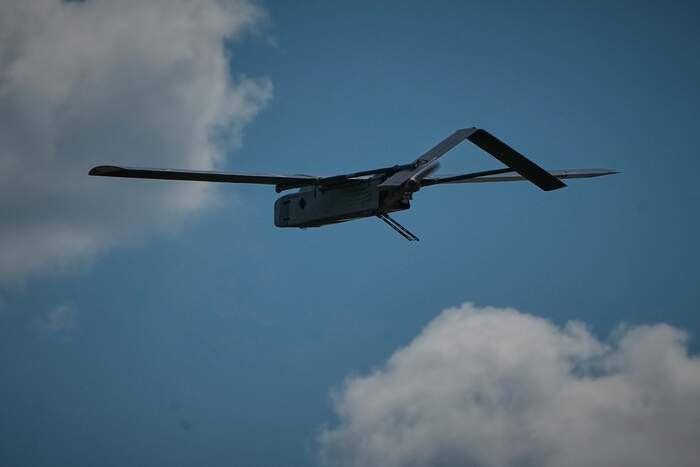
Look up near the sprawling campuses of Tencent or the bustling residential complexes of Longhua, and you will hear a distinct, high-pitched buzz—like a swarm of mechanical cicadas. Drones operated by Meituan, China’s delivery giant, descend from designated flight corridors along predetermined aerial highways, lowering insulated boxes of hot noodle soup, iced coffee, and urgent medical supplies onto automated landing kiosks.
Wait. Think about the choreography required to make that happen without chaos.
For a drone to drop a lukewarm latte onto a rooftop locker in the middle of a dense metropolis, an entire invisible architecture must exist beneath the surface. High-precision 5G networks have to blanket every street corner without dead zones. Real-time air traffic control algorithms must coordinate hundreds of low-altitude flights simultaneously, accounting for sudden gusts of wind funneling between glass skyscrapers. Local municipal authorities have to rewrite zoning laws, air-space regulations, and liability codes at a speed that would give a Western city planner vertigo.
This is the secret weapon behind the glossy hardware. Anyone with enough venture capital can buy lidar sensors, high-torque electric motors, and advanced microchips. What you cannot easily purchase off the shelf is total institutional alignment.
In Shenzhen, the boundary between private enterprise and municipal ambition is remarkably porous. When a company like BYD—now a dominant global force in electric vehicles, headquartered right here in Shenzhen’s Pingshan District—needs testing infrastructure, charging grids, or policy support to roll out next-generation battery tech and smart-driving systems, the city moves with it. When robotics firms like Unitree or UBTECH develop humanoid machines capable of sorting boxes on factory floors or patrolling power substations, local manufacturing ecosystems stand ready within a two-hour drive to supply custom actuators, gears, and carbon-fiber casings at a fraction of global costs.
During my time in the city, I visited a mid-sized hardware assembly plant in Bao’an District. The factory floor was neither a sterile sci-fi movie set nor a Dickensian sweatshop. It was something far more potent: a hybrid workshop where human technicians in blue antistatic smocks worked elbow-to-elbow with articulated robotic arms. A manager there showed me a prototype joint for a bipedal robot. "If we find a tolerance flaw at noon," he told me, tapping the machined aluminum with a calloused finger, "the machine shop three streets over will have a revised batch on my desk before dinner."
That physical proximity—the sheer density of engineering talent, raw materials, and rapid prototyping—acts like compound interest for innovation.
The Invisible Friction
It is tempting to look at Shenzhen’s gleaming skyline and conclude that the future has already arrived, friction-free and triumphant. That would be a lie. Beneath the polished veneer of autonomous mobility and robotic efficiency lies a quieter, deeply human tension that rarely makes it into official press releases.
Every time an autonomous vehicle navigates an intersection without a driver, a livelihood shifts. China’s gig economy—millions of ride-hailing drivers, delivery couriers, and warehouse sorters—has long served as the ultimate shock absorber for the country’s labor market. Whenever factory orders slowed or construction cooled, displaced workers could rent an electric sedan or buy a scooter and immediately earn a daily wage on the streets.
Now, those very streets are learning to drive themselves.
I spoke with a veteran taxi driver named Zhang Wei while waiting out a rainstorm near the Shenzhen Bay Port. He had driven these roads for nineteen years, watching small hills get flattened into tech parks and single-lane roads widen into eight-lane arteries. He stared out his rain-streaked windshield at a sensor-laden robotaxi gliding effortlessly through a flooded puddle across the street.
"They don't get tired," Zhang said quietly, his hands resting on the worn leather of his steering wheel. "They don't argue with passengers. They don't need to stop for lunch or send money home to their parents in Hunan." He paused, letting out a short, dry laugh that held no humor. "For twenty years, the city needed our hands to move people around. Now they're teaching the roads to do it without us."
His anxiety highlights the central paradox of Shenzhen’s transformation. The very technologies designed to make urban life safer, cleaner, and more efficient also threaten to hollow out the traditional ladder of upward mobility for millions of working-class citizens. Policymakers in Beijing and Shenzhen are acutely aware of this tightrope. Push automation too slowly, and China risks losing its hard-won technological edge in artificial intelligence and advanced manufacturing—especially at a time when aging demographics are shrinking the available factory workforce. Push it too fast, and you risk social friction among the very workers who built the modern Chinese economy.
And then there is the question of trust beyond China’s borders.
What the World Sees Through the Glass
When international leaders, trade ministers, and corporate executives descend on Shenzhen for APEC, they are walking into a carefully curated showcase. They will ride in autonomous shuttles. They will watch humanoid robots perform synchronized routines and delicate assembly tasks. They will tour gleaming corporate headquarters belonging to Huawei, DJI, and BYD—companies whose names have become shorthand for both China’s engineering prowess and the fierce geopolitical friction surrounding global tech supply chains.
For decades, the prevailing wisdom in Washington, Brussels, and Tokyo held that authoritarian or state-guided economies could copy existing technologies, scale them cheaply, and dominate low-margin manufacturing, but could never match the raw, chaotic creativity of Western free-market innovation.
Shenzhen stands as a direct, concrete rebuttal to that assumption.
Look at DJI, founded in a Shenzhen dorm room, which quietly captured the vast majority of the global commercial and consumer drone market not through state handouts alone, but through relentless product iteration and superior flight-control software. Look at BYD, which began as a humble battery maker in the 1990s and systematically mastered vertical integration—mining lithium, designing semiconductors, building cargo ships, and manufacturing electric vehicles that now challenge legacy automakers from Stuttgart to Detroit.
Yet, impressive engineering does not automatically translate into global acceptance. As Shenzhen’s tech champions look outward—seeking new markets across Southeast Asia, Latin America, Europe, and the Middle East—they carry heavy baggage. Data security concerns, tariffs, export controls on high-end semiconductors, and deep-seated skepticism from Western governments cast long shadows over every deal. A driverless car isn't just a vehicle anymore; in the eyes of foreign regulators, it is a rolling sensor array capable of mapping critical infrastructure and harvesting vast troves of behavioral data.
This is the true battleground of the coming decade. It is no longer a simple race to see who can invent the smartest algorithm or build the cheapest battery. It is a struggle over standards, trust, and who gets to write the operating system for modern urban life.
The Quiet Hum at Midnight
On my final night in Shenzhen, I took one last ride in a driverless car from the neon-lit canyons of Huaqiangbei—the legendary electronics market where millions of circuit boards and microchips still change hands every day—back toward the waterfront overlooking Hong Kong.
At one point, a stray dog darted out from behind a row of parked bicycles.
Before my eyes had even fully registered the movement in the peripheral dark, the vehicle’s braking system engaged. There was no panic, no tire screech, no violent jerk of a startled human reflex. Just a firm, immediate deceleration that brought the two-ton machine to a smooth halt three meters short of the animal. The dog trotted safely across the asphalt and disappeared into an alley. The wireframe map on the dashboard updated in a fraction of a second, the yellow obstacle marker vanished, and the car silently resumed its glide forward.
I sat back in the quiet cabin, watching the reflection of the city lights slide across the empty driver’s seat. Out there in the dark, across the bay and far beyond the Pacific, billions of people are still arguing about whether the age of autonomous machines is decades away, or whether it should be stopped before it begins. Here, in the warm night air of southern China, the steering wheel has already turned.