He had a great smile on his LinkedIn profile, a degree from a mid-tier state university in Ohio, and an uncanny ability to fix broken Python scripts at two in the morning.
Let’s call him Jason. Jason isn’t a real person—he’s a composite, a hypothetical character built from hundreds of real, declassified FBI case files and corporate forensic audits—but if you work in tech, finance, or healthcare, you have almost certainly worked alongside someone just like him.
Jason always kept his camera off during Zoom calls. He blamed a faulty webcam, or terrible rural bandwidth, or a sleeping newborn in the next room. His Slack messages were polite, slightly formal, and relentlessly productive. Every two weeks, a Silicon Valley payroll provider wired several thousand dollars into a bank account registered in the American Midwest. And every two weeks, that money vanished into a labyrinth of cryptocurrency mixers, traveling thousands of miles across the Pacific to fund ballistic missile tests in Pyongyang.
Invisible. Silent. Devastating.
For years, when the public pictured cyberwarfare, we imagined hoodies in dark basements, green code cascading down black monitors, and brute-force attacks battering down digital castle walls. We built higher firewalls. We bought better antivirus software. We trained employees not to click on suspicious links from Nigerian princes or fake FedEx notifications.
North Korea didn't bother kicking down the front door. They simply applied for a job, aced the technical interview, and got handed the keys.
Recently, the Trump administration struck back with sweeping federal sanctions and Department of Justice crackdowns targeting the shadowy IT front companies orchestrating this massive infiltration. On paper, the news reads like standard geopolitical dry-cleaning—a list of frozen assets, indicted shell corporations, and Treasury Department press releases.
But if you strip away the legalese, what you find is one of the most audacious, psychologically brilliant espionage campaigns in modern history. It is a story about how the global remote-work revolution accidentally created a backdoor into the American economy, and how thousands of ordinary hiring managers became unwitting financiers for a rogue nuclear state.
The Architecture of a Phantom
To understand how we got here, you have to remember the sheer chaos of the early 2020s.
Almost overnight, the physical office evaporated. Companies that once demanded three rounds of in-person interviews and a firm handshake suddenly had to hire entire engineering teams over video calls. Desperate for talent, human resources departments outsourced vetting to third-party recruiters, accepted digital scans of driver’s licenses without blinking, and mailed corporate laptops to residential addresses across the country.
In Pyongyang, intelligence operatives watched this shift with quiet fascination.
Sanctioned to the brink of economic collapse and cut off from the global banking system, the Kim regime needed hard currency. Traditional cybercrime—like the 2017 WannaCry ransomware attack or the $81 million heist of the Bangladesh Central Bank—was lucrative, sure, but it was loud. It drew immediate heat from intelligence agencies worldwide.
Remote IT work offered something entirely different. It offered a steady, legal-looking paycheck.
The regime began dispatching thousands of its brightest, most rigorously trained software engineers to border cities in China and Russia. Operating out of cramped, heavily monitored dormitories, these workers were given a singular mission: get hired by Western companies.
They didn't use their real names. Using stolen or purchased identities of real American citizens—often sourced from dark web data breaches—they constructed pristine digital lives. They hired English-speaking voice actors to sit in on initial phone screens. They used AI-generated profile photos and subtle deepfake filters when a camera absolutely had to be turned on.
And once they landed the job? They actually did the work.
That is the detail that breaks most people's brains when they first hear about it. These weren't lazy scammers trying to collect a single paycheck before disappearing. They were elite coders who routinely pulled twelve-hour shifts, cleared Jira tickets faster than their American peers, and earned glowing performance reviews. Some of them held down three or four full-time remote jobs simultaneously, pooling their salaries into massive revenue streams for the state.
Inside the Laptop Farms
Of course, a remote worker still needs a physical footprint in the United States. Companies don't ship MacBook Pros to Shenyang, China, and corporate VPNs immediately flag logins originating from overseas IP addresses.
Enter the "laptop farm."
Consider what happens next in a quiet suburban neighborhood in Arizona, Tennessee, or Maryland. A resident—sometimes a knowing accomplice motivated by easy cash, sometimes a naive victim who thinks they are helping an overseas tech consultancy—agrees to receive packages at their home.
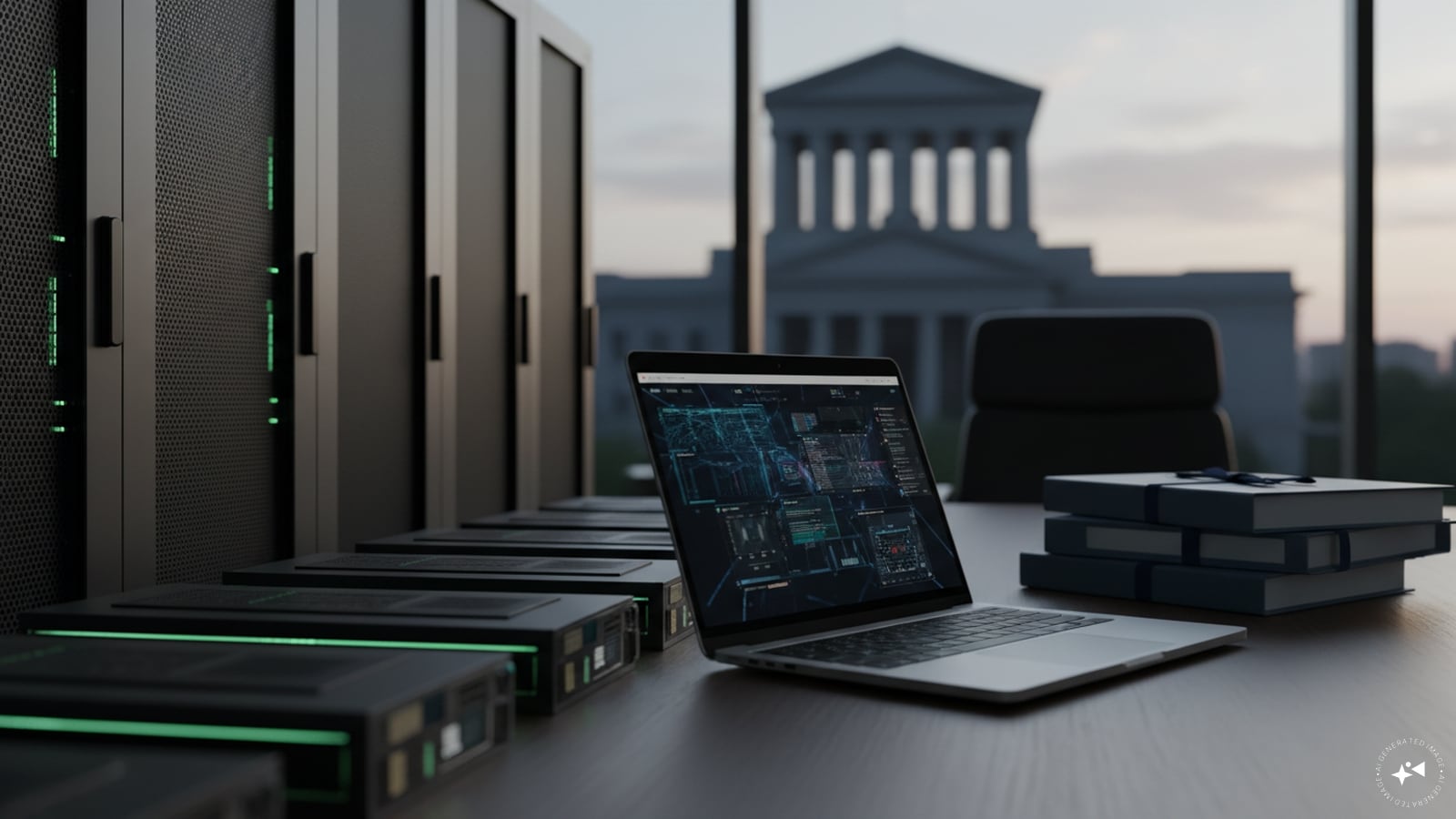
Within weeks, their living room looks like an Apple Store warehouse. Dozens of corporate laptops sit open on folding tables, plugged into power strips and connected to high-speed routers. Flashing lights blink in the dim room like a miniature data center.
Each machine belongs to a different Fortune 500 company, a defense contractor, or a hospital network. The homeowner's only job is to turn the computers on in the morning and plug in a tiny hardware device—a KVM switch—that allows an operator in China or Russia to control the mouse and keyboard remotely.
To the company’s IT security team in New York or Austin, everything looks completely normal. The employee is logging in at 9:00 AM Eastern Time from a residential IP address in Nashville. The hardware is company-issued. The traffic is encrypted.
I’ve spent years advising technology leaders on operational security, and the hardest thing to explain to a CEO isn't a zero-day software exploit—it’s the quiet horror of realizing that the threat is already inside the house, sitting in the Monday morning stand-up meeting, asking how everyone’s weekend went. You can patch a server in ten minutes. You cannot easily patch human trust.
The Shift from Paychecks to Poison
For a while, the arrangement was almost transactional. The North Korean operative wrote clean code; the American company paid a fair wage. Nobody got hacked. Nobody lost customer data.
Then the rules changed.
When a North Korean IT worker was finally caught and fired—usually after an observant manager noticed weird discrepancies in their tax forms or caught them using translation software during a live chat—the response turned vicious. Instead of quietly moving on to the next victim, operatives began downloading proprietary source code, internal Slack archives, and sensitive customer databases on their way out the door.
Days later, the company would receive an extortion email. Pay a six-figure ransom in Bitcoin, or watch your intellectual property get dumped on the dark web.
The boundary between covert fundraising and active corporate espionage had dissolved. Suddenly, these phantom employees weren't just siphoning salaries; they were acting as reconnaissance scouts for Pyongyang’s offensive hacking units, mapping out internal network architectures from the inside and leaving behind digital tripwires for future attacks.
Cutting the Wires
This is the backdrop against which the Trump administration’s recent enforcement blitz took shape.
For years, the federal response to the IT worker crisis felt like playing whack-a-mole with a blindfold on. The FBI would issue a public service announcement warning businesses to look out for red flags, and the Treasury Department would sanction a handful of individuals. Meanwhile, the front companies simply changed their names, registered new domains, and kept hiring.
The latest wave of sanctions and Justice Department actions represents a fundamental shift in tactics. Rather than just chasing individual ghost identities, federal authorities targeted the corporate nervous system enabling the scheme.
By sanctioning the specific North Korean IT firms, freezing the front companies managing the financial rails, and dismantling domestic laptop farms across multiple states, the government went after the infrastructure itself. When the Treasury Department blacklists an entity, it doesn't just freeze their American bank accounts; it turns them into toxic waste for the global financial system. Any foreign bank, crypto exchange, or payment processor that touches their money risks being cut off from the U.S. dollar entirely.
At the same time, federal prosecutors began aggressively targeting the domestic facilitators—the people running the laptop farms and laundering the money—sending a blunt message to anyone tempted by the promise of easy passive income: hosting a router for Pyongyang will land you in federal prison.
The Human Friction We Forgot
Yet, if you talk to cybersecurity investigators on the ground, nobody is popping champagne.
Sanctions are a heavy hammer, and the Trump administration swung it hard, disrupting major revenue pipelines and forcing dozens of shell operations into the dark. But the underlying vulnerability isn't a piece of software that Washington can ban. It is a structural flaw in how modern businesses operate.
We optimized our hiring pipelines for speed, scale, and convenience. We stripped away the friction of human verification because friction slows down growth. We trusted digital avatars because verifying reality takes time, money, and uncomfortable questions.
Look closely at the companies that got burned, and a clear pattern emerges. The victims weren't reckless; they were busy. They were startups racing to ship a product before their runway ran out, or mid-sized firms struggling to fill specialized engineering roles in a tight labor market. When a candidate showed up with a flawless resume, asked for a slightly lower salary than the market average, and never complained about working weekends, hiring managers didn't see a national security threat. They saw a miracle.
Fixing this doesn't require abandoning remote work, nor does it mean turning every HR department into a branch of the CIA. It requires bringing back a healthy dose of analog skepticism.
It means mandating live, unscripted video interviews where candidates must hold up physical identification next to their faces. It means shipping corporate hardware only to verified commercial pickup locations where a government ID must be scanned in person, rather than dropping boxes on suburban porches. It means paying attention when a developer’s keystroke cadence suddenly shifts, or when an employee refuses to ever speak on the phone without a twenty-four-hour notice.
Most of all, it means accepting an uncomfortable truth about the digital age. The internet made the world flat, borderless, and frictionless—and for decades, we celebrated that as an unalloyed good. We forgot that borders, delays, and face-to-face handshakes existed for a reason.
Somewhere right now, in a nondescript apartment building just across the Yalu River from North Korea, a young engineer is sitting under fluorescent lights, sipping instant coffee, and refreshing a job board. Beside his keyboard sits a fresh stack of stolen Social Security numbers, a newly generated headshot, and a script practiced until the accent is nearly gone.
The federal government just burned down his last office. By Monday morning, he will be interviewing for a seat on your team.