The crisp autumn air of 1903 smelled of coal smoke and wet cobblestones. In a modest, gas-lit living room in Baltimore, an elderly Irish immigrant named Thomas sat by a crackling hearth, clutching a cheaply printed newspaper. His hands trembled slightly, not from the chill, but from a profound, quiet awe. The headline announced that a man born just a few hundred miles away, a boy from the hardscrabble streets of New York, had ascended to the highest spiritual office on Earth. To Thomas, who had spent decades watching his community weathered by prejudice and viewed with deep suspicion by the American establishment, this felt like a validation of his entire existence. A boy from the neighborhood was now leading millions.
Now, shift the lens across more than a century of turbulent history to a sun-drenched, air-conditioned living room in Ohio. A modern voter sits on a plush sofa, the blue light of a smartphone illuminating their face. They are scrolling through a barrage of aggressive campaign advertisements, fiery social media posts, and breaking news alerts about Donald Trump. The noise is deafening. The passions are high. The political machine insists that this man commands an unprecedented, unbreakable hold over the American psyche. You might also find this similar coverage insightful: The Paper Tiger Illusion Why Firepower Cannot Buy Absolute Global Dominance.
But data has a strange way of cooling the hottest rooms.
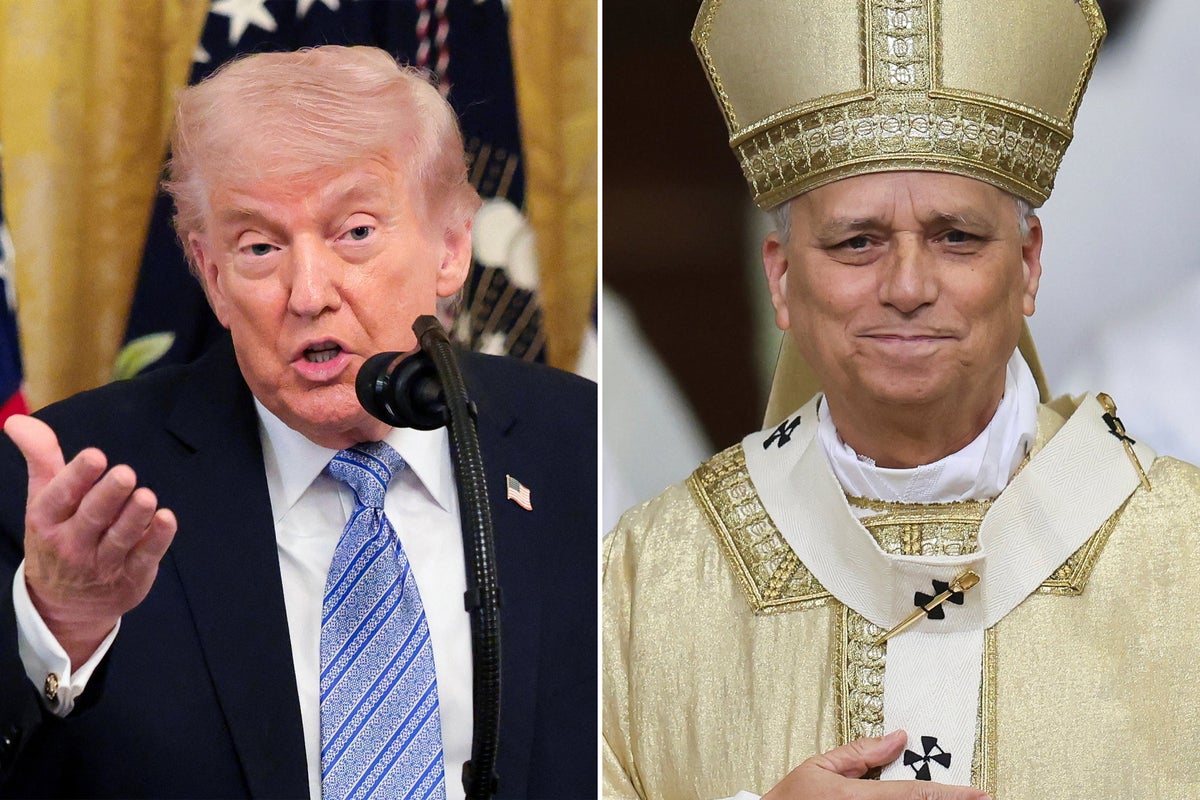
When you strip away the rallies, the red hats, and the cable news shouting matches, a stark historical reality emerges. A recent, deeply comprehensive poll pitted the modern political titan against that long-forgotten, American-born Pope from the turn of the twentieth century. The results were not just surprising. They were a total inversion of everything we are told about power, fame, and what it means to be loved by the American public. As discussed in latest coverage by USA Today, the implications are widespread.
The numbers revealed that Donald Trump, despite his inescapable cultural omnipresence, is far less popular today than Pope Leo XIII’s successor, or the memory of America’s own homegrown spiritual leaders, ever were at their peaks.
The Illusion of Loudness
We live in an era that mistakes volume for devotion. It is an easy trap to fall into. When a public figure can fill an arena with thirty thousand screaming fans, it feels like an undeniable mandate. It looks like total cultural dominance.
But consider a hypothetical contrast to understand how numbers deceive us. Imagine a local rock band that fills a five-hundred-seat theater every single Saturday night. The fans inside are fanatical. They know every lyric, buy every t-shirt, and would march through fire for the lead singer. To that singer, looking out from the stage, they feel like the center of the universe. Now, imagine a quiet country doctor who lives in the same town. The doctor doesn't have a stage, a microphone, or a merchandise table. But over forty years, that doctor has healed the children, comforted the grieving, and quietly visited every home on the block.
Who is more popular? The singer has the noise. The doctor has the community.
This is the exact divide that the latest polling data exposes between the modern political landscape and the historical legacy of religious figures like the American-born Pope. The pollsters didn’t just ask people if they liked a specific policy or political party. They measured deep-seated approval, trust, and favorability across broad, diverse cross-sections of the population.
Donald Trump’s favorability numbers have hovered rigidly in the low-to-mid forty percent range for years. It is a fiercely loyal forty-some percent, to be sure. It is a block of voters that is vocal, visible, and intensely mobilized. Yet, it remains a minority. The ceiling is built of concrete. The opposition is just as fiercely entrenched.
When researchers looked back at the favorability and public reverence commanded by historic spiritual leaders—figures who united communities rather than dividing them along partisan lines—the contrast was staggering. These figures regularly commanded favorability ratings hovering well above sixty, sometimes seventy percent, stretching across political divides, economic classes, and ethnic backgrounds. They were a unifying fabric, not a wedge.
The Weight of the Crown
To understand why a modern political figure struggles to reach the heights of a turn-of-the-century religious icon, you have to look at what politics forces a leader to do. Politics is, by its very nature, a game of subtraction. To win an election, a strategist will tell you that you don't need everyone. You just need more people than the other side on one specific Tuesday in November.
Every time a politician takes a hard stance on an economic policy, a border issue, or a social debate, they are drawing a line in the sand. They are intentionally telling a portion of the audience, "You are not with me."
Donald Trump mastered this art of division. He turned the line in the sand into a fortress wall. For his supporters, that wall represents protection, identity, and strength. For his detractors, it represents exclusion. This strategy is incredibly effective for winning primary elections and maintaining a vice-grip on a political party, but it is catastrophic for broad, national popularity. It inherently caps how much of the country can ever view you with warmth.
Now, look back at the figure of the Pope, or the revered cultural leaders of America’s past. Their mandate was built on addition, not subtraction.
When an American-born Pope or a major religious figure spoke, they spoke in the language of universal human experience. They talked about suffering, redemption, charity, and the quiet dignity of labor. They visited the sick. They blessed the poor. They did not have to vote on a tax bill or decide zoning laws. They offered a sanctuary from the daily grind of survival, rather than acting as the architects of it.
Because they stood outside the arena of partisan warfare, they were allowed to occupy a space of clean reverence in the public imagination. A democrat could respect them. A republican could honor them. An immigrant working the steel mills in Pittsburgh could see them as a beacon of hope, while a wealthy industrialist in Boston could view them as a pillar of moral stability.
The Human Cost of Constant Combat
It is exhausting to live in a state of perpetual outrage.
Walk into any coffee shop, sit on any commuter train, or stand in line at any grocery store today, and you can feel the collective fatigue. People are tired of the friction. The constant barrage of political messaging operates on a high-voltage frequency that human psychology wasn't designed to endure long-term.
This is where the true human element of the poll becomes clear. The preference for a figure like the historic Pope over a modern political fighter isn't just about theology or policy preferences. It is a symptom of a deep, unspoken cultural longing. It is a collective sigh for a different kind of leadership.
Consider what happens when a society loses its shared icons. When every single public figure is filtered through a partisan lens, we lose our common ground. We no longer have a shared script. If one side loves a leader, the other side is practically required to despise them. This creates a psychological exhaustion that depresses popularity across the board.
Donald Trump's lower favorability numbers are a direct reflection of this exhaustion. He is the avatar of the fight. When you choose to be the fighter, even the people who want you to win can get tired of watching the blood sport.
The historical figures who outpace him in popularity offered something entirely different: peace. They provided a sense of continuity in a rapidly changing world. When the world was shifting from agricultural communities to dense, smoky industrial cities, the presence of a steady, moral leader gave people an anchor. They didn't want someone to burn the institutions down; they wanted someone to assure them that the foundations would hold.
The Ghost in the Machine
There is a final, vital truth hidden within the percentages and charts of this modern poll. It is a truth about memory and legacy.
Fame is fleeting, but meaning endures. A politician can dominate the news cycle for a decade. They can dominate every headline, trigger millions of tweets, and be the subject of a thousand documentaries. But when the dust settles, and the elections are over, that kind of fame evaporates into the dry pages of history books. It becomes clinical. It becomes a matter of trivia.
But the popularity of a leader who touches the human soul, who validates the identity of an struggling immigrant community, or who offers comfort in a time of national crisis, leaves a completely different kind of footprint. It lives on in the stories passed down through families. It lives on in the quiet pride of a community that finally felt seen.
The poll showing that Donald Trump is significantly less popular than a historic, American-born Pope is not just a quirky piece of political data. It is a mirror. It forces us to look at what we are currently valuing, what we are currently elevating, and what we have lost along the way.
It reminds us that the loudest voice in the room is rarely the most cherished. True authority isn't seized in an election or demanded from a podium. It is quietly granted by the hearts of people who feel understood, protected, and elevated.
The political rallies will eventually fall silent. The campaign signs will fade and peel under the summer sun. The television screens will find new faces to scream about, and new crises to exploit. But somewhere, in the quiet spaces of the American consciousness, the longing for a leader who can unite rather than divide, who can heal rather than fight, remains entirely unbroken.


