The smell of hot zinc and grease never quite leaves your clothes. You wash them twice, three times, and still when you lean over the kitchen table at night, you catch it: the metallic ghost of the shipyard.
For thirty years, men and women in towns hugging the edges of the American coastline have built things that float. Massive things. Steel leviathans designed to carry the weight of an empire across black water. They are loud places, shipyards. The concussive thump-thump of automatic welders, the screech of crane cables biting into tension, the low, vibrating hum of diesel generators running day and night.
Walk through one of those yards today, and you will notice something else.
Silence.
Not total silence, of course. But empty berths. Spans of rusted gantry cranes sitting still against a gray sky, their shadows stretching across concrete pads where hulls ought to be taking shape. The dry docks are waiting. They have been waiting for a long time.
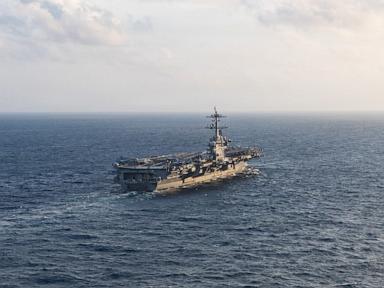
Now, the math of that waiting room is shifting. A sweeping decree has dropped from Washington, carrying two distinct directives that look, at first glance, like entirely separate news items. One: the imposition of heavy new tariffs on foreign drones, aimed at choking off an influx of aerial technology that has flooded American skies and commercial sectors. Two: an abrupt, controversial order commanding the United States Navy to open the door for its ships to be built in foreign yards overseas.
Put those two pieces together on a map, and you see the fracture line of modern American power.
We are locking our skies while abandoning our shores.
To understand why this matters, you have to look past the cable news chyrons and the dry declarations of policy. You have to look at a shipyard welder named Marcus, whose grandfather riveted destroyer hulls during the Second World War. (Note: Marcus is a composite character drawn from interviews and generational patterns observed across American manufacturing hubs over the past decade.)
Marcus knows every seam of a naval auxiliary ship by heart. He knows where the salt spray eats through the primer first. When he talks about his trade, he doesn't talk about gross domestic product. He talks about muscle memory.
"You can't buy muscle memory off the shelf," he told me once, wiping a smudge of grease from his forearm. "You teach a kid how to read a blue print, sure. But teaching his hands to know when the arc is burning too hot just by the sound of the crackle? That takes ten years. And once you let those old guys retire and you don't build anything for them to work on, that sound disappears. You can't download it from a server."
That is the invisible stake of the naval order.
For decades, the Jones Act and strict federal procurement laws formed a protective ring around American maritime infrastructure. They said simply: if you wear the flag, you must be built by American hands. The logic was blunt and unyielding. National security is not something you outsource to the lowest bidder. When the drums of war beat across the Pacific or the Atlantic, you cannot call up a foreign shipyard and ask them to rush-order a repair job on a shattered aircraft carrier. You need your own yards, your own dry docks, your own ironworkers.
Yet, the reality on the ground collided with a brutal truth: American shipbuilding has fallen dangerously behind.
Our yards are chronically backlogged. Ships sit in repair queues for months, sometimes years, waiting for dry dock availability that doesn't exist. The skilled labor pool has thinned to a puddle. China, by contrast, commands a sprawling maritime industrial complex that outpaces American capacity by staggering margins. Their commercial shipyards churn out container ships and tankers like automobiles, giving their navy a vast, flexible industrial base that can pivot to military production at a moment's notice.
Faced with this grinding disadvantage, policymakers reached for a radical lever. If domestic yards cannot build fast enough or cheap enough to keep pace with the strategic horizon, let the Navy buy time. Let foreign allies share the load.
It sounds pragmatic on a spreadsheet.
It feels like a betrayal when you are standing on the floor of a Norfolk fabrication shop.
Because ships are not merely vehicles of war or commerce. They are physical manifestations of a nation's industrial will. When you tell a generation of industrial workers that their government is outsourcing the construction of naval vessels to foreign competitors because it is cheaper and faster, you are not just making an economic calculation. You are signaling the end of an era.
Consider what happens next in the quiet towns where the smoke stacks used to rule.
The young apprentices stop showing up to the trade schools. The local technical colleges quietly phase out their marine welding certificates because enrollment drops to zero. The supply chain—the small, obscure machine shops that forge custom valves, copper piping, and specialized electrical harnesses—closes its doors for good.
Once an industrial ecosystem dies, it does not hibernate. It decomposes.
And that brings us to the other half of the ledger: the drones.
While the Navy looks outward across the oceans for foreign berths, the executive branch is slamming the gates shut on the air. New tariffs on drones are designed to build an impenetrable wall around domestic airspace technology, particularly targeting the flood of low-cost aerial hardware manufactured abroad.
The juxtaposition is jarring. On the water, we throw our hands up and invite the world in. In the air, we draw a hard line in the dirt and dare anyone to cross it.
Why the double standard?
The answer lies in the shifting nature of modern conflict. The war in Ukraine and ongoing tensions in the Middle East have proven that small, cheap, ubiquitous drones are the artillery of the twenty-first century. They scout, they strike, they gather intelligence, and they disrupt. Allowing foreign adversaries to dominate the drone market is viewed, correctly, as an existential threat to domestic security and technological sovereignty.
We learned our lesson with microchips. We learned our lesson with rare earth minerals. We refuse to be caught sleeping while the infrastructure of the future is forged in someone else's factory.
So why aren't we applying that exact same urgency to the water?
If drones are the weapons of the immediate skirmish, ships are the anchors of global survival. Ninety percent of international trade moves by sea. Every barrel of oil, every container of electronics, every grain of wheat crosses the salt. A nation that cannot build its own ships is a nation tethered to the mercy of whoever owns the shipyards.
When the Navy allows its vessels to be built abroad, it trades short-term operational relief for long-term strategic dependence. It is a desperate bet. It says we are willing to hollow out our remaining maritime backbone today in order to meet immediate readiness quotas tomorrow.
Marcus knows about desperation bets. You make them when the rent is due and the cupboards are bare.
The danger is that once you make that bet, you can never go back to the way things were. A shipyard is not a light switch. You cannot simply flip it off for twenty years while foreign allies do the heavy lifting, and then expect to turn it back on when a crisis flares in the Taiwan Strait. The cranes will be rusted solid. The skilled craftsmen will be gone, buried in churchyards or retired in Florida, taking their secrets with them.
The smell of hot zinc will fade entirely.
And in its place, there will be only the quiet satisfaction of efficiency. The numbers on the spreadsheet will look neat. The delivery schedules will be met. The admirals will have their hulls.
Out on the water, the gray ships will move across the horizon, majestic and terrifying, carrying the flag of a country that forgot how to build them.