The sea has a way of erasing boundaries until the world shrinks to the size of a floating hull. Inside, there is the hum of the engine, the clink of champagne flutes, and the quiet promise of escape. You unpack your bags, look out at the endless blue horizon, and let the tension drain from your shoulders. You believe you are safe because the ocean separates you from the chaos of the shore.
It is a beautiful illusion.
In May 2026, that illusion shattered aboard a luxury cruise liner bound for the Netherlands. What began as a dream vacation transformed into a floating quarantine, caught in the grip of an invisible, ancient threat. The culprit wasn't a sudden storm or a mechanical failure. It was hantavirus.
To understand the panic that rippled through the ship's lower decks, you have to understand the nature of the enemy. Hantavirus is not like the common flu, nor does it behave like the gastrointestinal bugs that occasionally plague modern cruise ships. It is a pathogen born of the shadows. Typically carried by rodents—specifically mice and rats—the virus is shed in droppings, urine, and saliva. Humans don't catch it from a bite; they breathe it in. When dried rodent waste is disturbed, microscopic viral particles take flight, suspending themselves in the air like dust motes in a shaft of sunlight.
Imagine a hypothetical traveler. Let us call her Elena. She is sitting in a beautifully appointed cabin, watching the waves roll past. She breathes in deeply, savoring the salty air, entirely unaware that deep within the ship’s structural veins, a biological clock is ticking.
The human body is an exquisite machine, but it is deeply vulnerable to the unseen. Once inhaled, the virus targets the endothelium—the thin layer of cells lining our blood vessels. It forces these vessels to leak fluid into the surrounding tissues. In its most severe form, Hantavirus Pulmonary Syndrome (HPS), the lungs literally fill with the body’s own fluids. It mimics drowning from the inside out. The mortality rate can climb as high as 38 percent.
Fear moves faster than any virus.
When the first passengers began reporting severe fevers, crushing muscle aches, and sudden bouts of breathlessness, the ship's medical bay initially suspected standard respiratory infections. But as the numbers grew, a darker reality set in. The ship’s captain made the call that every mariner dreads: the voyage was compromised. The vessel altered its course, heading directly for a specialized terminal in the Netherlands, a country renowned for its strict public health infrastructure and cutting-edge containment protocols.
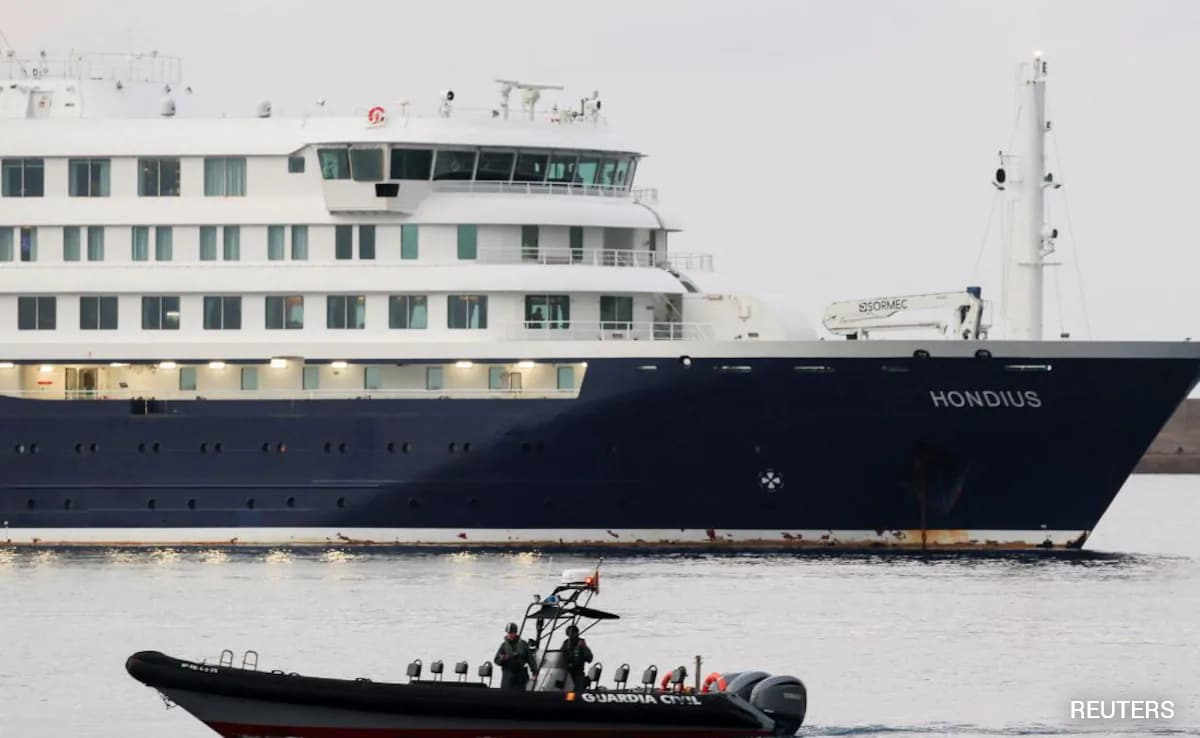
The sight of a massive luxury liner pulling into a Dutch port under a cloud of medical emergency is something those on shore will not soon forget. Docking was not a celebration; it was a tactical operation.
Hazardous material teams clad in thick, pressurized white suits and respirators stood waiting on the pier. To the onlookers gathering beyond the security perimeter, the scene looked like a set from a dystopian film. But for the souls on board, it was real life. The contrast was stark: the cheerful, brightly colored logos of the cruise line framed against the stark, clinical reality of biological decontamination.
Medical personnel boarded first, isolating the sick and establishing a triage system directly on the decks. For the healthy passengers, a agonizing waiting game began. They were confined to their cabins, listening to the muffled announcements over the PA system, watching the gray Dutch sky through their portholes.
The immediate question on everyone's lips—both on board and across the global travel industry—was simple. How does a virus traditionally associated with rural cabins and dusty barns find its way onto a multi-million-dollar maritime palace?
The answer lies in the complex, hidden logistics of global shipping. Cruise ships are cities on water. They require massive influxes of provisions at every port of call. Crates of fresh produce, pallets of dry goods, and miles of linen are loaded into the holds daily. Somewhere along the supply chain, in a warehouse or a harbor depot half a world away, a hitchhiker climbed aboard. A single infected rodent nesting in a pallet of dry goods is all it takes to introduce a pathogen into the ship’s underbelly.
Once inside, the creature finds a labyrinth of utility corridors, wiring channels, and ventilation shafts. These are the spaces passengers never see, the industrial guts of the ship that keep the lights on and the water hot. If the virus enters the HVAC system, the ship's greatest asset—its climate-controlled comfort—becomes its greatest vulnerability.
Public health officials in the Netherlands understood this immediately. Containment was only the first step; eradication was the real battle.
Disinfecting a structure as massive and intricate as a modern cruise ship is a monumental task. You cannot simply spray bleach down the hallways and call it a day. The process requires chemical fogging, a technique where specialized disinfectants are aerosolized into an incredibly fine mist. This mist penetrates every nook, cranny, and air duct, neutralizing the virus on contact without leaving wet residue that could damage the ship's complex electronics.
Every single mattress, curtain, and carpet must be treated or destroyed. The logistical cost is staggering, running into millions of dollars, but the reputational cost to the cruise industry is immeasurable.
We live in an era where we demand total control over our environment. We build stronger hulls, install satellite navigation, and track weather patterns with pinpoint accuracy. Yet, this incident serves as a humbling reminder of a fundamental truth: we are never truly separate from the natural world. The microscopic realm operates on its own rules, indifferent to our luxury or our schedules.
Consider the psychological toll on those passengers. They stepped off the gangway not into the welcoming arms of loved ones, but into waiting ambulances and quarantine facilities. Their luggage was impounded for disinfection. The souvenirs they bought in distant ports were treated as potential biohazards. The vacation photographs on their phones now look like artifacts from another lifetime, taken before the world shifted beneath their feet.
The Netherlands has since completed the decontamination process, and the ship will eventually return to service, its steel polished and its air filters replaced. The headlines will fade, replaced by the next cycle of breaking news.
But for those who were on board, the memory will linger every time they step into an enclosed space. They will remember the sudden silence of the engines, the sight of the white suits on the dock, and the realization that the line between safety and peril is as thin as a single breath.
The ocean remains vast and beautiful, inviting us to explore its depths. But as we look out at the horizon, we must also look closer to home, into the shadows of the spaces we inhabit, remembering that sometimes the greatest dangers are the ones we cannot see.