Cold.
If you have never stood on a shingle beach in Kent at three in the morning, you do not know the specific, bone-deep ache of the English Channel. The wind does not blow there; it cuts. It carries the taste of diesel, wet salt, and desperation. For years, I watched the border from the inside of Britain's national security apparatus, staring at satellite feeds and listening to intercepted chatter until the static hummed behind my eyelids even when I slept. In those rooms, we talked about threats in clean, sterile language. We spoke of maritime incursions, irregular entry vectors, and hostile state reconnaissance.
But standing on that freezing beach, watching the deflated black rubber of a rigid-hulled inflatable boat wash against the stones, the bureaucracy evaporates. You realize a terrifying truth. When a border bends under the weight of genuine human misery, the shadows slip through right alongside the desperate.
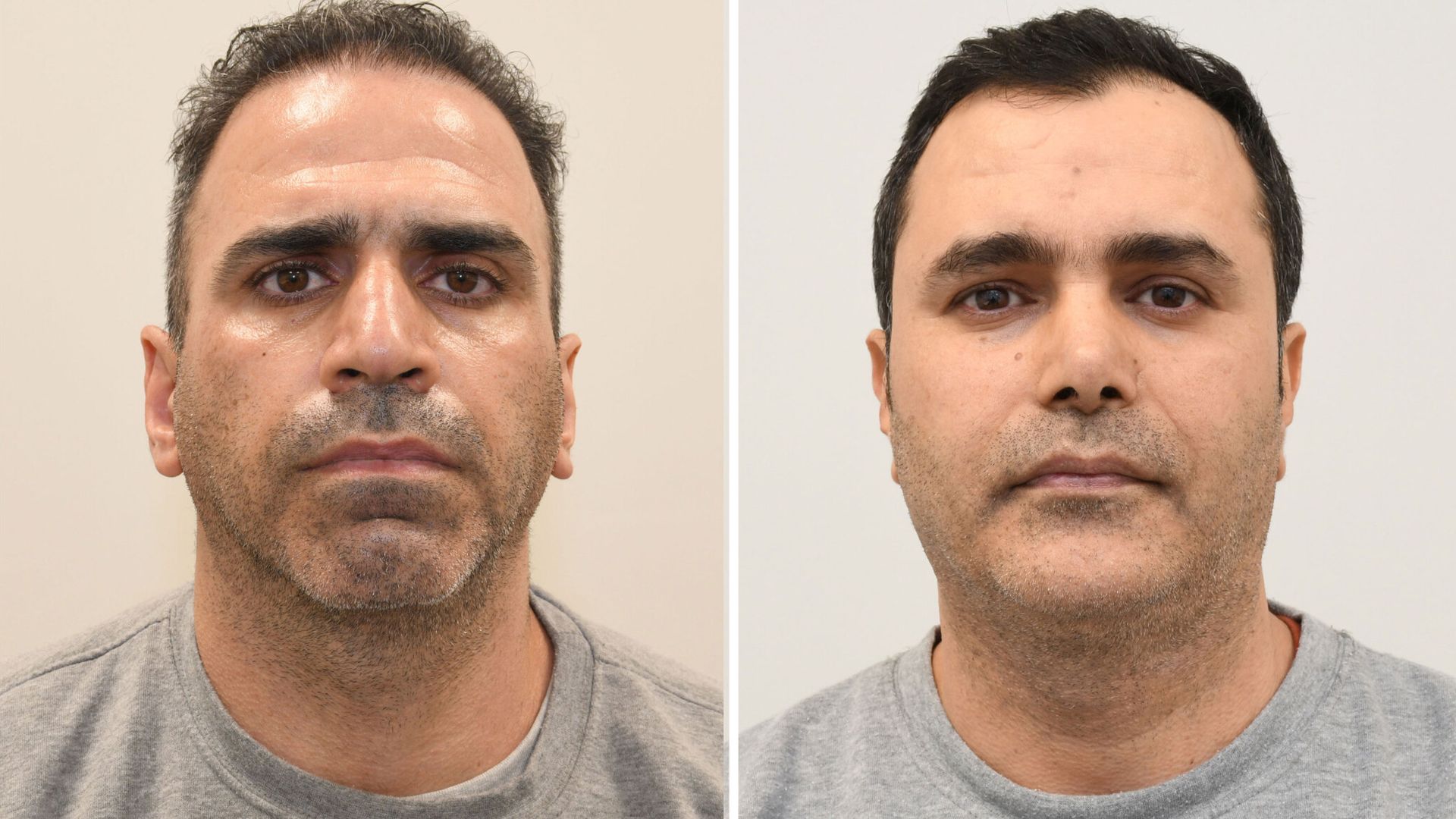
Recent convictions in a British courtroom stripped away the polite fiction that irregular migration and state-sponsored espionage live in separate worlds. Two Iranian nationals, men who arrived on British soil without papers, without permission, and without a paper trail, were found guilty of spying for Tehran. They did not parachute from stealth bombers. They did not walk through Heathrow carrying diplomatic pouches or forged Swiss passports. They came the way thousands of frightened families come—through the back door, disappearing into the chaotic, overwhelmed machinery of an asylum system stretched to its breaking point.
To understand why this case should keep every citizen awake at night, you have to stop looking at the headline and start looking at the architecture of modern espionage.
The Anatomy of an Invisible Arrival
Consider a hypothetical scenario, rooted in the exact operational playbooks intelligence agencies have tracked across Europe over the last decade.
Picture a young software engineer in Tehran—let’s call him Reza—who has spent three years working quietly for a front company linked to Iran's Ministry of Intelligence. He has no diplomatic immunity. If he applies for a British tourist visa, MI5 and the Home Office will run his biometrics, trace his employment history, flag his cousins in the Revolutionary Guard, and stamp a red refusal across his file before he ever books a flight. The front door is locked, bolted, and watched by cameras.
So Reza’s handlers hand him ten thousand dollars in untraceable cash and put him on a flight to Istanbul, then onto a smuggler’s route through the Balkans, and finally onto a crowded dinghy pushing off from a beach near Calais.
When Reza steps onto British sand, he has no passport. He threw it into the sea three miles out, just as the smugglers told him to do, and just as thousands of legitimate refugees do when they fear deportation back to regimes that will torture them. He gives a false name. He tells a rehearsed, heartbreaking story of political persecution—a story stolen from the real suffering of the dissidents his own employers hunt back home.
And then the British state does what a humane, rule-bound democracy is obligated to do. It feeds him. It houses him in a converted hotel or a shared flat in a mid-sized English town. It hands him a biometric residence permit while his claim sits in a backlog that stretches for months, sometimes years.
Overnight, a foreign intelligence operative has achieved what used to take a decade of deep-cover legend-building. He has a clean identity, freedom of movement across the United Kingdom, a modest weekly stipend, and an impenetrable shield of plausible deniability. If anyone asks why he is loitering outside a community center in North London or photographing a parked car in Manchester, he is just a confused newcomer trying to find the bus stop.
That is not a thriller plot. That is the operational reality exposed when British prosecutors dismantled the espionage ring at the center of this conviction.
Why Tehran Watches the Streets of London
A reasonable person reading about Iranian spies in Britain asks a simple question. What could two men with no security clearances, no access to Whitehall, and no connection to military bases possibly steal? They are not sitting in the Cabinet Office. They are not downloading submarine blueprints from the Ministry of Defence.
They are not looking for state secrets. They are looking for people.
To understand Tehran’s obsession with the Iranian diaspora in the United Kingdom, imagine a massive, sprawling glass house where the owners are terrified of a single stone thrown from the outside. Since the protests following the death of Mahsa Amini in 2022, and throughout decades of exile politics before that, London has functioned as the beating heart of Persian-language independent media and opposition organizing. Broadcasters like Iran International, BBC Persian, and Manoto beam uncensored news directly into millions of living rooms in Shiraz, Isfahan, and Tehran, piercing the regime's information blockade every single hour.
To the clerics and security chiefs in Tehran, a journalist sitting in a studio in West London is more dangerous than an armored brigade on their border.
So the intelligence apparatus does not send spies to steal nuclear codes. It sends spotters.
Think of espionage like a surgical operation. The assassin or the kidnapper—often a hired criminal gang from Eastern Europe or the local underworld, kept at arm's length so Tehran can deny involvement—is the scalpel. The spotter is the MRI machine. Before a threat can be neutralized, a target must be mapped.
What time does the dissident leave his flat? Does he walk his daughter to school along the same canal path every Tuesday? Which side of the street has blind spots where municipal CCTV cameras fail to reach? Does the television presenter take the Northern Line or a black cab after the late broadcast?
This is tedious, unglamorous work. It requires patience, a smartphone, a burner SIM card, and a reason to be standing on a cold British pavement for four hours without drawing the attention of a passing police constable. Two men who entered the country illegally, blending seamlessly into diaspora neighborhoods where Farsi is spoken in the grocery stores and tea shops, are the ideal instruments for that surveillance. They speak the language. They know the cultural idioms. They can sit at the next table in a café in Finchley, nursing a single cup of tea, listening to exiles argue about politics while quietly recording faces, license plates, and routines.
The Human Collision at the Border
Here is where the story becomes uncomfortable, and where honest people have to admit how hard the problem actually is.
I remember interviewing a genuine Iranian dissident years ago—a man whose fingernails had been pulled out in Evin Prison because he printed pamphlets for a student union. His hands shook every time he lifted a glass of water. When he crossed the Channel, he arrived with nothing except the clothes on his back and nightmares that woke the neighbors.
When the public hears that Iranian spies entered Britain illegally and were convicted of espionage, the immediate, visceral reaction is anger. People feel played. They feel that the compassion of their country—the taxpayer money funding asylum accommodation, the legal protections designed for the tortured and the hunted—has been weaponized against them.
That anger is justified. It is a rational response to a profound betrayal of trust.
Yet if you harden the border into an indiscriminate wall that treats every undocumented arrival as a hostile agent, you hand Tehran a different kind of victory. You lock the doors on the very dissidents, journalists, and human rights lawyers fleeing the regime's gallows. You force the sheep back into the pen with the wolves.
The tragedy of this case is the cruel irony at its center. The very same regime that drives genuine refugees across the English Channel in rubber boats is simultaneously using those boats to smuggle in the hunters to finish the job on British soil.
It is a parasite feeding on a humanitarian crisis. And for years, Western intelligence services were slow to grasp the scale of the tactic because our bureaucracies were siloed. Immigration enforcement looked at paperwork, country-of-origin reports, and asylum criteria. Counter-intelligence looked at embassies, cyberattacks, and known diplomatic covers. The two machines rarely spoke the same language until the threat was already sitting on a commuter train in Surrey.
How a Democracy Fights Back Without Losing Its Soul
So how do you catch a ghost who has no fingerprints in your database and no honest history on paper?
The convictions of these two Iranian operatives prove that the British security state is not blind, even when its borders are porous. When you strip away the legal jargon of the Official Secrets Act and the National Security Act, the downfall of these men came down to the oldest vulnerability in tradecraft: communication.
A spy in London is useless if he cannot talk to Tehran.
You can enter a country without a passport. You can sleep in an unremarkable flat, buy groceries with cash, and blend into the crowd on Oxford Street. But the moment you take a photograph of a target's front door and send it across an encrypted messaging app, or receive instructions from a handler sitting behind a desk in Tehran, you create a digital footprint. Intelligence work is rarely the glamorous car chases of cinema; it is mostly brilliant analysts sitting in windowless rooms in Cheltenham and Thames House, noticing that a burner phone in Birmingham pings a relay server in Turkey five minutes after a surveillance target walks out of a studio in London.
Once counter-terror police and MI5 lock onto that digital thread, the asylum cover evaporates. Physical surveillance teams—men and women who can follow a target across London for weeks without ever appearing in the same periphery twice—begin documenting every movement. Every coffee shop meeting. Every photograph snapped from across a street. Every drop-off.
And here, Britain recently sharpened its blade. For decades, British espionage laws were stuck in the Edwardian era, written in 1911 to catch German naval spies sketching dockyards in Portsmouth. Under those antiquated rules, if an operative was merely gathering open-source information or watching a private citizen on a public street, prosecutors struggled to prove an offense against the state.
The National Security Act changed the calculus. It recognized that modern hostile states do not just target government ministries; they wage shadow wars against dissidents, journalists, and private citizens living under British protection. It gave police and prosecutors the tools to treat hostile surveillance of civilians as what it truly is—an act of foreign aggression.
The Invisible Perimeter
When the verdict came down and the prison doors clanged shut behind these two men, it was tempting to treat the news as a closed chapter. Two spies caught. Two threats neutralized. On to the next headline.
That would be a mistake.
Ask yourself what it feels like tonight to be an Iranian journalist walking home from a late shift in London. You pull your coat tighter against the rain. You glance over your shoulder at the man walking thirty paces behind you, his hood up, his eyes fixed on his phone. You look at the delivery cyclist idling near the corner of your street, watching the entrance to your building a little too closely.
Is he just waiting for an order? Is he just a neighbor walking home in the cold? Or did he cross the Channel six months ago with your home address memorized in his head?
That psychological terror—the slow, corrosive paranoia that no street is safe, no border is real, and the long arm of the regime can reach into your kitchen in a free country—is the real objective of Tehran's espionage campaign. Even when a plot is foiled, even when the spies are locked in high-security prisons, the poison lingers in the air.
We tend to think of national borders as lines drawn on maps, marked by concrete walls, passport booths, and patrol boats cutting through grey water. Those physical lines matter, and when they fail, real people pay the price.
But the true border of a free society is invisible. It is the boundary between fear and safety on an ordinary street at night. Defending that line requires more than patrol boats in the Channel; it demands an intelligence service sharp enough to see in the dark, laws strong enough to punish those who abuse our sanctuary, and the quiet, stubborn refusal to let foreign tyrants turn British neighborhoods into hunting grounds.
Somewhere tonight, on a dark stretch of French coastline, another inflatable boat is being dragged toward the surf. Most of the people climbing aboard are praying for a chance to live free. A few of them are carrying orders. And in quiet rooms across Britain, the lights are still on, watching the water.