Dust has a memory. It settles over discarded things like a slow, deliberate blanket of time, burying the moments we swore we would never forget.
In a quiet corner of Wakefield, amid the impersonal clatter of daily commerce and the indifferent churn of modern life, a stranger picked up a heavy, rectangular object from a pile of refuse. It was a photo album. Not a sleek, digital scroll of pixels lighting up a smartphone screen, but an artifact of heavy black paper, brittle celluloid corners, and faded linen binding.
Someone had let it go. Or perhaps, more hauntingly, someone had lost the people who knew whose faces were inside.
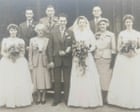
Inside those cardboard covers, trapped beneath translucent sheets of tissue paper, were black-and-white ghosts from the 1950s. A woman in a tailored wool suit laughing against a slate-gray sky. A man squinting into a brilliant, mid-century sun, his arm slung casually over the hood of a polished sedan that had long since rusted into scrap. Bridesmaids in mid-stride, their laughter frozen by a flashbulb that popped more than half a century ago.
They were strangers to the person who found them. But they were someone’s inheritance. They were the proof of life.
We live in an era obsessed with preservation. We back up our clouds, archive our emails, and geotag our brunches, terrified that if we do not record a moment, it ceases to exist. Yet, paradoxically, we discard our physical histories with an alarming casualness. When attics are cleared out, when elderly relatives pass into the quiet geography of memory, physical photographs become orphaned. They are heavy. They take up space. They demand context that living minds can no longer supply.
Consider the journey of that Wakefield album. It did not start in a dumpster. It started on a kitchen table in 1958, illuminated by the warm amber glow of an incandescent bulb.
Imagine the bride. Let us call her Margaret. She spent hours pressing bobby pins into her victory-roll curls, smoothing the satin of a dress that her mother likely spent months sewing by hand. She looked out a window at a world recovering from the deep scars of global conflict, believing with a fierce, quiet certainty that her tomorrow would be stable, predictable, and permanent.
She did not know that her grandchildren would live in a world of pocket-sized supercomputers. She did not know that her wedding day—the most important afternoon of her entire existence—would one day be tossed into a municipal waste stream like an empty carton of milk.
When the album was discovered in Wakefield, the finder faced a choice. They could have dropped it back into the bin. They could have shrugged, muttered about the callousness of modern families, and walked away. Instead, they did something radical. They paid attention.
They opened the cover. They looked at the faces. And they asked a question that we rarely pause to utter in our fast-paced lives: Who are you?
Local appeals went out. Social media algorithms, usually engineered to feed our outrage or sell us shoes, were repurposed for a much older, more sacred human duty: finding out where people belong. People shared the grainy images of 1950s tailoring and vintage automobiles. Comment sections filled not with arguments, but with curiosity. Someone recognized a street corner. Someone identified an old car model. Bit by bit, the digital ether wove a net to catch a falling piece of history.
The mystery was eventually solved. The descendants were found.
It sounds like a tidy, heartwarming resolution fit for a Sunday morning broadcast. But the deeper truth of the Wakefield album lingers long after the headlines fade. Why did those photos end up in the trash in the first place? Was it malice? Was it apathy?
Neither, usually.
The tragedy of modern inheritance is that we inherit things we cannot decode. When we look at a photograph of our great-grandparents cutting a cake in 1952, we see pixels on paper. We do not hear the scratch of the record player in the corner. We do not smell the roasting beef or taste the overly sweet buttercream frosting. We do not know the private joke whispered between the bride and groom just before the shutter clicked.
Without that narrative tether, a photograph is just a piece of cardboard with chemicals on it. And when people are drowning in the sheer volume of their own contemporary clutter, historical cardboard easily looks like trash.
We are all curators of our own vanishing acts. Every day, we take hundreds of digital photographs that we never print, never organize, and never show to anyone. We trust corporate servers to hold our memories for us, leasing our past from tech companies who could change their terms of service tomorrow. We think we are safeguarding our legacies, but we are actually building castles out of digital sand.
The 1950s couple in the Wakefield album survived because their memories were physical. They were clumsy, heavy, and vulnerable to fire and water, but they were tangible enough to be picked up by a stranger's hand in a dusty alleyway.
When the album was finally returned to the family, something extraordinary happened. The past stopped being a concept and became a bloodline again. The descendants looked at those stiff poses and recognized the shape of their own cheekbones, the stubborn tilt of their own chins. They realized that they did not appear out of nowhere; they were the continuation of a story that started long before they downloaded their first app.
We spend so much of our lives running toward the future, terrified of missing the next upgrade, the next trend, the next notification. We treat our histories like disposable packaging.
Pause for a moment. Look around your home. Where are the boxes from your parents' attic? Where are the albums of people who loved you before you knew how to love yourself?
They are waiting. Not for a digital backup, but for someone to pick them up, blow off the dust, and care enough to ask who was standing in the sun.



