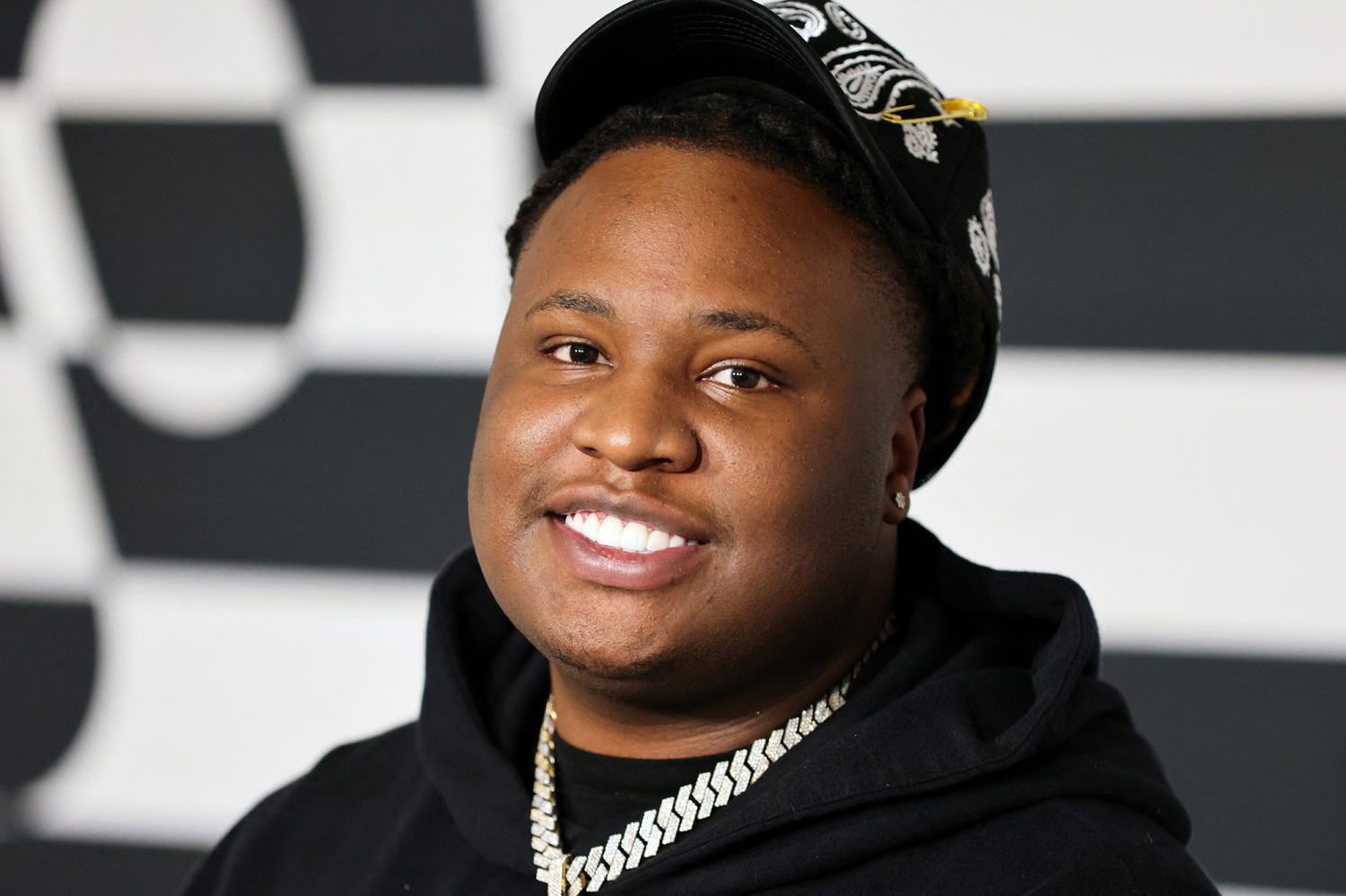
Jamie Christian-Johal, known to the masses as Giant, just walked away from the BBC’s Gladiators reboot after three seasons. The standard media narrative is already churning out the same tired scripts: "end of an era," "fans devastated," or "big shoes to fill."
They are missing the point. Giant isn’t leaving because he’s finished; he’s leaving because he’s outgrown a format that treats elite physical specimens like interchangeable action figures.
For years, the industry assumption has been that the brand is the star. Whether it’s the 1990s original or the shiny BBC revival, the logic remains: people watch for the spandex, the Eliminator, and the Saturday night nostalgia. The athletes? They are viewed as modular components. Plug in a bodybuilder, give them a catchy name like "Predator" or "Steel," and watch the ratings climb.
Giant just shattered that illusion. By exiting at the height of the show’s renewed popularity, he has signaled a shift in power that the BBC and production companies are desperate to ignore. The talent is now more valuable than the IP.
The Myth of the Replaceable Titan
Television executives love "closed systems." A closed system is a show where the format is so rigid that the individual performers don't matter. The Masked Singer is a closed system. Gladiators was designed to be one.
The "lazy consensus" says that because Jamie Christian-Johal is 6ft 5in and looks like he was carved out of granite, any other 6ft 5in bodybuilder can step into the ring and provide the same value. This is a fundamental misunderstanding of modern celebrity.
I have watched production budgets balloon while talent fees stagnate because "the platform is the payment." Producers tell these athletes they should be grateful for the exposure. But in 2026, exposure is a currency the talent can mint themselves. Giant realized that being a scripted character in a BBC arena limits his earning potential and his personal brand. He is no longer a "Gladiator"; he is a business.
When a flagship star leaves, the show doesn’t just lose a physical presence; it loses the narrative glue. The audience doesn’t connect with a helmet; they connect with the person under it. By treating these athletes as disposable, the BBC is eroding the very "appointment viewing" culture they are trying to resurrect.
Why The Reboot Model Is Failing Its Stars
The current Gladiators contract is a relic of 20th-century broadcasting. It demands total commitment, physical risk, and a sanitized public image, all while the network retains the lion’s share of the commercial upside.
- Physical Depreciation: These athletes are red-lining their bodies for entertainment. A torn pectoral or a blown-out knee in the Travelator isn't just an injury; it’s a career-ender for their primary income stream (fitness modeling, personal training, competitive bodybuilding).
- The Content Gap: While the BBC sits on footage for months, the athletes are often restricted in how they can use their own likeness or behind-the-scenes content.
- Monetization Caps: Being a "BBC face" comes with a mountain of red tape regarding third-party endorsements.
Imagine a scenario where an athlete of Giant's caliber stays for six seasons. By the end, they are physically spent, their peak earning years are gone, and they are still "that guy from the TV show" rather than the owner of a fitness empire. Giant’s departure isn't a "loss" for him—it's a strategic divestment from a depreciating asset.
The Power Shift: Platform vs. Person
| Feature | The BBC's View | The Modern Reality |
|---|---|---|
| The Star | The Gladiators Logo | The Individual Athlete |
| Value Prop | Saturday Night Slot | Social Media Ecosystem |
| Longevity | Reboots every 10 years | Lifetime personal brand |
| Control | Scripted personas | Authentic engagement |
The "Big Man" Problem
Let’s talk about the specific physics of the show. Giant wasn't just another body. He provided the necessary "Final Boss" energy that the show requires to maintain its stakes.
The problem with Gladiators—and why it’s currently on a path to stagnation—is that it struggles to balance spectacle with actual competition. If the Gladiators are too dominant, the show is boring. If they lose too often, the brand is diluted. Giant was one of the few who could walk that line.
His exit creates a vacuum that "better casting" cannot fix. You can find another tall man. You cannot easily find another tall man with the charisma to navigate the BBC’s family-friendly requirements while maintaining an intimidating physical aura.
The "People Also Ask" crowd wants to know if the show is in trouble. The honest answer? Yes. Not because of one man’s departure, but because the departure proves the show’s internal logic is flawed. If the biggest stars are looking for the exit, the environment is toxic to long-term growth.
The Insider's Truth About "New Blood"
The press release will inevitably announce "exciting new Gladiators" joining for the next season. The BBC will frame this as a fresh start.
Do not believe it.
Bringing in "new blood" is a cost-saving measure disguised as a creative choice. New talent is cheaper. New talent has less leverage. New talent is easier to control.
I’ve seen this play out in dozens of franchises. When the original cast starts realizing their worth, the producers "refresh" the lineup. They tell the public they are "listening to the fans" and "evolving the show." In reality, they are just resetting the payroll.
The downside to this contrarian view? Stability. If a show becomes a revolving door of athletes, it loses its soul. It becomes a game show, not an event. Gladiators succeeded in the 90s because names like Wolf, Jet, and Hunter became household fixtures. They were the furniture. You don't build a legacy with a rotating cast of seasonal workers.
The Strategy For Survival
If I were sitting in the production office, I wouldn't be looking for a Giant replacement. I would be looking to change the fundamental relationship between the show and its stars.
- Equity over Salaries: Give the top-tier Gladiators a stake in the merchandising or the live tour revenue.
- Creative Autonomy: Stop scripting the "trash talk." It’s cringeworthy and it dates the show instantly. Let the athletes be themselves.
- The "Joe Rogan" Effect: Allow the stars to build their own media brands through the show, rather than in spite of it.
Giant’s exit is a warning shot. He has looked at the landscape and decided that being a cog in the BBC machine is a bad deal. He’s betting on himself. And in the current creator economy, that is a much safer bet than a fourth season of wrestling accountants on a giant cotton bud.
The show isn't losing a Gladiator. The Gladiators are losing the only thing that made the reboot relevant: the belief that the arena was the biggest stage in the world for these men and women.
Giant just proved that the world outside the arena is much, much bigger.
The BBC doesn't need a new giant. They need a new reason for the giants to stay. Right now, they don't have one.
Stop mourning the departure. Start questioning why the smartest guy in the room decided to leave while the lights were still on.