The wind in the Whitsundays used to sound like money. It was the soft clink of ice in a crystal tumbler, the rustle of high-thread-count linen, and the rhythmic lap of a turquoise sea against the hulls of yachts that cost more than most small-town hospitals. Today, the wind sounds different. It whistles through shattered floor-to-ceiling glass and moans as it catches the jagged edges of corrugated iron roofing that has peeled away like dead skin.
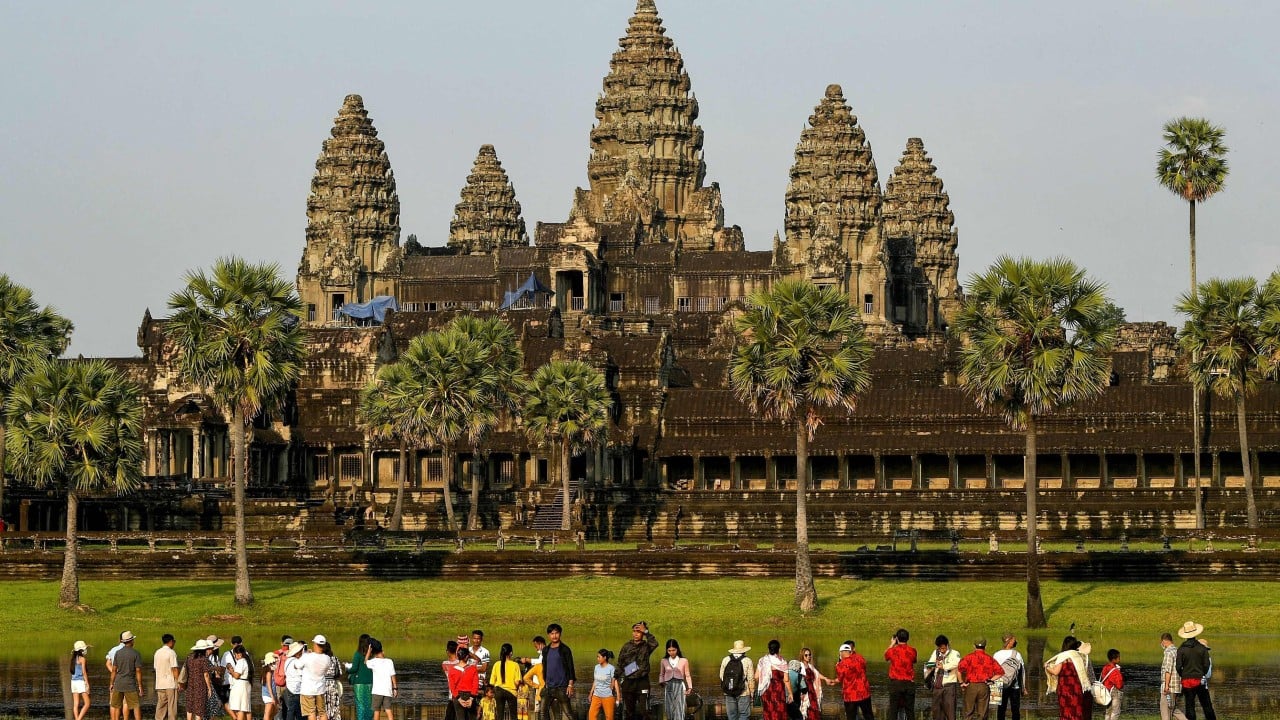
I remember standing on the jetty of Lindeman Island when the air was still thick with the scent of frangipani and expensive sunblock. Now, the scent is of salt-rot and damp concrete. We have a habit of looking at ruins as ancient artifacts—Rome, Athens, Angkor Wat—but there is a specific, visceral horror in a modern ruin. It is the sight of a 50-inch flat-screen television hanging by a single wire in a room reclaimed by vines. It is the realization that a billion-dollar dream can be dismantled by a single afternoon of bad weather and a decade of corporate indifference.
The Anatomy of a Billionaire’s Abandonment
In the high-stakes world of tropical real estate, the narrative usually follows a predictable arc: acquisition, renovation, celebration. But on islands like Lindeman, South Molle, and Hook, the story stalled at "catastrophe."
When Cyclone Debbie tore through the Whitsundays in 2017, it wasn't just the palm trees that broke. The storm acted as a brutal stress test for the business models of the ultra-wealthy. Consider the logistics. Operating a luxury resort on a remote island is a feat of engineering and madness. You have to barge in every drop of fresh water, every head of lettuce, and every kilowatt of power. When the cyclone’s 260km/h winds stripped the paint off the walls, they also stripped away the illusion of profitability.
White Horse Group, the Chinese conglomerate that purchased Lindeman Island for $12 million in 2012, initially promised a $600 million "integrated resort" featuring six-star hotels and a golf course. They held the glossy brochures. They shook the hands. But as the years ticked by and the salt air began to eat the existing infrastructure, the silence from the boardroom became deafening.
The property is now back on the market, a "fixer-upper" for the person who has everything except a sense of risk. The core facts are stark: the resort is a skeleton. The swimming pools are filled with brackish rainwater and frog spawn. The tennis courts are cracked open by the insistent roots of the scrub. This isn't just a failed business venture; it is a monument to the fragility of human ambition in the face of an ecosystem that doesn't care about your portfolio.
The Ghost in the Suite
To understand what was lost, you have to look past the spreadsheets. Think of a hypothetical guest—let’s call her Sarah. In 1995, Sarah spent her honeymoon on South Molle Island. She remembers the way the light hit the water at 4:00 PM, a shade of blue so intense it felt fake. She remembers the laughter in the buffet line and the feeling of absolute safety in a secluded paradise.
If Sarah returned today, she would find the jetty she walked down has been reclaimed by the Pacific. The dining hall where she toasted her future is a cavern of mold. This is the "human element" that developers often miss. A resort is not just a collection of assets; it is a repository of memory. When a billionaire decides that the insurance payout is more attractive than the reconstruction cost, they aren't just abandoning a building. They are evicting a thousand memories.
South Molle Island, once the crown jewel of the Whitsunday group, was purchased by billionaire Craig Williams in the early 2000s and later sold to China Capital Investment Group (CCIG). After the 2017 cyclone, the "Welcome" signs stayed down. The staff went home. The electricity was cut.
Imagine the silence of a kitchen designed to feed five hundred people when there is no one left to cook. The stainless steel surfaces, once gleaming, are now filmed with a grey patina of oxidation. The silence is the loudest thing about these places. It is a heavy, humid silence that feels like a physical weight on your chest.
The Cost of Doing Nothing
There is a logical deduction to be made about why these ruins persist. In the world of high finance, an abandoned resort can be a strategic asset. It sits on the balance sheet as a land bank. The "value" isn't in the service provided or the rooms booked; it’s in the potential of the dirt itself.
But dirt doesn't pay for the ecological cleanup.
As these structures rot, they become environmental hazards. Asbestos fibers loosen. Lead paint flakes into the soil. Plastic fittings shatter into microplastics that wash into the Great Barrier Reef with every heavy rain. The invisible stakes are far higher than a lost investment. We are watching the slow-motion poisoning of one of the world’s most delicate ecosystems because it is cheaper for a corporation to pay a fine than to hire a demolition crew.
The tragedy of the Whitsunday ruins is that they are not isolated incidents. They are symptoms of a broader philosophy where the Earth is a stage, and when the play is over, the actors simply walk off without striking the set.
The Psychology of the Ruin Hunter
Recently, a new kind of traveler has emerged: the urban explorer. They don't come for the snorkeling or the cocktails. They come for the decay. They bypass the "Keep Out" signs and the rusted perimeter fences to photograph the skeleton of the Club Med era.
Through their lenses, we see a world without us. There is something hauntingly beautiful about a vine curling around a telephone receiver in a derelict lobby. It appeals to a dark part of our subconscious—the part that wonders what will happen when the party finally ends. These explorers are documenting the "aftermath" of the 20th-century dream of endless expansion.
They find eerie relics: a stack of room keys for doors that no longer lock; a "No Diving" sign submerged in a pool of mud; a rotting piano with keys that stick like honey. These objects are the punctuation marks in a story of sudden departure.
A New Ownership Paradigm
But the story doesn't have to end with a bulldozer or a slow dissolve into the jungle. There is a growing movement to rethink island ownership. Instead of selling to the highest bidder with the flashiest rendering, what if we looked at "custodianship"?
Consider the contrast between the rotting ruins and the successful eco-resorts that survived the same storms. The difference isn't just money; it's design. The resorts that are still standing are those that didn't fight the island. They used modular construction, renewable energy grids, and flexible materials that could breathe with the wind rather than resisting it until they snapped.
The market for these "rotting" islands is shifting. Potential buyers are no longer just looking for a place to build a palace. They are looking for a way to mitigate the massive liability of a crumbling concrete legacy. The "up for grabs" nature of these properties hides a terrifying truth: the purchase price is the cheapest part of the deal. The real cost is the restoration of the land itself.
The Tide Always Returns
I walked the beach of an abandoned resort recently at dusk. The sun was dropping behind the charred silhouette of a hillside that had been burned in a bushfire, then stripped by a storm, then left to the weeds. In the twilight, the skeletons of the villas looked like ribs of a great, beached whale.
We like to think we are the masters of these places because we poured the concrete and laid the tiles. We feel a sense of outrage that a billionaire would let such beauty "go to waste." But the ocean has a much longer memory than a corporate board. It has seen the rise and fall of coral reefs over millennia. It doesn't care about the six-star rating or the infinity pool.
The lesson of the Whitsunday ruins is one of humility. We are guests on these islands, and the rent is paid in maintenance and respect. When we stop paying, the landlord—nature itself—doesn't send a notice. She just moves back in, uncurling her green fingers to reclaim the space, one cracked tile at a time.
The luxury is gone. The billionaires have moved on to newer, dryer pastures. What remains is a skeletal reminder that even the most expensive walls are porous to time. The ruins aren't just eyesores; they are mirrors. They show us what happens when we value the transaction over the transition, and the profit over the place.
The water remains that impossible, heartbreaking blue. It laps at the rusted pylons of the jetty, indifferent to the fact that there is no one left to step onto the shore.