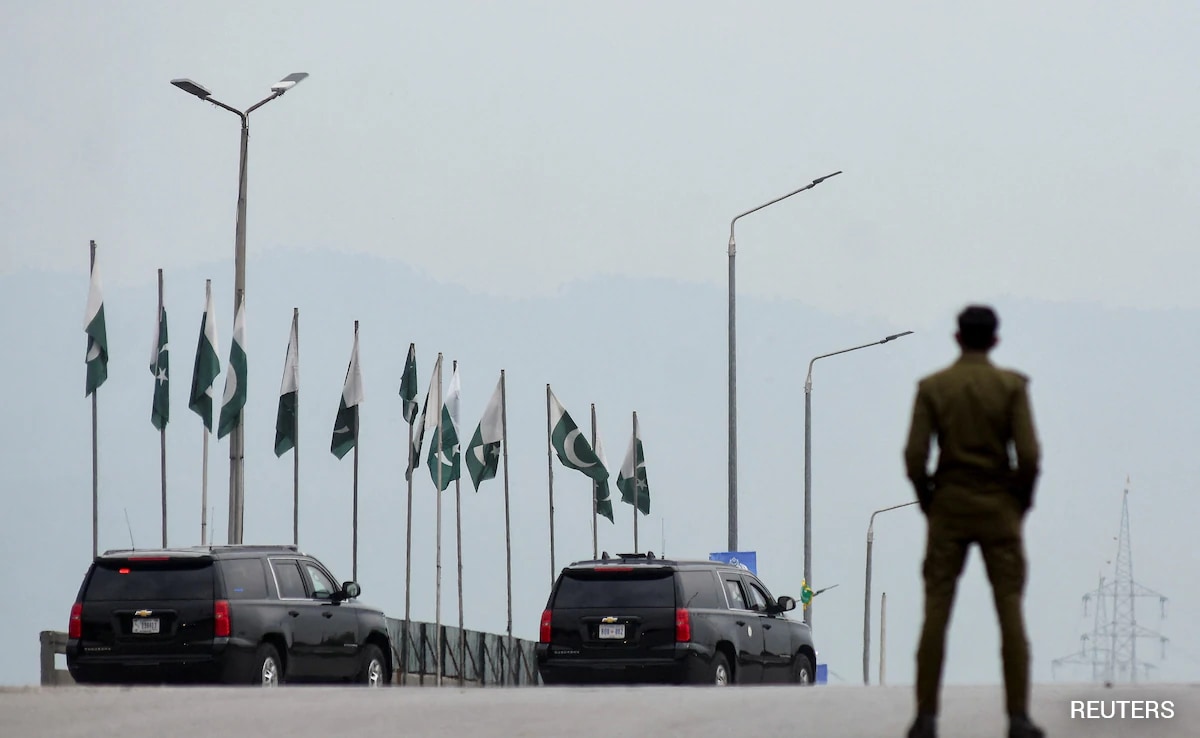
The scent of cardamom tea hangs heavy in the lobby of the Islamabad Serena, a thick, sweet perfume that does its best to mask the smell of floor wax and anxious sweat. Outside, the Margalla Hills rise like sleeping giants under a bruise-colored sky. Inside, the marble floors are polished to such a high shine that you can see the jittery reflection of men in charcoal suits before you ever hear their footsteps.
They don't look like enemies. Not at first glance. They look like tired travelers, burdened by the weight of too many time zones and the crushing gravity of their own flags. But look closer. Notice the way the American official checks his watch every three minutes. Observe the Iranian diplomat as he avoids the gaze of everyone except the steam rising from his cup. Meanwhile, you can read other developments here: The Islamabad Gamble: JD Vance and the Brutal Reality of the New Persian War.
History is rarely made in grand halls with cheering crowds. Usually, it happens in the hushed corners of luxury hotels, where the air conditioning hums at a steady 22 degrees and the stakes are measured in lives, not line items.
The Geography of a Secret
Islamabad is an odd choice for a ghost hunt. To the uninitiated, it is a city of wide boulevards and brutalist architecture, a purpose-built capital that feels more like a sterile laboratory than a bustling South Asian metropolis. Yet, for a few days this spring, it became the most important square mile on the planet. To see the full picture, we recommend the recent analysis by BBC News.
Pakistan has spent decades perfecting the art of the middleman. It is a nation that speaks the language of the West and the heart of the East, a bridge built on the volatile fault lines of the Cold War and the Islamic Revolution. When Washington and Tehran found themselves screaming into a void, they realized they needed a room where the walls didn't have ears—or at least, where the ears were discreet.
The Serena is that room.
It is a fortress disguised as a palace. To enter, you must pass through layers of security that would make a prison warden blush. K-9 units sniff the undercarriages of SUVs. Armed guards with eyes like flint scan every face. Once you are inside, however, the world softens. You are surrounded by intricate wood carvings, silk carpets, and the soft splashing of fountains. It is the kind of luxury that feels like a sedative.
For the delegates, this comfort was a tactical necessity. You cannot negotiate the future of nuclear proliferation or the stability of the Persian Gulf if you are distracted by a hard chair or a cold meal.
The Ghost at the Table
Imagine a hypothetical figure named Sarah. She is a mid-level State Department staffer, the kind of person who knows the exact nuance of a Farsi verb but hasn't slept more than four hours a night since the crisis began. Across the table sits her counterpart, let’s call him Ahmad, a man who remembers the smell of smoke in Tehran and the sting of sanctions that have throttled his daughter’s dreams of studying medicine.
They sit in a private suite, the curtains drawn against the midday sun. Between them lies a folder. Inside that folder are numbers: centrifuge counts, barrels of oil, frozen assets, and the distance between two shores.
But these aren't just numbers.
To Sarah, those numbers represent a career spent trying to prevent a war that no one wants but everyone seems to be sprinting toward. To Ahmad, they represent the pride of a civilization that feels cornered. When Sarah slides a document across the table, her hand trembles—not from fear, but from the sheer friction of history.
Every word they speak is filtered through decades of trauma. There is the 1979 embassy siege. There is the 1953 coup. There is the downing of a civilian airliner. The room is crowded with the ghosts of men who are long dead, all of them whispering that the person across the table cannot be trusted.
Breaking that silence requires more than just diplomacy. It requires a shared recognition of the abyss.
The Mechanics of the Unspoken
The talks weren't publicized. You won't find a press release detailing the exact appetizers served during the breakthrough session. But the evidence of their existence was written in the sudden shift of regional winds.
Direct communication between the U.S. and Iran has been a broken circuit for years. Instead, they rely on "shuttle diplomacy," where a third party—often the Swiss or the Omanis—carries messages back and forth like a glorified courier service. It is a slow, agonizing process. Nuance is lost. Tone is misinterpreted. A firm "no" becomes a "perhaps," and a "maybe" is read as a surrender.
By meeting in the same physical space, even if they stayed in separate wings of the hotel, the two sides achieved something that a thousand emails could never accomplish: they saw each other's eyes.
They saw the fatigue. They saw the human desperation to find an exit ramp.
The Pakistani hosts played their part with a surgical precision. They didn't hover. They provided the infrastructure of peace—the secure lines, the private entrances, the endless carafes of water—and then they stepped back. They understood that the best thing a host can do for two fighting brothers is to give them a room and a lock on the door.
The Price of the Walkway
Why does this matter to someone sitting in a coffee shop in London or a farmhouse in Kansas?
It matters because the world is a series of interconnected gears. When the gear between Washington and Tehran grinds to a halt, the sparks fly everywhere. They fly in the form of oil prices that make it harder to drive to work. They fly in the form of regional proxy wars that turn ancient cities into rubble. They fly in the quiet, terrifying possibility of a conflict that would make the last twenty years of Middle Eastern history look like a dress rehearsal.
The talks in Islamabad weren't about a grand bargain. There was no photo-op with pens and handshakes. It was about something much more fragile: de-escalation. It was about making sure that a misunderstanding in the Strait of Hormuz doesn't lead to a missile launch.
Consider the physical reality of these delegates. They are men and women who have spent their entire lives being told the other side is the embodiment of evil. Then, they find themselves sharing a breakfast buffet. They watch the "enemy" struggle with a toaster. They see them yawn. They see them check a photo of their kids on their phone.
It is remarkably difficult to demonize someone when you know they like their eggs over-easy.
The Invisible Threshold
As the week wore on, the tension in the Serena didn't disappear, but it changed shape. It became a heavy, productive silence. The "standard facts" reported by news agencies—that meetings were held, that "progress was discussed," that the parties remained "committed to dialogue"—miss the visceral reality of the work.
Diplomacy is an endurance sport. It is hours of sitting in a windowless room, arguing over the placement of a comma, knowing that if you get it wrong, people will die. It is the physical toll of holding back your anger when the person across from you says something you find abhorrent. It is the discipline of looking for the one percent of common ground in a ninety-nine percent sea of hostility.
On the final night, a small group of negotiators stepped out onto the hotel terrace. The air had finally cooled. Below them, the city of Islamabad was a grid of flickering lights. For a moment, they weren't representatives of empires. They were just people, standing on a balcony in a foreign land, breathing the same air.
They didn't reach a definitive peace. That is a fairy tale for people who don't understand how the world works. What they reached was a stay of execution. They built a bridge of words, fragile and swaying, across a chasm of fire.
The hotel remains. The marble is still polished. The cardamom tea is still brewing. The delegates have flown back to their respective capitals, carrying secret briefcases and the weight of what was—and wasn't—said.
The world feels the same. The headlines have moved on to the next scandal, the next disaster, the next outrage. But somewhere in a filing cabinet in Washington and a secure vault in Tehran, there are notes from a hotel in Pakistan. Those notes contain the blueprint for a future that isn't on fire.
We live our lives in the spaces created by these quiet rooms. We thrive in the gaps between the wars that didn't happen because two exhausted people decided to keep talking until the sun came up over the Margalla Hills.
Peace isn't a monument. It is a flickering candle in a drafty room, and for a few days in Islamabad, the walls of a five-star hotel were enough to keep the flame from going out.
The lobbyists and the hawks will tell you that such talks are a sign of weakness, a betrayal of principle. They are wrong. Standing in the middle of a battlefield and refusing to fire is the hardest thing a human being can do. It requires a courage that makes combat look like a vacation.
As the last black sedan pulled away from the Serena's gates, the dust settled back onto the pavement. The fountains continued to splash. The city went back to its business.
The ghosts were still there, of course. They always are. But for the first time in a long time, they were quiet.



