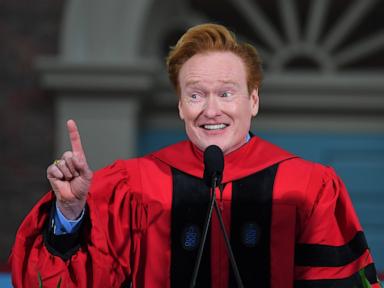
The rain in Cambridge, Massachusetts, doesn’t just fall. It bleeds into the red brick of Harvard Yard, darkening the centuries-old clay until the entire campus feels less like a university and more like a fortress holding its breath.
Walk through Johnston Gate on a Tuesday morning. The air smells of wet slate, old money, and an unmistakable, modern anxiety. Students hustle past with eyes glued to screens, their shoulders hunched against both the Atlantic drizzle and a relentless news cycle that has turned their sanctuary into a political lightning rod. Meanwhile, you can find related developments here: The Secession Bottleneck: Why Treaty Rights Negate Provincial Separatism.
Harvard is hurting. The elite institution is locked in a high-stakes, ideological cage match with a vengeful Donald Trump and a hostile Washington. It is a battle over the soul of American higher education, fought with congressional subpoenas, endowment tax threats, and venomous press releases.
And into this arena of bruised egos and existential dread steps a lanky, fifty-something comedian with an absurdly high pompadour. To see the full picture, check out the detailed report by Al Jazeera.
Conan O’Brien is coming home.
The announcement that the former late-night host will deliver the 2024 Harvard commencement address might look, at first glance, like a classic institutional pivot. A distraction. A bit of Hollywood tinsel draped over a structurally compromised house. But look closer at the timing, the history, and the sheer desperation of the moment. This isn't just a booking. It is a tactical deployment of a specific kind of armor: self-deprecation.
The Art of the Jester in the King’s Court
To understand why a towering comedian is exactly what Harvard needs right now, you have to understand the specific flavor of misery currently blanketing the Ivy League.
For the past year, the university has been a punching bag. Congressional committees have grilled its leadership. Activists have flown drones over its libraries. Donors have closed their checkbooks with deafening snaps. The criticism from the right, spearheaded by Trump’s MAGA movement, frames Harvard not as a center of excellence, but as an out-of-touch, elitist indoctrination camp.
When a palace is under siege, the worst thing the inhabitants can do is act like royalty.
Defensiveness breeds contempt. Arrogance invites a heavier battering ram. What Harvard requires at the podium of Tercentenary Theatre this May is not another statesman, a billionaire tech founder, or a somber human rights activist. It needs someone who can look at the massive, gilded crest of Veritas and laugh at it.
Enter Conan.
He is an alumnus, yes. Class of 1985. Magna cum laude. Former president of the Harvard Lampoon. But more importantly, O’Brien’s entire comedic identity is built on being the smartest guy in the room who deliberately trips on the rug to make everyone else feel better.
Humor is a solvent. It dissolves the rigid posture of institutions that take themselves too seriously. By inviting O’Brien, Harvard is signaling a rare, necessary vulnerability. They are bringing in a master of the comedic art form to do what the administration cannot: puncture the balloon of their own self-importance before their enemies do it for them.
Crimson Blood and Late-Night Scars
The relationship between Conan and Harvard is not a distant, ceremonial affair. It is baked into his DNA.
Picture a rail-thin kid from Brookline, Massachusetts, arriving on campus in the early 1980s. He wasn't New York royalty or European nobility. He was an Irish-Catholic kid with a hyperactive mind and a desperate need for validation. The Lampoon castle on Mt. Auburn Street became his laboratory. There, in a strange, mock-Flemish castle funded by generations of wealthy pranksters, O’Brien learned how to weaponize absurdity.
That education mattered because the world outside those brick walls has never been particularly kind to the overly earnest.
Consider O'Brien's own public trauma in 2010. The Tonight Show debacle. The late-night war with NBC that saw him publicly humiliated, stripped of a lifelong dream, and replaced by Jay Leno after just seven months. It was a corporate execution played out in front of millions of viewers.
The way Conan handled that public execution offers a blueprint for how Harvard might survive its current political trial.
He didn't sue quietly. He didn't retreat into a bitter, wealthy silence. He turned the entire debacle into a traveling rock-and-roll comedy tour. He embraced the absurdity of his own failure. He told his audience, with a voice cracking from genuine emotion, that cynicism was his least favorite quality. He turned a professional catastrophe into a cultural apotheosis.
Now, look at Harvard. The university is experiencing its own version of a public execution. Its reputation has been battered in the court of public opinion. Its leadership has changed under immense pressure. The institution feels fragile, a word rarely associated with an entity backed by a fifty-billion-dollar endowment.
The students sitting in those white folding chairs on commencement day aren't just graduating. They are graduating into a world that feels distinctly hostile to the very credentials they just spent four years earning. They need to hear from someone who knows what it looks like when the pedestal crumbles.
The Invisible Stakes of a Punchline
There is a distinct danger in assuming this is all just entertainment. The stakes of this commencement address stretch far beyond the borders of Cambridge.
Donald Trump’s campaign has made higher education a central pillar of its cultural grievance platform. There are promises to tax large endowments, restrict federal funding, and dismantle diversity initiatives. These aren't empty threats; they are policy proposals with immense legislative momentum.
In this environment, every public statement from Harvard is parsed for weakness, arrogance, or partisan bias.
If the commencement speaker were a political figure, the ceremony would become a battleground. If the speaker were a traditional captain of industry, it would feel tone-deaf. O’Brien represents a neutral zone. You cannot easily partisan-ize a man who once spent an entire segment of his show trying to deliver a giant, motorized taco to a late-night rival.
But do not mistake neutrality for lack of bite.
Satire is historically the most dangerous weapon against authoritarian posturing. When political movements attempt to build a narrative of an all-powerful, insidious elite enemy, nothing breaks the spell faster than showing that the "elite" are just a bunch of nervous twenty-two-year-olds and a comedian who can’t keep his hair straight in the wind.
The View from the Yard
On the day of the speech, the morning fog will likely lift off the Charles River, leaving that crisp, New England spring light that makes everything look like a postcard. The parents will arrive in their linen blazers and sundresses, carrying cameras and boxes of tissues. The faculty will march in their medieval gowns, a sea of crimson, black, and gold velvet.
The pomp and circumstance will be fully intact. But the tension will be humming just beneath the surface.
Every student sitting there knows the reality of the job market they are entering. They know the vitriol attached to the name of their school on social media. They have watched their campus become a security zone, punctuated by protests, counter-protests, and the constant hum of news trucks parked along Massachusetts Avenue.
They don't need a lecture on civic duty. They’ve lived it. They don't need a speech about the glorious future awaiting them. The future looks incredibly complicated.
What they need is a moment of shared humanity.
O’Brien’s gift has always been his ability to bridge the gap between the absurdly high-brow and the shamelessly low-brow. He can quote French literature and then immediately make a face like a startled horse. That synthesis is exactly what the moment demands. It is a reminder that excellence and humility can occupy the same body. That intellect without joy is just a sterile exercise in ego.
The crowd will quiet down as the introduction ends. The lanky figure will walk up to the microphone, looking out over a sea of thousands of faces framed by the historic buildings of the Yard. The cameras will pull tight on his face.
The university is betting that a man who made a career out of being foolish can teach them how to be wise again. And as he clears his throat, the collective breath of an institution under fire will finally be released, waiting for the first laugh to break the silence.


