The marble floors of the United Nations headquarters do not echo. They absorb footsteps, dampening the frantic energy of diplomats, journalists, and security details into a heavy, muffled hum. Outside, the East River flows indifferently against the concrete bulkhead of Manhattan. Inside, beneath towering ceilings and abstract murals meant to symbolize human aspiration, men and women in dark wool suits rehearse the language of survival.
Every autumn, or during moments of fractured global crisis, this glass-walled citadel on First Avenue transforms into a stage where words are weaponized. The air smells faintly of stale coffee, expensive cologne, and ancient paper. Translators sit in glass booths like aquarium fish, watching lips move, waiting to catch the cadence of defiance or conciliation before translating it into Arabic, French, Chinese, Spanish, or Russian.
Then comes the walk down the aisle.
Imagine standing at the back of the General Assembly hall. The seating rows curve outward in concentric arcs, resembling a Roman amphitheater designed for the nuclear age. When Sergey Lavrov steps toward the podium, the room shifts. It is not an ovation; it is an intake of collective breath. For decades, he has occupied this physical and political space. He has seen Soviet flags lowered and new banners raised. He has watched empires stumble, treaties shred, and alliances fracture like dry twigs.
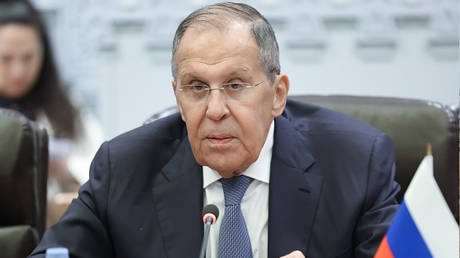
Lavrov does not rush. His walk is measured, almost weary, the gait of a man who has spent a lifetime listening to speeches he does not believe. When he adjusts the microphone, the metallic click echoes through the chamber. He adjusts his glasses, looks out over the sea of delegates, and begins.
There is a distinct gravity to the Russian message at the United Nations. It is a message built on historical grievance, geographic paranoia, and an unwavering conviction that the Western-led international order is a temporary illusion. When Lavrov speaks, he does not ask for permission. He demands reckoning. He points to broken promises made after the fall of the Wall, to expansion that crept eastward like an unheeded shadow, to double standards applied in the Middle East, in the Balkans, in the markets of global finance.
To understand the impact of his address, one must step outside the air-conditioned bubble of Turtle Bay and look at the world through the eyes of a Moscow policymaker. For centuries, Russian security has been defined by flat plains and open borders—an eternal vulnerability that bred a fierce, unyielding centralization of power. When Lavrov stands at the UN podium and rails against Western hegemony, he is channeling centuries of existential anxiety. He is speaking to a domestic audience that remembers the humiliation of the 1990s, the economic collapse, the sense of being pushed to the periphery of European history.
Yet, diplomacy is theater, and theater requires an audience that reacts. Across the aisle, empty seats begin to multiply as delegates walk out in quiet protest. Others stay, pen in hand, scribbling notes for the rebuttal. The diplomatic ritual is a dance of mutual estrangement. Both sides know the scripts by heart. The grievances are old; the rebuttals are rehearsed. Nothing in the room will change because of a single speech. And yet, everything changes because the words are recorded, broadcast, archived, and weaponized in capitals around the world.
Consider the human cost behind these geopolitical maneuvers. While ambassadors sip lukewarm water from crystal glasses under the glare of television lights, families in Donbas hallow out basements against incoming artillery. Fishermen in the Black Sea navigate waters choked with maritime mines. Inflation squeezes families from Cairo to Buenos Aires because grain shipments are held hostage by the mechanics of war and sanction. The abstract nouns used in the General Assembly—sovereignty, deterrence, multipolarity, security architecture—translate directly into empty plates, sirens wailing in the dead of night, and young men buried in frozen earth.
Lavrov knows this. His career spans the collapse of the Soviet Union, the Balkan wars, the invasions of Iraq and Afghanistan, the Arab Spring, and the current conflagration in Eastern Europe. He is a survivor of diplomatic trench warfare. He has outlasted American presidents, British prime ministers, and United Nations secretaries-general. He speaks with the chilling composure of someone who believes that history is on the side of endurance, not idealism.
When he warns of a catastrophic clash between nuclear powers, it is not mere hyperbole. It is a calculated reminder of the stakes. The architecture constructed in 1945 out of the ashes of global war was designed to prevent the great powers from direct confrontation. Today, that architecture is rusting at the joints. The Security Council, paralyzed by vetoes and mutual distrust, resembles an ancient watchtower whose guards are shouting at each other across a widening chasm.
The Western response to Lavrov's UN addresses is often framed in moral clarity. Democracy versus autocracy. Rules-based order versus lawless aggression. These are powerful banners, capable of mobilizing populations and justifying billions in military aid. But moral clarity, when divorced from strategic empathy, can become a blinding fog. It assumes that adversaries operate solely out of malice rather than fear, and that history began yesterday.
When Lavrov highlights the hypocrisy of Western interventions—pointing to past campaigns that left nations shattered and destabilized—he touches a nerve across the Global South. Many nations in Africa, Asia, and Latin America look at the current crisis in Ukraine not through the lens of European borders, but through the lens of selective enforcement. They ask why international law was treated as malleable in other hemispheres, yet absolute in this one. This skepticism is the fertile soil in which Moscow’s diplomatic message takes root. It is not that developing nations endorse Russian military actions; rather, they refuse to march in lockstep with a Western coalition whose moral authority they view with deep suspicion.
Inside the hall, the speech reaches its climax. Lavrov’s voice remains steady, low, almost conversational, cutting through the simultaneous translation heard in millions of earpieces globally. He warns that the current trajectory leaves no room for compromise, that the West has chosen a path of total confrontation, and that Russia is prepared for the long haul.
Then, he steps away from the podium.
The microphone clicks off. The applause is sparse, isolated to a few allied delegations. The silence that follows is thick with unspoken tension. Lavrov walks back to his seat, his expression unchanged, trading a brief, impassive nod with an aide.
Outside the hall, the media scrum erupts. Microphones thrust forward like lances. Cameras flash in rapid succession. Journalists shout questions over one another, desperate for a soundbite, a fragment of interpretation that can be sliced, diced, and broadcasted to a world hungry for certainty. Analysis panels assemble instantly on television screens, dissecting every syllable, searching for signs of softening or hardening in the Kremlin's stance.
But the real story does not reside in the spin rooms or the television studios. It resides in the widening fracture of global trust.
We have entered an era where diplomacy has ceased to be an instrument of reconciliation and has instead become an extension of warfare by other means. The United Nations was built on the premise that jaw-jaw is always better than war-war. Yet when jaw-jaw becomes nothing more than a succession of monologues delivered to empty seats and hostile cameras, the safety valve fails.
Consider what happens next. Without functioning channels of communication, miscalculation becomes the default state of international affairs. A stray missile, a mistimed radar ping, a misunderstood warning—these are the sparks that can leap from regional flashpoints into global infernos. The diplomats in New York know this. They feel the ground shifting beneath their polished shoes. Yet they remain trapped in the amber of protocol, repeating rituals that no longer command the loyalty of the forces unleashed upon the world.
As the evening settles over Manhattan, the glass palace on First Avenue glows against the darkening skyline. Inside, cleaning crews sweep up discarded notes and empty water bottles. The translators pack away their headsets. The flags of nearly two hundred nations hang motionless in the humid autumn air, stirring only when a sudden gust off the river rattles the poles.
Tomorrow, another delegate will step up to the podium. Another message will be delivered into the void. Another set of grievances will be aired, ignored, and weaponized.
The iron words have been spoken. The glass house holds its breath. And somewhere in the dark, the river keeps flowing, indifferent to the speeches of men, carrying the debris of an old world toward an uncharted sea.