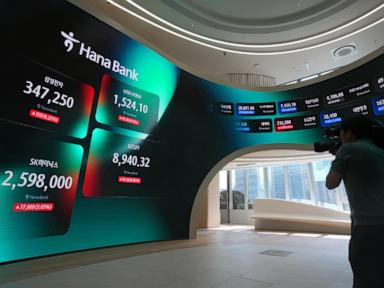
The mixed reaction across global equity indices following the diplomatic accord between the United States and Iran reflects a structural repricing of geopolitical risk rather than a uniform shift in market sentiment. While mainstream commentary characterizes the market behavior as directionless, a granular decomposition of capital flows reveals a sharp divergence between energy-dependent equities, commodities, and systemic risk-off assets. The signing of the agreement triggers two competing macroeconomic vectors: the immediate deflationary pressure on global energy markets and the simultaneous expansion of risk tolerance in non-energy manufacturing and logistics sectors.
Understanding the net impact of this geopolitical pivot requires isolating the specific mechanisms through which diplomatic normalization alters corporate cash flows and discount rates. Equity markets are not reacting to the sentiment of peace; they are calculating the mathematical shift in global supply curves and the localized unwinding of the geopolitical risk premium.
The Tri-Partite Transmission Mechanism of the Accord
The baseline volatility observed in world shares stems from three distinct economic transmissions that operate on differing time horizons.
[Geopolitical Accord]
   │
   ├───> 1. Supply Curve Shift (Immediate Brent Crude Depressurization)
   ├───> 2. Cost-of-Capital Reduction (Unwinding of the Straits Risk Premium)
   ├───> 3. Asset Reallocation (CapEx Migration from Defensive to Cyclical)
1. Supply Curve Shift and Brent Crude Depressurization
The primary transmission vector is the physical and psychological recalibration of the global energy supply curve. The formalization of the accord implies the structured removal of secondary sanctions on Iranian crude exports. Financial models must account for two distinct phases of supply expansion:
- Floating Storage Clearance: The immediate mobilization of crude currently held in maritime storage. This volume acts as an instantaneous supply shock to the spot market.
- Production Capacity Re-engagement: The capital expenditure required to restore mature fields to peak production capacity. This process introduces a lag of four to eight months, shifting the medium-term futures curve into deeper contango.
The immediate drop in Brent and WTI futures strips out the speculative war premium, which had artificially elevated crude prices by an estimated $12 to $15 per barrel prior to the signing. The compression of energy prices operates as an immediate tax cut for energy-importing industrialized economies, particularly within the Eurozone and developed Asian markets, while simultaneously downgrading the cash-flow projections for Western energy conglomerates.
2. Cost-of-Capital Reduction via Maritime Logistics Stability
The second mechanism is the structural reduction in operational friction along critical trade corridors, specifically the Strait of Hormuz. Geopolitical friction in this chokepoint forces maritime transport operations to absorb elevated war-risk insurance premiums and incur secondary costs through route diversification.
The signing of the accord compresses these insurance premiums almost immediately. The reduction in maritime freight costs lowers the landed cost of containerized cargo and bulk commodities. For logistics firms and global supply chains, this compression functions as an expansion of operating margins. The discount rate applied to cash flows generated by international trade routes declines, driving a targeted revaluation of shipping, logistics, and global manufacturing equities.
3. Asset Reallocation and Capital Migration
The divergent performance of global indices is fundamentally an asset reallocation problem. Capital is migrating out of defensive safe havens and inflation hedges into cyclical equities.
- Precious Metals and Sovereign Debt: Gold and long-duration sovereign bonds experienced immediate capital outflows as the probability of a systemic escalatory shock dropped to near zero.
- Cyclical and Growth Equities: The capital extracted from defensive positions is being deployed into high-beta technology, consumer discretionaries, and industrial manufacturing.
This rotation explains the "mixed" headline performance of global indices. The downward pressure on heavily weighted energy and defense sectors offsets the gains recorded in the technology and industrial sectors, creating a deceptive illusion of market stagnation at the aggregate index level.
Regional Asymmetry in Market Calibration
The aggregate global index data obscures deep regional variances driven by local economic dependencies on energy imports and regional trade architectures.
The Eurozone and Developed Asia
Indices such as the DAX in Germany and the Nikkei 225 in Japan demonstrate the strongest positive correlation with the diplomatic breakthrough. These economies are characterized by a structural reliance on imported hydrocarbons and a high concentration of industrial manufacturing. The compression of input costs via lower oil prices directly expands corporate gross margins. Furthermore, the stabilization of broader Middle Eastern trade routes reduces the systemic risk metrics for export-oriented European and Asian conglomerates.
North American Equities
The S&P 500 and Nasdaq exhibit a bifurcated response. The energy sector, which commands a significant share of capital expenditure and high-yield debt issuance in North America, acts as a major drag on the broader indices. Exploration and production companies are repricing their inventory valuation based on a lower long-term oil price floor. Conversely, the technology and consumer sectors benefit from the expectation of sustained consumer purchasing power preservation as domestic retail fuel prices ease. The net result is an index-level equilibrium that appears static but masks high internal churn.
Emerging Markets and Sovereign Spread Compression
Within emerging markets, the impact splits along net-exporter and net-importer lines. Non-oil producing emerging markets face a significant reduction in their current account deficits, leading to an appreciation of local currencies against the US dollar. This currency appreciation reduces the servicing cost of dollar-denominated sovereign and corporate debt. The credit default swap spreads for these nations are tightening, signaling a fundamental improvement in sovereign risk profiles.
Institutional Limitations and Structural Bottlenecks
While the analytical framework suggests a net-positive transition for global growth, institutional investors must factor in several structural constraints that prevent an immediate, unconstrained market rally.
First, the velocity of Iranian oil integration is bounded by infrastructure decay. Years of underinvestment and capital isolation mean that domestic production facilities require substantial Western capital and technology to achieve sustained maximum output. The initial supply surge will be restricted to existing inventories, meaning the long-term deflationary pressure on energy will be more gradual than the spot market's initial reaction implies.
Second, regulatory friction regarding compliance lookup structures remains high. Even with the signing of a deal, global financial institutions will not instantly clear transactions involving newly secondary-sanction-cleared entities. The architectural rebuilding of banking corridors and correspondent banking relationships requires months of legal auditing. This creates a liquidity bottleneck, delaying the actual deployment of capital into regional trade initiatives.
Strategic Asset Allocation Realignment
The current market equilibrium presents a mispricing opportunity born from index-level confusion. The structural reduction in geopolitical risk demands a permanent recalibration of portfolio exposure away from conflict-hedged positions.
The optimal strategic play requires shorting volatility instruments and reducing exposure to domestic defense contractors whose valuation multiples were predicated on sustained procurement escalations. Capital should be reallocated toward high-beta industrial exporters within the Eurozone and East Asia, which stand to capture the double benefit of compressed input costs and expanded global trade liquidity. The mixed signal from global benchmarks is a transient phenomenon; the underlying fundamentals point to a structured expansion of cyclical economic activity as the geopolitical risk tax is dismantled.


