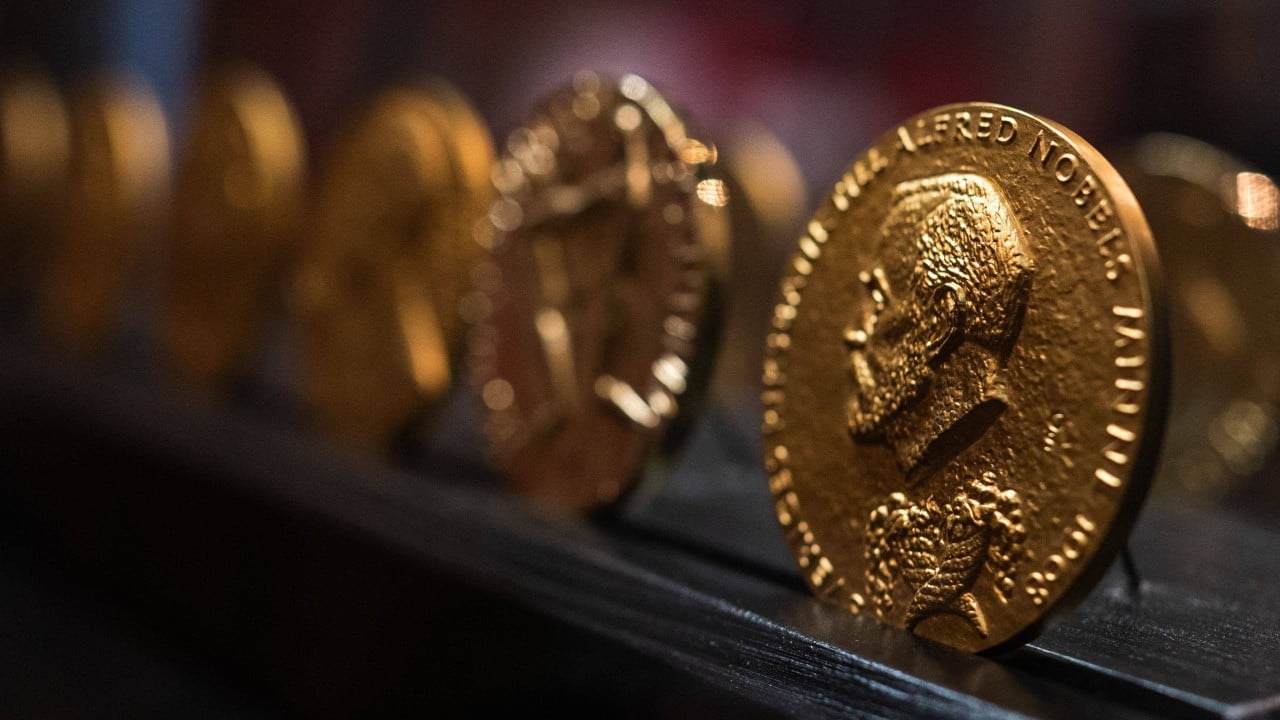
The phone call from Stockholm arrives in the dead of night, usually around three in the morning on the East Coast of the United States. A voice with a polite Swedish accent informs a groggy scientist that their life is over.
Not literally, of course. Technically, their life has just reached its absolute zenith. They have won the Nobel Prize. Within forty-eight hours, their name will be printed in every major newspaper on earth. Universities will rename buildings after them. Presidents will call to offer congratulations, and young graduate students will tremble slightly when passing them in the hallway.
Yet, inside the quiet, fluorescent-lit laboratories where real discovery actually happens, a strange funeral begins.
For decades, we have operated under a comforting, almost cinematic delusion about how human progress works. We believe that if you take a brilliant mind, hand them a gold medal, a million dollars, and unconditional prestige, they will use that freedom to take even bigger, wilder risks. We assume the Nobel Prize is rocket fuel for the human intellect.
A sobering body of research—most notably an exhaustive, data-driven investigation by Chinese researchers examining decades of scientific output—suggests we got the chemistry entirely backward. The medal isn't rocket fuel. It is amber.
The Architecture of a Slowdown
To understand what happens when a mind is crowned, we need to leave the press conferences behind and step into a fictionalized, composite scenario built from real behavioral data.
Consider Dr. Elena Vance. Let us imagine her at forty-two, hunched over a mass spectrometer at two in the morning, fueled by lukewarm coffee and a stubborn, slightly reckless hypothesis about protein folding. At forty-two, Elena is hungry. She has to fight for grant money. Peer reviewers tear her drafts apart. Her ideas are considered fringe by the grey-bearded elders of her department. Because she has nothing to lose and everything to prove, she takes a wild gamble on an experimental method that ninety percent of her colleagues call a dead end.
It works. Fifteen years later, at fifty-seven, that gamble changes medicine forever. And three weeks after her fifty-eighth birthday, Stockholm calls.
Now watch what happens to Elena in the five years after the ceremony.
Her calendar, once empty enough to allow six uninterrupted hours of staring at raw data, is shattered into fifteen-minute increments. She is asked to sit on presidential advisory boards. She is flown to Davos, to Beijing, to Geneva, to deliver keynote speeches about "the future of science" rather than actually doing any. Universities beg her to lend her name to new institutes. She becomes a ceremonial monument.
Even when she manages to slip back into her lab, the air has changed. Before the prize, if Elena published a paper that turned out to be wrong, it was just Tuesday. Science is built on a mountain of respectable failures. After the prize, a wrong paper isn't just a mistake; it is a fall from grace. The weight of her own legend sits on her shoulders like lead armor.
She stops taking wild gambles. Why risk looking foolish when you are already immortal?
This is not merely a psychological hunch. When researchers analyzed the publication records, citation impacts, and patent filings of Nobel laureates before and after their wins—comparing them against equally brilliant peers who came close to winning but never got the call—the pattern was unmistakable. Productivity doesn't just plateau after the prize. It drops. More tellingly, the novelty of their work plummets.
The prize winners become curators of their own past triumphs. Meanwhile, the scientists who lost—the ones who stayed hungry, annoyed, and overlooked—kept pushing into uncharted territory, generating higher-impact breakthroughs in the years that followed.
The Gravity of Prestige
I remember the first time I witnessed a smaller, localized version of this phenomenon up close. Years ago, I worked alongside a lead engineer who had just won a prestigious industry innovation award for redesigning a notoriously unstable distributed database. Before the award, he was a terror in code reviews—restless, constantly questioning our foundational assumptions, tearing up his own architectures every six months because he smelled a better way.
The week after the glass trophy landed on his desk, he stopped writing experimental code. Instead, he spent his mornings defending his prize-winning architecture against newer, faster ideas proposed by junior developers. The trophy had turned a pioneer into a border guard. He wasn't protecting the company; he was protecting the validity of his prize.
Magnify that human reflex by a factor of a thousand, and you have the global scientific establishment.
When the Chinese research team dug into the metrics of top-tier scientific awards, they uncovered a structural paradox that should worry anyone who cares about the future of medicine, clean energy, or artificial intelligence. The study looked closely at how elite recognition alters the trajectory of research teams, funding allocation, and intellectual risk-taking.
What emerges from the data is a phenomenon economists call "the winner's curse," mutated into an intellectual trap.
First, there is the distraction tax. A Nobel laureate's time instantly ceases to belong to them. The administrative, ceremonial, and public-speaking demands act like a slow-acting poison on deep cognitive work. Breakthrough science requires long, uninterrupted stretches of boredom and frustration—the exact mental states that celebrity obliterates.
Second, and far more insidious, is the magnetism of money.
Science funding is a zero-sum game. When an institution suddenly boasts a Nobel laureate, grant agencies and private philanthropists rush to shower that lab with millions of dollars. On paper, this looks like a win. In reality, it creates intellectual monopolies.
Think of scientific innovation like an ecosystem. Healthy forests need thousands of small, scrappy seeds competing for sunlight. When a single giant tree grows so massive that it blocks out the sky, the forest floor dies.
In the wake of a major prize, massive amounts of capital and the brightest graduate students are vacuumed up into the laureate’s orbit. Yet, because the laureate has become conservative—focusing on safe, incremental extensions of the work that won them the prize twenty years ago—all that fresh talent and money gets locked into yesterday’s revolution.
The fringe mavericks, the ones working on the bizarre, unproven ideas that will actually matter in 2045, are left starving in the dark.
Why We Confuse History with the Future
To understand why this happens, you have to look at the strange, backward-facing nature of the Nobel Prize itself.
Alfred Nobel originally intended his prizes to honor discoveries made "during the preceding year." He wanted to fund active, ongoing brilliance. He wanted to give firebrands the cash to keep burning.
Over the past century, however, the Nobel committee grew terrified of making mistakes. To ensure a discovery was truly bulletproof, they began waiting. And waiting. Today, the average lag time between a scientist making a breakthrough and winning the Nobel Prize for it is often twenty to thirty years.
By the time the call from Stockholm arrives, the revolutionary work is already settled history. The laureate is usually in their late sixties or seventies. Yet, our culture treats the prize not as a lifetime achievement wreath, but as an anointing of supreme, ongoing authority.
We hand the keys to the future to people being rewarded for the past.
Consider what happens next in the hierarchy of a research university. When a Nobel laureate speaks in a faculty meeting, debate dies. Who is going to tell a laureate that their intuition about a new funding direction is outdated? Who is going to challenge their orthodoxy?
In physics, there is a famous, slightly grim maxim attributed to Max Planck: science advances one funeral at a time. Planck wasn't being cruel; he was observing a stubborn truth about human ego. New truths rarely triumph by convincing their opponents. They triumph because a new generation grows up familiar with them, while the old guard eventually steps aside.
Top-tier awards artificially extend the reign of the old guard. By turning mortals into deities, we freeze the intellectual consensus around whatever worked two decades ago.
The Myth of the Lone Genius
There is another layer to this problem, one that feels deeply personal to anyone who has ever built anything complex.
The Nobel Prize is rigidly tethered to an antiquated nineteenth-century fantasy: the myth of the lone genius. Under Nobel rules, a prize in a given category can be shared by at most three living individuals.
Modern science does not work like that. Not even close.
When the LIGO collaboration detected gravitational waves in 2015—confirming a century-old prediction by Albert Einstein—the discovery paper had over one thousand authors. It required armies of optical engineers, software architects, vacuum technicians, and theoretical physicists working in tandem across continents. Yet, when the Nobel Prize was awarded in 2017, only three men stood on the stage in Stockholm.
Imagine being one of the nine hundred and ninety-seven other researchers who spent twenty years calibrating lasers in the Louisiana swamps or writing noise-reduction algorithms through the night, only to watch the history books erase your existence so three figureheads could wear white tie and tails.
This winner-take-all distortion breeds a toxic hyper-competitiveness inside laboratories. Instead of sharing preliminary data freely—which accelerates everyone's progress—researchers hoard their findings, terrified that a rival lab will publish three weeks earlier and steal the credit that leads to Stockholm.
The Chinese study highlights how this obsession with elite, individual trophies warps national science policies as well. Around the world, governments and university administrators have become fixated on "Nobel-hunting." They pour billions into flashy, prestige-driven mega-projects designed to snag international headlines and climb university rankings, while quietly gutting the unglamorous, foundational research budgets that sustain thousands of everyday scientists.
You cannot manufacture a breakthrough by dangling a gold medal at the end of a stick. Breakthroughs are messy, accidental, and profoundly inefficient. They happen when curious people are given enough stability to survive and enough obscurity to fail without an audience.
The Courage to Be Obscure
I confess that when I first encountered the data showing that Nobel laureates become less innovative after winning, my immediate reaction was skepticism. It felt cynical, almost ungrateful. Shouldn't we celebrate human excellence? Shouldn't the people who cure diseases and unlock the secrets of the universe get their flowers while they are still alive to smell them?
Of course they should.
The problem isn't gratitude. The problem is how we design the incentives around it.
Look closely at the moments in history when science and technology exploded forward at breathtaking speed. Think of Bell Labs in the mid-twentieth century, or the early days of molecular biology in Cambridge, or the skunkworks aerospace teams of the 1950s.
Those environments were intensely collaborative, wildly experimental, and remarkably flat in their hierarchies. Nobody was optimizing their daily schedule to win a lifetime achievement award. They were obsessed with the puzzle right in front of them. When someone cracked a major problem, the reward wasn't a golden throne and a permanent speaking tour; the reward was getting handed an even harder, weirder puzzle the next morning.
If we want more genuine innovation—not just more trophies on mahogany shelves—we have to rethink how we reward brilliance.
What if, instead of pouring massive prestige and monopolistic funding onto scientists after their best work is behind them, we inverted the pyramid? What if we funded "high-variance" science—betting small amounts of money on thousands of unproven, slightly crazy ideas proposed by twenty-eight-year-old postdocs who have zero prestige to protect?
And what about the winners? Perhaps the kindest thing we could do for a newly minted Nobel laureate isn't to put them on a pedestal, but to build them a wall. Protect their time. Insulate them from the boards, the committees, the endless ceremonial dinners. Remind them that the medal in their drawer is a receipt for past work, not a barrier against future failure.
The Heavy Gold
Picture a quiet office in a brick building on a rainy Tuesday afternoon.
On the wall hangs a framed certificate signed by the King of Sweden. Beside it, inside a velvet-lined wooden box, rests a heavy disk of eighteen-karat green gold plated with twenty-four-karat gold, bearing the profile of Alfred Nobel.
At the desk sits a brilliant mind, staring at a blank sheet of paper. Outside the door, an assistant is holding a stack of invitations to speak in Zurich, Tokyo, and New York. Down the hall, twenty young researchers are waiting for the boss to approve their safe, predictable, completely uncontroversial grant proposals.
The laureate picks up a pen, hesitates for a second over a wild, unproven equation that might make them look like a fool, and then slowly sets the pen down. The phone rings. Another interview. Another applause line.
The gold in the box doesn't tarnish. It stays bright, heavy, and immaculate forever, resting quietly in the dark while the world outside waits for a miracle that nobody has the freedom to risk anymore.