Walk through the aisles of a grocery store in Fresno or stand on a street corner in San Francisco, and you’ll feel it. A heavy, static tension. It is the weight of a state that feels like it is vibrating at a frequency its citizens can no longer tune into. California was once the promised land, a place where a middle-class salary could buy a piece of the sun and a backyard with a lemon tree. Now, for many, it feels like a beautiful machine that has begun to grind its own gears.
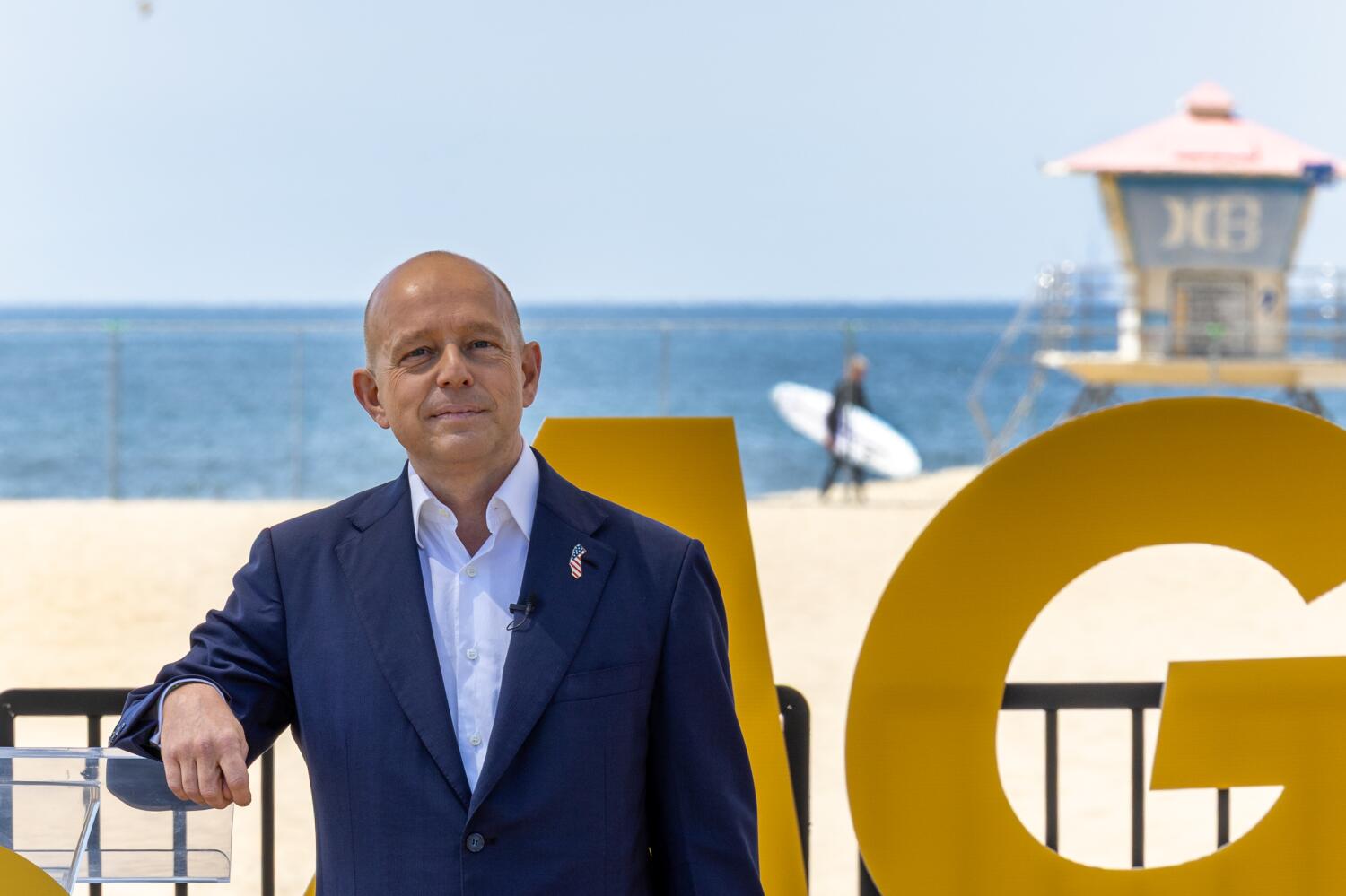
Into this friction steps a specific kind of endorsement. It isn't just a political rubber stamp. When Donald Trump announced his support for Steve Hilton in the race for California Governor, he didn't just back a candidate. He lit a signal fire in a valley that many national Republicans had long ago ceded to the shadows. Meanwhile, you can find related events here: The Islamabad Framework: Strategic Architectures of the US-Iran Ceasefire.
The Architect of the Positive
Steve Hilton is not your standard-issue career politician. He doesn't carry the weary, polished veneer of someone who has spent twenty years climbing the rungs of Sacramento’s legislative ladder. Most people recognize him from the glowing screen of their televisions, the host of "The Next Revolution" on Fox News. But before he was a media personality, he was an architect of a different sort.
In the United Kingdom, Hilton served as a senior advisor to Prime Minister David Cameron. He was the man behind "Big Society," a philosophy built on the idea that power should be stripped away from centralized, bloated bureaucracies and handed back to neighborhoods, families, and individuals. He is obsessed with the granular. He cares about why it takes five years to permit a single apartment building and why the electricity bill in a Bakersfield bungalow is double what it is in Vegas. To understand the bigger picture, check out the excellent analysis by Al Jazeera.
Trump’s endorsement of Hilton is a recognition of this specific brand of populism. It is a fusion of the MAGA movement’s disruption and Hilton’s "Positive Populism." This isn't about burning the house down. It is about trying to find the blueprints and figuring out where the wiring went wrong.
The Invisible Stakes of a One-Party Reality
To understand why this endorsement matters, you have to look past the campaign posters and into the cold mathematics of California life. The state is currently a supermajority. One party holds the keys to the Governor’s mansion, the Assembly, and the Senate. When competition dies, innovation usually follows it into the grave.
Consider a hypothetical small business owner named Maria. Maria runs a dry-cleaning business in Riverside. She isn't a political theorist. She is a mother who works fourteen hours a day. Over the last decade, Maria has watched her margins evaporate. It wasn't one big disaster. It was a thousand small cuts. A new regulatory fee here. A mandatory insurance hike there. A spike in utility costs driven by ambitious but expensive energy transitions.
For Maria, the Trump-Hilton alliance represents a hope that someone might finally say "no" to the next regulation. The endorsement signals a shift toward a "California First" mentality that mirrors the national "America First" rhetoric. It’s a promise to prioritize the cost of living over the comfort of the administrative class.
The numbers back up Maria’s anxiety. California has consistently ranked near the bottom of business friendliness indices. The state’s poverty rate, when adjusted for the cost of living, remains among the highest in the nation. This is the paradox Hilton aims to solve: the wealthiest state in the union with a disappearing middle.
The Television Primary
There is a visceral quality to this race that sets it apart. Trump is a creature of the media, and so is Hilton. They understand the power of the image and the narrative arc. By endorsing Hilton, Trump is bypassing the traditional GOP infrastructure in California—which has often been accused of being too quiet or too resigned to defeat—and plugging directly into a high-voltage media personality.
Hilton’s campaign is built on the "California Plan." It is a series of policy proposals that sound more like a tech startup's disruptor manifesto than a government white paper. He talks about "reversing the decline" with a fervor that borders on the religious. He points to the homeless encampments lining the 101 and asks why a state with a budget larger than most countries cannot provide basic dignity and order on its streets.
Critics will argue that a Trump endorsement is a kiss of death in a state where the former President lost by millions of votes. That is the conventional wisdom. But we are living in unconventional times. The political tectonic plates are shifting. If you look at the 2024 election results, you see a quiet, steady movement among Latino and working-class voters toward the Republican platform. These are the people Hilton is talking to. He isn't trying to win over the Hollywood hills; he is trying to win over the Central Valley and the Inland Empire.
The Policy of the Personal
What does Hilton actually want to do? He speaks of "Ending the Housing Crisis" not by government spending, but by radical deregulation. He wants to strip away the California Environmental Quality Act (CEQA) requirements that are often used by NIMBY activists to block affordable housing.
He wants to overhaul the education system, moving away from a centralized model and toward a "student-first" funding system where the money follows the child. To Hilton, the fact that California’s public schools are failing children while receiving record funding is a moral catastrophe.
Trump’s endorsement validates this aggressive, anti-establishment stance. It tells the base that Hilton is the "fighter" they have been looking for. In a state that has felt like a one-way street for decades, the mere presence of a candidate with this much name recognition and high-level backing changes the atmosphere.
The Shadow of the 2026 Horizon
The governor's race is more than just a local contest. It is a referendum on the California Dream. Is the dream dead, or is it just buried under a mountain of paperwork?
The 2026 election will be a test of whether the "Trump effect" can penetrate the deepest blue strongholds. If Hilton can make the race competitive, it forces the Democratic establishment to move toward the center. It creates a conversation that hasn't happened in California in a generation.
The stakes are invisible until they aren't. They are invisible when you pay your taxes in April. They become visible when you realize your children have moved to Texas or Florida because they can’t afford a house in the town where they grew up. They become visible when the lights go out during a heatwave because the grid can’t handle the load.
Steve Hilton is betting that Californians are tired of being a cautionary tale. Trump is betting that Hilton is the one to write a different ending.
The road to the Governor's mansion is paved with the frustrations of millions who feel like the state no longer loves them back. It is a long, winding path through the redwoods and the desert, through the tech hubs and the farm towns. The endorsement is the starting gun. Now, the actual running begins.
Deep in the heart of the valley, where the dust hangs thick over the almond groves, people are watching. They aren't looking for a savior. They are looking for a mechanic. Someone to pop the hood of the state and finally get the engine turning again. The gamble has been placed. The cards are on the table. California is waiting to see if it can still surprise the world.