On a morning that should have been routine, a single-engine Cessna 182 equipped with amphibious floats bypassed the runway and claimed a stretch of asphalt on North 32nd Street in Phoenix. The sight was jarring. A vessel designed for the sprawling lakes of the Northwoods sat idling amidst suburban traffic lights and strip malls. While local news outlets scrambled to replay cell phone footage of the soft touchdown, the immediate narrative focused on the "miracle" of the landing.
It was no miracle. It was a failure of systems, both mechanical and human.
When a seaplane operates on land, it is at its most vulnerable. The pilot reported an engine malfunction shortly after departing from Deer Valley Airport, leaving the aircraft with the glide ratio of a falling brick. In the cockpit of an amphibious plane, every second spent troubleshooting an engine is a second lost to the unforgiving physics of drag. To understand why this plane ended up on a residential artery, we have to look past the dramatic video and examine the brutal mechanics of emergency aviation in a sprawling urban desert.
The Aerodynamic Tax of the Amphibian
Flying a seaplane over a desert is inherently contradictory. Those massive, bulbous floats that allow the aircraft to bob gracefully on water act as giant air brakes when the engine dies. In a standard Cessna 182, a pilot has a fighting chance to stretch a glide toward a distant field. Once you bolt on amphibious gear, the aircraft’s performance profile shifts dramatically.
Drag increases. The weight distribution changes. Most importantly, the margin for error shrinks.
When the power plant failed over Phoenix, the pilot faced a "dead stick" scenario with an aircraft that wanted to go down, not forward. The choice of 32nd Street wasn't a tactical preference; it was a geographical necessity dictated by a rapidly vanishing altitude. In the tight confines of the Phoenix airspace, surrounded by mountains and dense suburban sprawl, an engine failure in an amphibious craft turns a flight into a high-stakes countdown.
The Heat Factor and Density Altitude
Phoenix isn't just a challenging environment because of the buildings. The thin, hot air of the Sonoran Desert plays havoc with engine performance and lift. On a warm morning, the "density altitude"—how high the airplane feels like it is flying based on air density—can be thousands of feet higher than the actual elevation.
This means engines produce less power and wings produce less lift. If a mechanical issue begins to brew, the environment accelerates the crisis. For a seaplane, which is already struggling against the aerodynamic penalty of its floats, the desert heat creates a narrow corridor of safety that can vanish in an instant.
Why the Street Became the Runway
A pilot’s primary directive in an emergency is to maintain aircraft control. The secondary directive is to find a place to land that minimizes the loss of life on the ground. North 32nd Street offered a long, relatively straight corridor with fewer power lines than the surrounding residential blocks.
However, landing on a public road is a desperate gamble. A Cessna 182 has a wingspan of 36 feet. Most city lanes are 10 to 12 feet wide. This leaves the pilot with a razor-thin clearance between parked cars, street signs, and utility poles. The fact that the aircraft touched down without clipping a wingtip or hitting a commuter speaks to a high level of stick-and-rudder skill, but it also highlights the terrifying lack of options available to general aviation pilots in modern urban landscapes.
Urban sprawl has effectively swallowed the "emergency patches" that pilots used to rely on. Fifty years ago, the area around Deer Valley Airport was largely open desert. Today, it is a sea of rooftops. When a motor quits today, the options aren't "field or forest"; they are "freeway or front yard."
The Mechanical Question Mark
While the FAA and NTSB begin their slow trek through the wreckage and maintenance logs, the focus will inevitably turn to the fuel system and the engine’s history. Continental and Lycoming engines, the workhorses of this industry, are incredibly reliable, but they are not immortal.
Small aircraft maintenance is a rigorous, regulated world, yet "infant mortality" of parts or simple fuel starvation can bring down the most well-maintained bird. In an amphibious seaplane, the fuel systems can be more complex, involving different tank configurations to manage the weight and balance of the floats. A simple mistake in fuel management or a clogged fuel injector becomes a terminal problem when there is no water for miles.
The Training Gap in Emergency Procedures
We often hear about "engine-out" training, but few pilots practice it in a high-drag amphibious configuration over a metropolitan area. Flight schools teach students to look for the "darkest green" spot in a field, assuming a soft landing. In Phoenix, the "darkest green" is usually a golf course, which is often packed with people, or a backyard swimming pool, which is far too small.
The pilot in this incident had to override the instinct to find "soft" ground and instead commit to the hard, unforgiving asphalt of a public road. This requires a mental pivot that many pilots struggle to make in the heat of a crisis.
The Illusion of Safety in Twin-Engine Thinking
Many observers ask why these planes don't have two engines for safety. The reality is that a second engine adds weight, cost, and a whole new set of aerodynamic complications. For most private owners, a well-maintained single-engine plane is the standard. But this incident serves as a stark reminder that when you fly a single-engine craft, you are effectively tethered to the ground by a single mechanical thread. When that thread snaps, your life depends entirely on the geography beneath you and the speed of your decision-making.
Public Infrastructure as a Safety Net
This event brings up a difficult conversation about how cities are built. We design roads for cars and sidewalks for pedestrians, but we rarely consider the airspace above as a functional part of the city's safety infrastructure. In some parts of the world, highways are built with straight sections specifically intended to serve as emergency landing strips for the military. In the United States, we have the opposite: we fill our medians with trees, our roadsides with power lines, and our intersections with massive overhead signals.
The Phoenix landing was successful because the pilot found a rare "dead zone" in the infrastructure. Had there been a pedestrian bridge or a dense cluster of power lines, the headline would have been a tragedy rather than a curiosity.
The Hidden Costs of General Aviation
Every time a plane lands on a road, the "not in my backyard" (NIMBY) crowd gains more ammunition to shutter local airports. They see a plane on 32nd Street and see a threat, not a mechanical failure handled with precision. But closing smaller airports like Deer Valley or Scottsdale doesn't make the sky safer; it just forces pilots to fly longer distances over congested areas to reach their destinations.
The survival of the pilot and the lack of ground injuries should be a case study in emergency management. Yet, it also exposes the fragility of the general aviation ecosystem. We are flying 50-year-old airframes with 40-year-old engine designs over 21st-century cities that have no room left for error.
The Physical Toll of a Hard Stop
When an airplane lands on a road, it doesn't just roll to a stop like a car. The tires on a Cessna are not designed for high-speed braking on asphalt without the benefit of a long, manicured runway. The friction creates immense heat. The pilot has to fight the "weather vane" effect, where the wind tries to catch the large tail and spin the plane into a ditch or a building.
The landing gear of an amphibious plane is tucked inside the floats. If the gear fails to extend fully, or if one side locks, the plane will "ground loop," spinning violently and likely flipping over. The video of the Phoenix landing shows a remarkably stable roll-out, suggesting the mechanical systems held together just long enough to save the pilot's life.
Beyond the Viral Video
The internet will move on from the seaplane on 32nd Street within forty-eight hours. But for the aviation community, the questions will linger. Was there a pre-flight oversight? Did the high density altitude play a role in the engine’s inability to recover?
Most importantly, we must ask if we are asking too much of pilots by allowing urban development to choke off every possible safety valve. If every field is turned into a shopping mall, every emergency becomes a public spectacle on a busy street.
The pilot did their job. They flew the airplane all the way through the crash. In aviation, a "good" landing is one you can walk away from, and an "excellent" landing is one where they can reuse the airplane. This was a good landing, born from a bad situation that was years in the making.
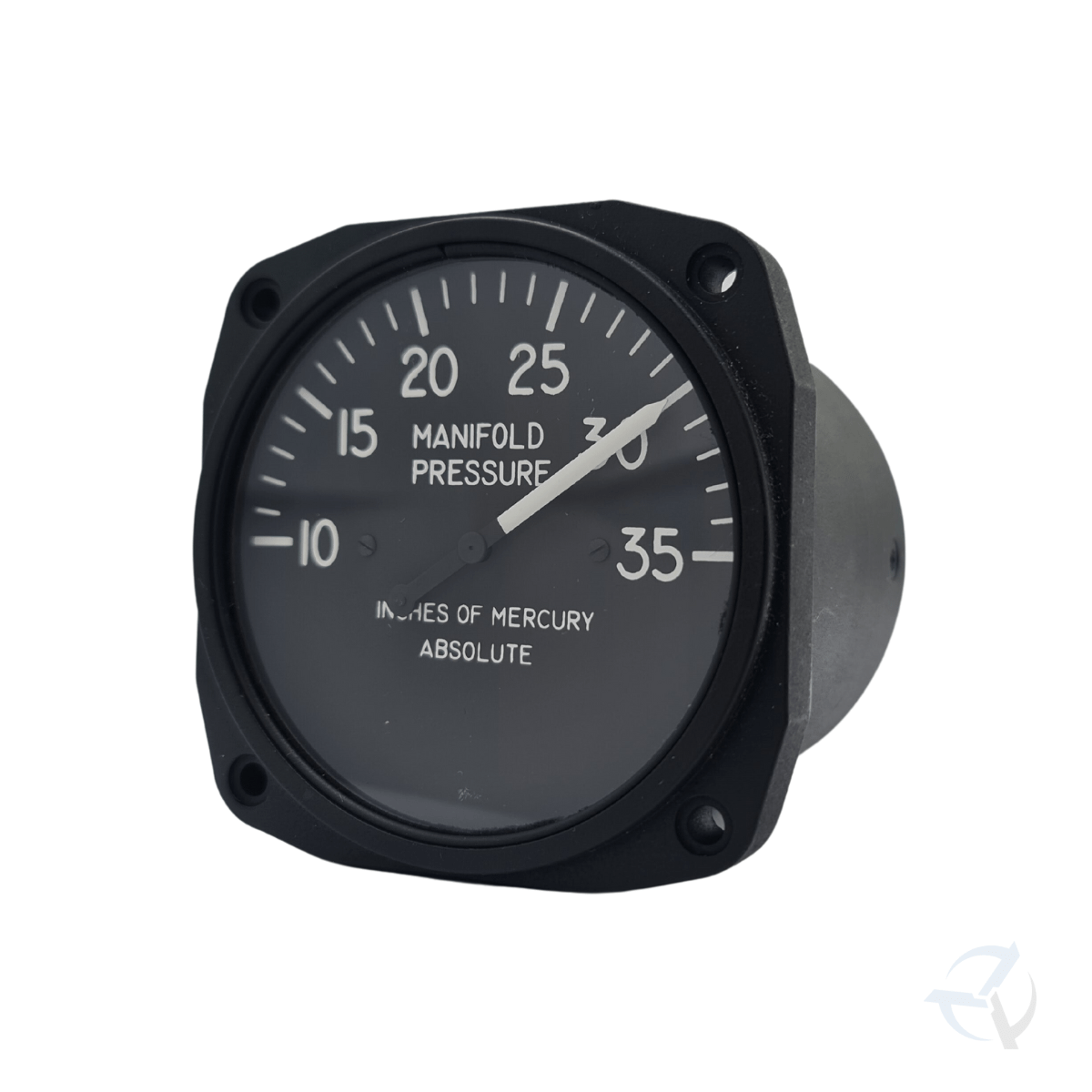
Check your fuel sumps. Watch your manifold pressure. In the desert, the ground is always rising to meet you faster than you think.