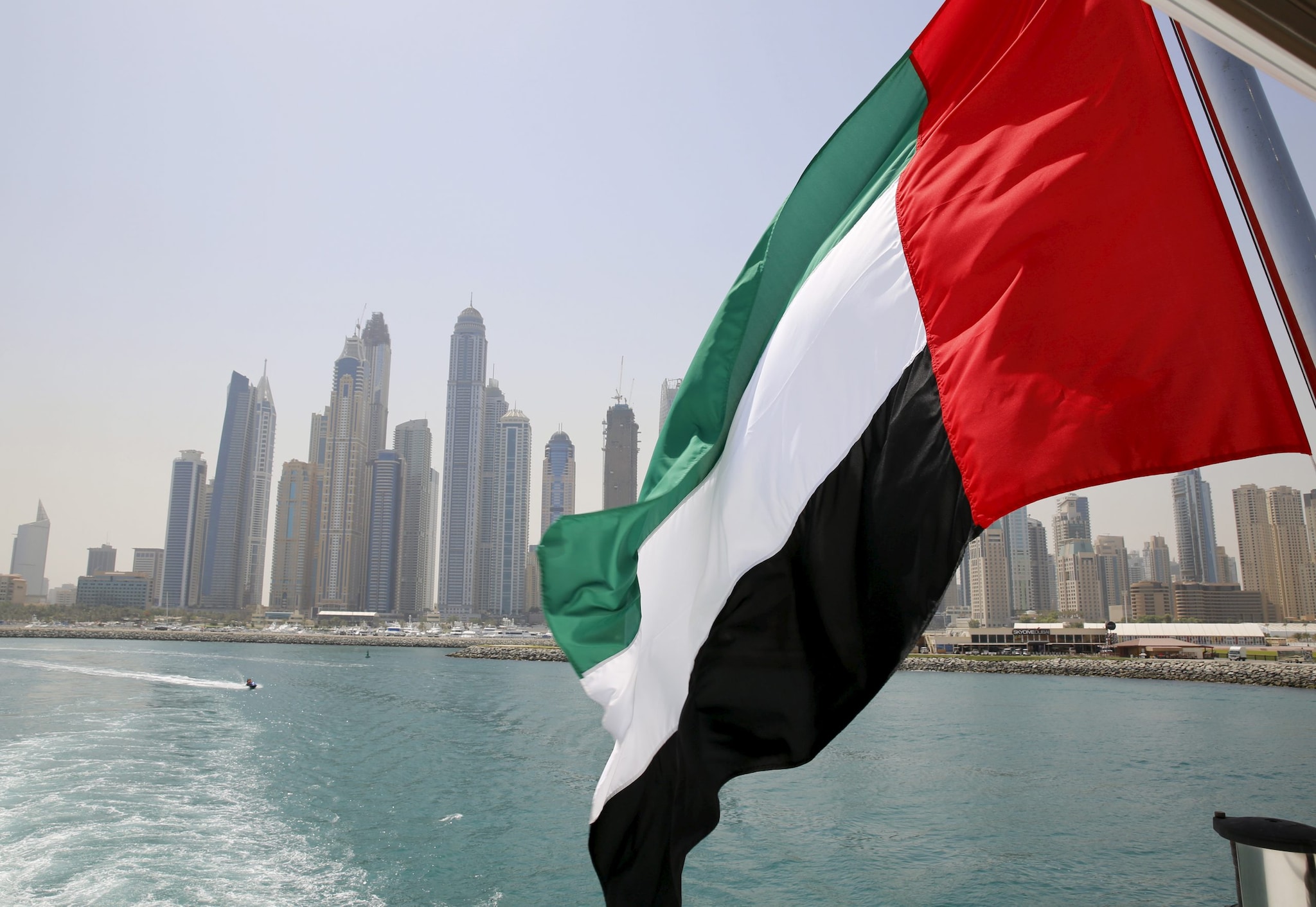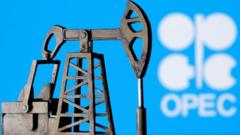
The announcement came with the clinical coldness of a corporate restructuring. On April 28, 2026, the United Arab Emirates confirmed it would exit OPEC, effective May 1. After 59 years of membership, Abu Dhabi has decided that the constraints of the cartel are no longer worth the price of entry. This is not just a policy shift; it is a fundamental break in the geopolitical architecture of the Middle East.
By walking away, the UAE effectively strips OPEC of roughly 12% of its total production capacity. More importantly, it removes the organization's second-most influential member and its most aggressive investor in new capacity. While the immediate price of Brent crude has spiked toward $105 per barrel, that rally is a product of fear and the ongoing closure of the Strait of Hormuz rather than a vote of confidence in OPEC’s remaining power. In reality, the UAE’s departure signals the beginning of a "price taker" era where individual national interests finally outweigh the collective fiction of Gulf solidarity. Don't forget to check out our earlier coverage on this related article.
The Five Million Barrel Friction
For years, the tension between Abu Dhabi and Riyadh has been the industry's worst-kept secret. While Saudi Arabia has pushed for aggressive production cuts to prop up prices and fund its ambitious Vision 2030 projects, the UAE has been playing a different game.
The Abu Dhabi National Oil Company (ADNOC) has poured over $150 billion into expanding its production capacity. They aren't building for a future of scarcity; they are building for a future of volume. Under current OPEC quotas, the UAE was capped at roughly 3.4 million barrels per day (bpd), despite having the physical infrastructure to pump nearly 5 million bpd. If you want more about the background of this, Business Insider provides an excellent breakdown.
This delta—1.6 million barrels of "locked" oil—represents a massive daily loss in potential revenue. For a nation looking to diversify its economy before the energy transition hits full stride, sitting on idle capacity at the behest of a neighbor is an intolerable cost. By exiting, the UAE regains total autonomy over its taps. They can now produce at full throttle, securing market share in Asia and forging direct bilateral deals with China and India without asking for permission from a committee in Vienna.
A Fracture Beyond Petroleum
To view this strictly through the lens of oil barrels is to miss the broader breakdown in the relationship between President Sheikh Mohamed bin Zayed and Crown Prince Mohammed bin Salman. The two nations are no longer just allies with minor disagreements; they are direct competitors for the title of the Middle East’s primary financial and logistical hub.
- The Saudi Push: Riyadh is forcing multinational companies to move their regional headquarters to the Kingdom if they want government contracts, a direct shot at Dubai’s status as a corporate haven.
- The Maritime Edge: While the Iran war has paralyzed shipping through the Strait of Hormuz, the UAE has utilized its Habshan–Fujairah pipeline to bypass the chokepoint, exporting crude directly to the Indian Ocean.
- The Investment Pivot: Even as it exits the oil cartel, the UAE is doubling down on global energy integration. Its overseas arm, XRG, is currently evaluating 29 separate deals worth tens of billions to build a massive natural gas and LNG footprint in the United States.
Abu Dhabi is positioning itself as a global energy major—more like a nation-sized ExxonMobil than a traditional petrostate. They are betting that being an unconstrained, reliable supplier is more valuable in the long run than being part of a cartel that is increasingly viewed as a tool for Saudi regional hegemony.
The Bearish Undercurrent
The short-term market reaction has been bullish because traders hate uncertainty. With the Strait of Hormuz partially closed due to the conflict with Iran, the physical delivery of oil is currently more important than who belongs to which club. However, once the regional dust settles, the UAE’s exit acts as a massive bearish catalyst for global prices.
OPEC’s primary weapon is the threat of coordinated cuts. When the UAE leaves, that weapon loses its edge. If other members with spare capacity—such as Iraq or Kuwait—decide that they too would rather sell more barrels at $70 than fewer barrels at $90, the cartel's ability to "floor" the price evaporates. We are looking at a future where the global supply of oil is likely to outpace demand, potentially driving Brent toward the $60 range once the current geopolitical risk premiums fade.
The Domino Effect
The most dangerous aspect of the UAE’s exit for OPEC isn't the lost barrels; it's the precedent. For decades, the cartel was the only way for Middle Eastern producers to counter the influence of Western "Seven Sisters" oil companies. But the rise of U.S. shale and the accelerating shift toward renewables have changed the math.
If the UAE successfully ramps up production and captures market share without suffering significant diplomatic or economic retaliation, the glue holding the rest of the group together will dissolve. Why should smaller producers follow quotas that primarily benefit the Saudi treasury?
This is the end of an era for the managed oil market. The UAE has realized that in a world moving away from fossil fuels, the winner isn't the one who keeps the most oil in the ground to support the price. The winner is the one who sells the most oil the fastest, using that capital to buy the future. Abu Dhabi just took the first shot in the final scramble for the exit.