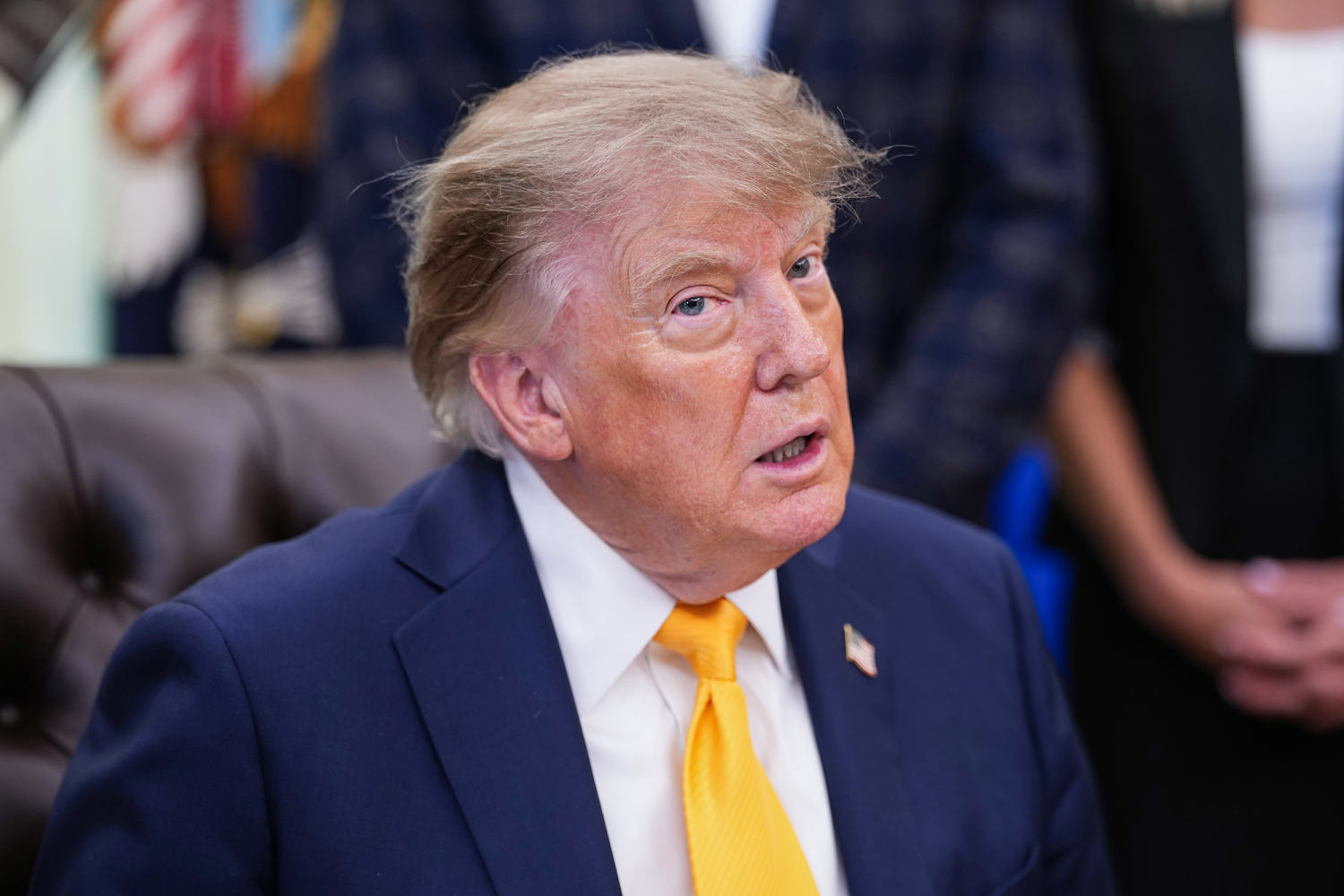
When Donald Trump and Xi Jinping sit down across a negotiating table, the international press corps treats the event like a theological breakthrough. Analysts breathlessly dissect every handshake, every carefully worded press release, and every perceived shift in tone as a sign of shifting global order. Yet this theatrical focus on leader-level summits obscures a far more rigid and unforgiving reality. High-level diplomacy between Washington and Beijing has settled into a predictable cycle of temporary truces and superficial resets that fail to alter the structural trajectory of their economic and technological cold war.
The underlying mechanisms driving bilateral friction are not solved by personal chemistry or late-night communiques. They are rooted in an unyielding battle for industrial dominance, supply chain sovereignty, and military positioning in the Indo-Pacific. While the two leaders manage political volatility through brief freezes on tariffs or agricultural purchases, the structural decoupling of the world's two largest economies proceeds methodically beneath the surface.
The Illusion of Commercial Permanence
For decades, the conventional wisdom held that deep economic integration would serve as an impenetrable anchor for political stability. If American corporations manufactured their goods in Chinese factories and Chinese banks held vast reserves of U.S. debt, a catastrophic fracture was supposedly unthinkable. That commercial logic collapsed years ago, replaced by a doctrine of national security pragmatism.
Consider the ongoing maneuvering over critical minerals and rare earths. Beijing retains control over a dominant share of global rare-earth refining capacity, giving it a permanent structural chokepoint that American industrial policy has struggled to bypass. When Washington announces new domestic subsidies or strategic stockpiling initiatives, it acts as an admission that decades of market reliance cannot be undone by a simple stroke of a pen during a summit meeting.
To understand why summits continually disappoint markets, one must look at what is intentionally left off the negotiating agenda. Core restrictions on advanced logic semiconductors, artificial intelligence compute clusters, and national security oversight are treated by both administrations as non-negotiable pillars of state survival. A temporary extension of a trade truce or minor adjustments to agricultural quotas do nothing to alter the fundamental competition over who writes the rulebook for twenty-first-century technologies.
The Domestic Pressures That Drive External Posturing
Both leaders operate under intense domestic constraints that make durable compromises nearly impossible. In Washington, bipartisan consensus on checking China's rise has hardened into one of the few enduring political certainties. Any administration that appears overly accommodating risks immediate legislative backlash and accusations of weakness from political opponents.
Beijing faces its own severe structural calculations. Faced with property market adjustments, demographic decline, and overcapacity in industrial manufacturing, the central leadership views technological self-reliance as an existential necessity. Relying on foreign components or open markets is perceived as an unacceptable vulnerability. When Xi Jinping engages with his American counterpart, he does so from a position shaped by domestic economic nationalism. Every concession must be balanced against the imperative to demonstrate strength to a domestic audience that expects zero capitulation to foreign pressure.
Consequently, the outcomes of these high-profile meetings are heavily front-loaded with optics while lacking deep institutional substance. Joint statements speak of strategic stability, but operational reality tells a different story. Bureaucracies in both capitals continue to implement export controls, investment screening mechanisms, and cybersecurity mandates independently of what transpires during the summit.
The Cost of Managing Symptoms Instead of Causes
By treating systemic competition as a diplomatic management problem, policymakers create a cycle of false hope followed by inevitable disillusionment. Markets rally every time a bilateral meeting is announced, only to face renewed volatility when working-level enforcement mechanisms clash with political rhetoric.
This friction extends far beyond bilateral trade ledgers. Third-party nations across Europe, Latin America, and Southeast Asia are forced to navigate an increasingly fragmented global economy where neutrality is a vanishing luxury. When superpowers prioritize national security over multilateral efficiency, supply chains fracture, redundancy becomes mandatory, and the cost of global commerce rises.
The core challenge of contemporary geopolitics is not finding the right formula of words for two leaders to agree upon. It is recognizing that the competition between the United States and China is structural, permanent, and immune to summit theater. Until analysts and markets stop treating every presidential meeting as a turning point, they will continue misreading the steady, grinding reality of a world permanently altered by great power rivalry.