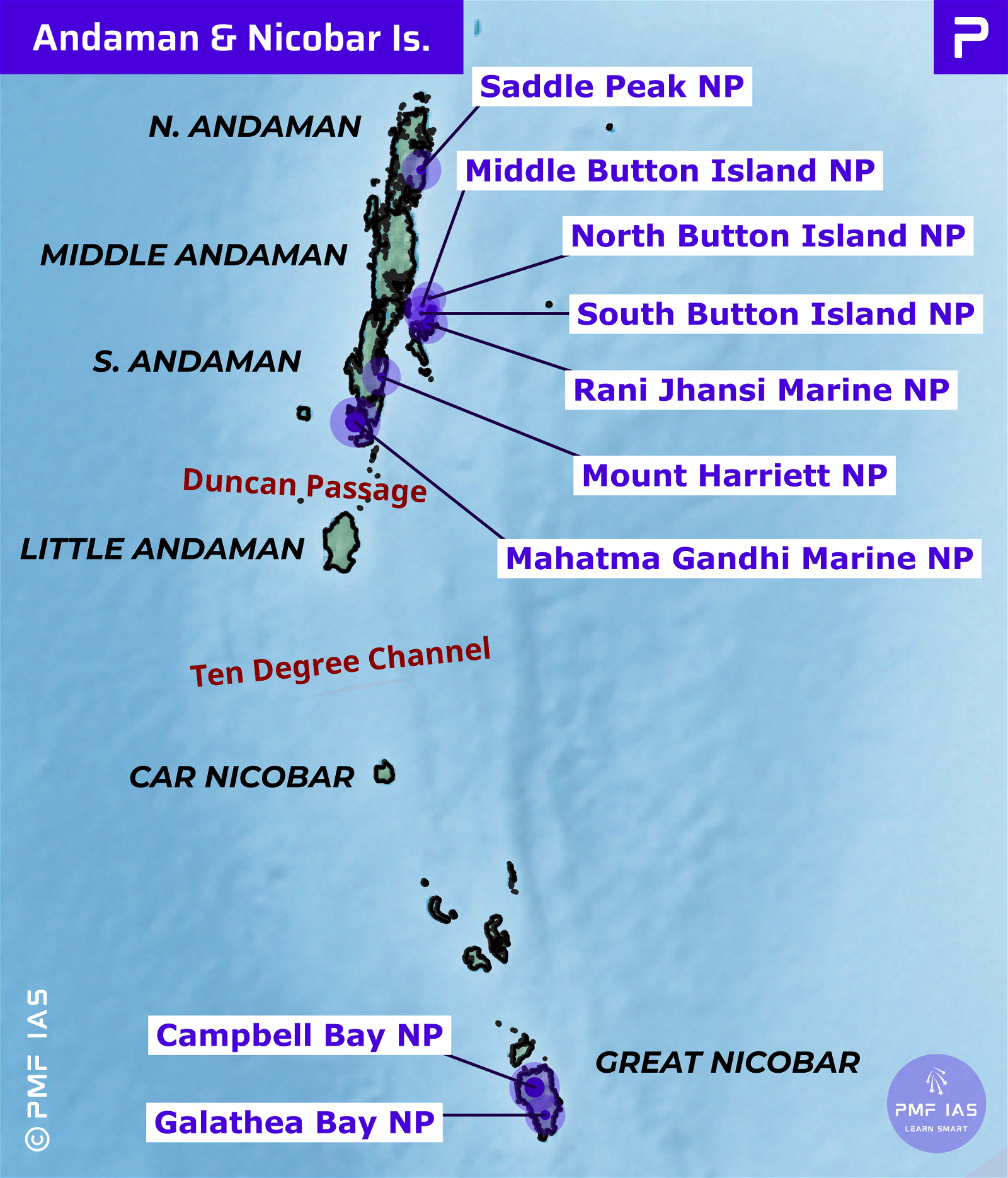
Stop crying over the mangroves and start looking at the Strait of Malacca. Most commentary on the Great Nicobar Project falls into two camps: wide-eyed government boosters celebrating a "new era" of infrastructure, or environmentalists mourning a lost eden. Both are missing the point. The Galathea Bay transhipment port isn't just a harbor. It is a dagger pointed at the heart of China’s maritime dominance.
If you think this is about shipping logistics, you’ve already lost the argument. If you found value in this post, you should check out: this related article.
The Transhipment Myth
Every surface-level analysis focuses on the fact that India currently loses nearly 75% of its transhipment cargo to ports like Colombo, Singapore, or Port Klang. They tell you that building a deep-sea port at Galathea Bay will "reclaim" that revenue.
Let’s be honest: that's a rounding error. For another angle on this event, check out the latest update from Reuters Business.
The real value of Great Nicobar isn't the port fees. It’s the control of the "choke point." Approximately 35% of global trade and 80% of China’s oil imports pass through the 1.5-mile-wide funnel known as the Malacca Strait. Currently, India watches this flow from a distance. With a Tier 1 international transhipment terminal at the southernmost tip of the Andaman and Nicobar Islands, India doesn't just watch the flow—it sits on the faucet.
Why Singapore is Terrified (And Why They Shouldn’t Be)
Critics argue that Great Nicobar can't compete with the efficiency of Singapore. They’re right. Singapore has spent fifty years perfecting the art of moving a container from Ship A to Ship B in record time. Galathea Bay is starting from zero in a region with no existing industrial base.
But the "efficiency" argument is a red herring.
In a world defined by fragmented supply chains and "friend-shoring," efficiency is taking a backseat to security. Global shipping lines are desperate for a hedge against a single point of failure in the Malacca Strait. By offering a deep-draft port—20 meters or more—capable of handling the newest generation of ultra-large container vessels, India isn't trying to "beat" Singapore. It is offering an alternative insurance policy for the Indo-Pacific.
The Environmental Cost is a Trade-Off, Not a Crisis
Let’s dismantle the biggest hurdle: the environmental impact. The project requires the diversion of roughly 130 square kilometers of forest and the relocation of indigenous communities. The outrage is predictable. It is also geographically illiterate.
Nations that have achieved economic hegemony did so by leveraging their geography. The United States didn’t become a superpower by leaving its coastlines pristine; it built the Port of Long Beach and the Erie Canal. China didn’t grow its GDP by 10% a year by prioritizing the habitat of the leatherback sea turtle over the Port of Shanghai.
The "lazy consensus" suggests we can have "sustainable development" here. We can't. You cannot build a $9 billion port and a dual-use military airfield without breaking things. The question isn't whether there is an environmental cost—there is, and it’s high—but whether the cost of not building it is higher. Without this project, India remains a secondary player in its own backyard, a maritime power that can't even service its own ships.
The Malacca Dilemma 2.0
Former Chinese President Hu Jintao famously coined the "Malacca Dilemma" to describe his country's vulnerability to a blockade. Great Nicobar is the physical manifestation of that dilemma.
The project includes:
- A massive transhipment port.
- An international airport.
- A power plant.
- A greenfield city.
This isn't just infrastructure; it's an "unsinkable aircraft carrier" for the Indian Navy. By placing a commercial port and a military outpost in the same 160-kilometer stretch, India creates a "civilian shield" that makes any hostile maneuvering in the Bay of Bengal infinitely more complicated.
The $9 Billion Gamble
Critics love to point at the price tag. They claim the return on investment (ROI) will take decades.
They are thinking like accountants, not strategists.
In the shipping world, the Distance-Time-Cost triad governs everything. Ships traveling from the Suez Canal to the East currently have to deviate to hit Colombo or Singapore. Galathea Bay sits almost exactly on the international shipping lane.
- Distance Saved: Minimal.
- Time Saved: Significant.
- Strategic Leverage Gained: Infinite.
I have seen companies blow billions on "smart cities" that end up as ghost towns because they lacked a primary economic engine. Great Nicobar avoids this. The engine is the port. The city is just the support system.
The Indigenous Argument: A Hard Truth
The Shompen and Nicobarese tribes are often used as pawns in this debate. Activists claim the project will "destroy" their way of life. The uncomfortable truth is that "protection" has often looked like forced isolation.
The status quo hasn't saved these communities; it has left them vulnerable to the next tsunami or medical crisis without any infrastructure to support them. Integrating these regions into the national economy—while admittedly disruptive—is the only way to ensure long-term viability. We need to stop treating indigenous lands as museum exhibits and start treating the people as stakeholders in a national asset.
Forget the "Concerns"—Follow the Money
Adani Ports and other major players aren't looking at this because they want to save the turtles. They are looking at it because the center of gravity in world trade is shifting. The Atlantic century is dead. The Pacific century is halfway over. We are entering the Indian Ocean century.
If you aren't at the table, you're on the menu.
The Great Nicobar Project is India's seat at the table. It is messy. It is environmentally expensive. It is politically volatile. It is also the most important piece of real estate on the planet right now.
Stop asking if we can afford to build it. Ask what happens to India’s sovereignty if we don’t.
Build the port. Scale the military presence. Accept the trade-offs.
Move the ships.