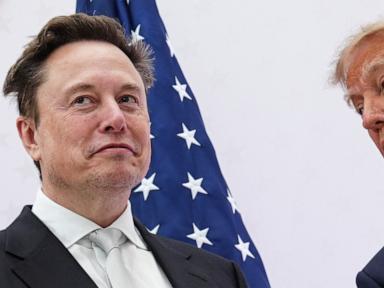
When Elon Musk poured nearly half a billion dollars into the 2026 midterm elections, the objective was simple. Protect the Republican majorities, shield corporate interests, and secure a favorable regulatory runway for the sprawling empire of Tesla, SpaceX, and his various technological ventures. It was an unprecedented financial deployment, ultimately totaling roughly $446 million through a combination of super PACs and direct contributions. Yet, as the ballots were tallied, the strategy met a wall of voter resistance. The world's richest man discovered the hard ceiling of what raw capital can buy when an electorate is motivated by entirely different economic and political headwinds.
The sheer scale of the spending defied historical norms. Through America PAC and substantial contributions to entities like the Senate Leadership Fund, Musk surpassed every prior individual donor record in a single election cycle. A major share of this capital was funneled into high-stakes contests, including a massive financial footprint in Texas targeting the Senate seat contested by Ken Paxton. Billions in total net worth meant very little when translated to the ground-level reality of voter sentiment. Democrats swept every one of the top Senate races where America PAC concentrated its heaviest financial ammunition.
The Diminishing Returns of Mega-Donations
Political scientists have long debated the exact saturation point of campaign expenditure. In 2026, that ceiling became glaringly obvious. Pumping millions into saturated media markets creates an environment of total exhaustion. Voters exposed to the exact same cycle of attack ads and super PAC messaging grow numb to the repetition.
The strategy assumed that sheer volume could override underlying political liabilities. It treated legislative outcomes like an ad-impression optimization problem on social media. But human voters do not behave like target audiences for software updates. When an electorate experiences widespread fatigue over economic pressures or administrative policies, an endless stream of outside funding often serves to galvanize the opposition rather than pacify it. Opposing campaigns successfully reframed the influx of billionaire cash as an overreach, turning the massive spending figures into a rallying cry for grassroots mobilization.
Fallout for the Corporate Empire
The financial miscalculation carries consequences that extend far beyond a lost election night. For years, major corporate innovators have relied on a relatively accommodating regulatory climate, enjoying light-touch oversight regarding artificial intelligence, aerospace expansion, and automated transport systems.
By tying his personal political brand so aggressively to one side of the aisle, Musk exposed his corporate holdings to immediate political blowback. Legislative bodies at both the federal level and within states like Texas are now seeing shifts in power dynamics. Lawmakers who campaigned successfully against the influence of outside mega-donors are taking office with mandates to scrutinize corporate subsidies, land use, and environmental permissions.
The insulation that once protected these ventures is thinning. When a benefactor invests heavily to maintain a specific political status quo and fails, the incoming legislative majority rarely responds with leniency. Instead, committees prepare oversight hearings, and state regulators find renewed institutional backing to press hard on unresolved compliance questions.
The Limits of Algorithmic Politics
There is a profound disconnect between commanding an online platform and shaping a national electorate. On digital networks, amplification can mimic consensus. Algorithms reward engagement, controversy, and speed, creating a feedback loop that feels identical to popular momentum.
Ballot boxes operate on an entirely different mechanism. They aggregate quiet grievances, local economic realities, and institutional trust that cannot be bought with a wire transfer. Treating an entire nation's political identity as an engineering problem to be solved with capital injection ignores the unpredictable nature of civic behavior.
The fallout from this cycle forces a re-evaluation of how wealth translates into political power. Money remains a dominant force in modern campaigns, capable of keeping uncompetitive candidates on life support long past their expiration date. Yet, as the 2026 midterms demonstrated, it cannot manufacture a victory when the underlying current of the electorate is moving firmly in the opposite direction. The checks cleared, the ads ran on an endless loop, and the outcome remained completely indifferent to the ledger.