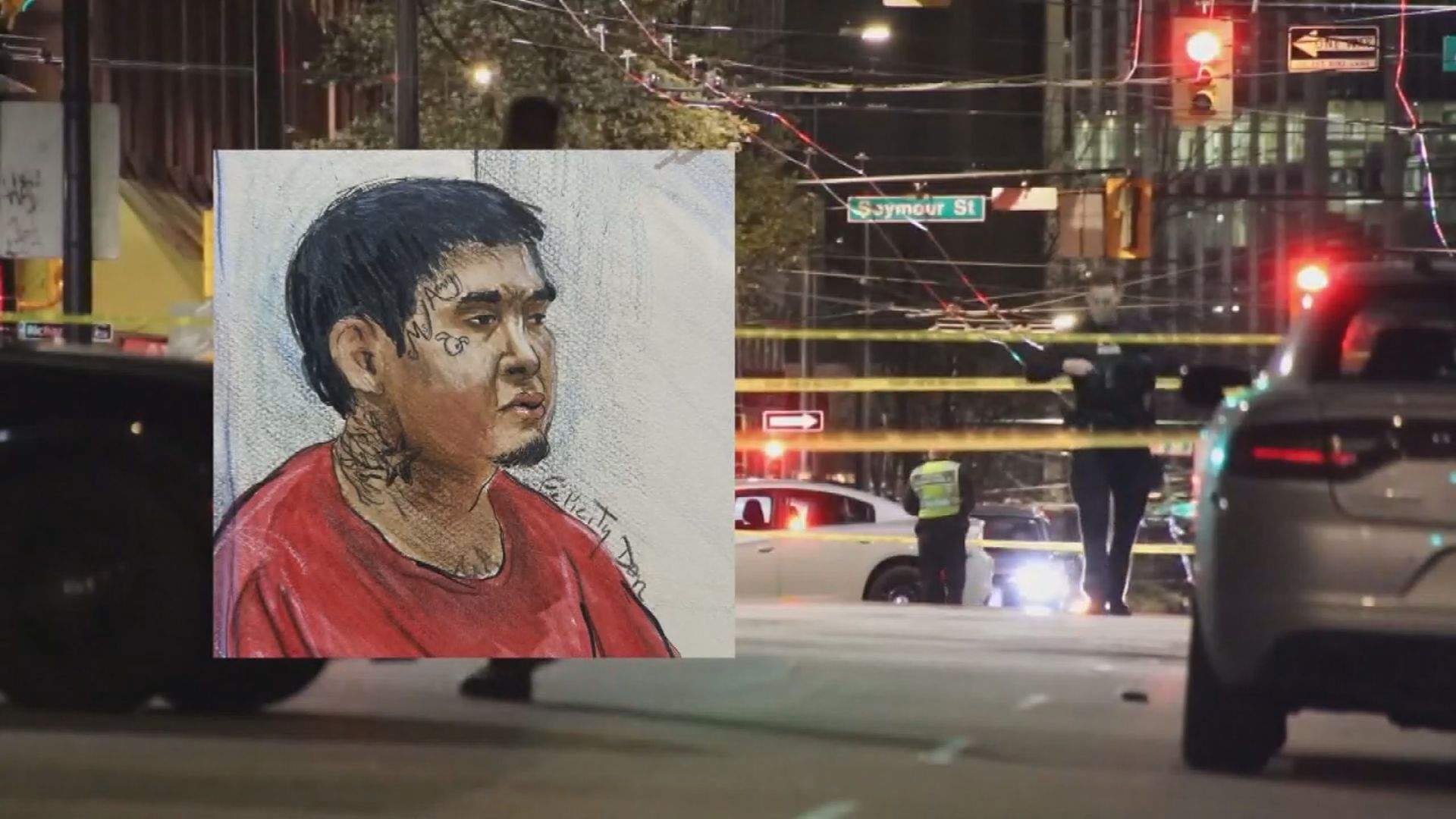
Most local crime news stops the second the police tape comes down. A headline flashes across your screen about an innocent bystander caught in crossfire—someone saying half their face was destroyed and their life was ruined—and then the news cycle moves on to the next tragedy by morning.
That's a massive blind spot in how we talk about gun violence. Recently making headlines lately: Inside the NATO Air Policing Scramble Protocol Nobody Explains Properly.
When a stray bullet hits someone who wasn't part of any dispute, surviving the initial emergency room visit isn't the end of the story. It's the beginning of a brutal, multi-year gauntlet of reconstructive surgeries, mounting medical debt, and psychological trauma that local news segments rarely stick around to document. Having spent years covering criminal justice outcomes and victim advocacy systems, I've seen firsthand how the gap between surviving a gunshot wound and actually recovering from one swallows people whole.
Why News Reports Miss the Real Story of Bystander Shootings
Local television stations and wire services operate on speed. When a bystander takes a round to the face or torso during a street dispute or drive-by, the initial report focuses on the immediate shock value—the 911 call, the hospital transport, and a brief quote from the victim or a family member about how their life just shattered. Additional insights into this topic are detailed by The Guardian.
They miss the math of survival.
According to data analyzed by organizations like the Giffords Law Center and trauma researchers at major urban medical centers, for every person killed by gunfire in the United States, more than two others survive with nonfatal injuries. Yet public policy and media coverage obsess almost exclusively over homicide rates. Nonfatal shooting survivors—especially bystanders with severe craniofacial trauma—disappear into a bureaucratic maze.
Think about what a gunshot wound to the face actually entails. It isn't like a movie where a character gets stitched up and walks out with a rugged scar. High-velocity projectiles shatter bone, sever cranial nerves, destroy salivary glands, and obliterate dental structures. A single bullet can require upwards of ten to fifteen separate reconstructive procedures over five years just to restore basic functions like chewing, speaking clearly, or closing an eyelid.
The Medical Reality of Facial Gunshot Trauma
If you talk to maxillofacial trauma surgeons at Level 1 trauma centers, they'll tell you that facial gunshot wounds are among the most complex injuries in civilian medicine. Unlike a wound to an arm or leg, you can't simply immobilize the face in a cast while it heals. Every breath, swallow, and blink puts tension on damaged tissue.
The recovery timeline usually breaks down into distinct, exhausting phases that nobody prepares a survivor for.
First comes airway management and hemorrhage control. Because the face is heavily vascularized, swelling can close off a patient's airway within minutes, often requiring an emergency tracheostomy.
Second comes bone stabilization. Surgeons use titanium plates and screws to rebuild the orbital sockets, cheekbones, or jaw. If the blast blew away too much bone, doctors have to harvest bone grafts from the patient's own hip, rib, or fibula—meaning the victim wakes up with surgical wounds on multiple parts of their body just to fix their face.
Third comes soft tissue reconstruction and nerve grafting. Even after the bone heals, damaged facial nerves can leave half the face paralyzed. Patients deal with chronic drooling, inability to blink properly (which risks permanent corneal damage), and severe chronic neuropathic pain that standard painkillers barely touch.
Honest truth? Many patients never get back to their pre-injury appearance. Plastic surgeons work miracles with free-flap transfers—taking skin, muscle, and blood vessels from the forearm or thigh to rebuild a cheek or jaw—but the tissue rarely matches the exact texture or color of facial skin. Every time the survivor looks in a mirror or walks into a grocery store, they're confronted with stares from strangers and a permanent reminder of someone else's violence.
How Victims Get Crushed by the Financial Aftermath
You might assume that if an innocent bystander gets shot while walking to their car or sitting on their porch, the state steps in to cover the bills. In theory, every U.S. state operates a Crime Victim Compensation program funded largely through federal Victims of Crime Act (VOCA) grants and offender fines.
In practice, these systems are notoriously slow and restrictive.
Let's look at how the numbers actually play out for an uninsured or underinsured worker. A single week in a surgical intensive care unit followed by one major reconstructive operation easily crosses $150,000 to $250,000. Even with private health insurance, out-of-pocket maximums, out-of-network trauma specialists, and uncovered dental reconstructions leave families drowning.
Dental implants alone—which are essential when a bullet destroys the upper or lower jaw—are frequently classified by health insurers as "cosmetic" or strictly dental, capping coverage at a couple thousand dollars when the actual reconstruction costs $40,000.
State victim compensation funds do help, often reimbursing out-of-pocket medical expenses, lost wages, and mental health counseling. However, nearly every state enforces strict eligibility rules and payout caps:
- Maximum caps: Many states cap total payouts between $25,000 and $50,000. For a catastrophic facial injury, that covers a fraction of the real cost.
- Cooperation mandates: Victims must report the crime promptly—usually within 72 hours—and cooperate fully with police investigations. If a bystander is terrified of retaliation from the shooter's associates and hesitates to give a formal statement, their claim can be denied.
- Contributory conduct clauses: Claims investigators scrutinize the victim's background and actions at the scene. While true bystanders pass this hurdle, delays in verifying police reports can stall payouts for six months to over a year while collection agencies hound the patient.
Meanwhile, if the shooter isn't caught—and clearance rates for nonfatal shootings in many major cities hover well below 30%—there is no criminal restitution order. Even when an arrest happens, defendants in street shootings rarely have assets to seize in a civil lawsuit. The financial burden lands squarely on the person who was just in the wrong place at the wrong time.
The Psychological Toll Nobody Measures
Physical scars heal on a predictable biological schedule. Psychological trauma doesn't.
Research published in journals like JAMA Surgery and studies conducted by violence intervention programs consistently show that gunshot survivors experience rates of Post-Traumatic Stress Disorder (PTSD) comparable to combat veterans—often exceeding 40% to 50% in the first year after injury. For bystanders, there's a unique cognitive dissonance that makes recovery even harder.
When someone is targeted in a conflict, they often have a framework—however tragic—for why it happened. A bystander has no framework. The randomness destroys their basic sense of safety in the world.
Suddenly, routine sounds trigger panic attacks. A car backfiring, fireworks on a holiday, or a heavy door slamming shut sends adrenaline surging through their nervous system. Many survivors develop severe agoraphobia, refusing to leave their homes after dark or avoiding crowded public spaces altogether.
Add facial disfigurement to that PTSD, and you get profound social isolation. Humans are wired to connect through facial expressions. When half of someone's face is paralyzed or heavily scarred, casual interactions become exhausting. People look away awkwardly, ask invasive questions, or treat the survivor as fragile. Over time, many victims stop going to family gatherings, quit jobs that require customer interaction, and pull away from friends.
What Actually Helps Survivors Rebuild
If you or someone you care about is navigating the aftermath of a bystander shooting, waiting around for the hospital billing department or the district attorney's office to volunteer help is a mistake. You have to advocate aggressively from week one.
Start by requesting a dedicated hospital social worker or asking if the medical center has a Hospital-Based Violence Intervention Program (HVIP). Organizations affiliated with the Health Alliance for Violence Intervention embed case managers directly inside trauma centers. Unlike standard discharge planners, HVIP specialists understand how to navigate crime victim compensation paperwork, connect survivors with trauma-informed therapists, and coordinate long-term follow-up care.
Next, tackle the medical billing and compensation paperwork systematically:
- File the state crime victim compensation application immediately. Do not wait until surgeries are finished or bills go to collections. Get the police report number from the investigating detective and submit the initial application right away to lock in your filing date.
- Apply for hospital charity care or financial assistance. Nonprofit hospitals—which make up the majority of Level 1 trauma centers—are legally required under IRS rules to maintain financial assistance policies. Even if you earn a middle-class income, catastrophic trauma bills often qualify for massive reductions or complete write-offs.
- Separate medical and dental coding carefully. When dealing with facial trauma, work with your maxillofacial surgeon's billing coordinator to ensure jaw and tooth reconstructions are billed under medical necessity codes resulting from accidental trauma rather than routine dental codes.
- Seek out specialized trauma therapy. Standard talk therapy often falls short for acute shooting trauma. Look for clinicians certified in EMDR (Eye Movement Desensitization and Reprocessing) or Cognitive Processing Therapy (CPT), which are specifically validated for severe PTSD.
A stray bullet changes a person's life in a fraction of a second, and no legal settlement or surgical reconstruction erases that reality. Real recovery requires treating the injury not as a single news event, but as a long-term chronic condition that demands coordinated medical, financial, and psychological support long after the headlines fade.