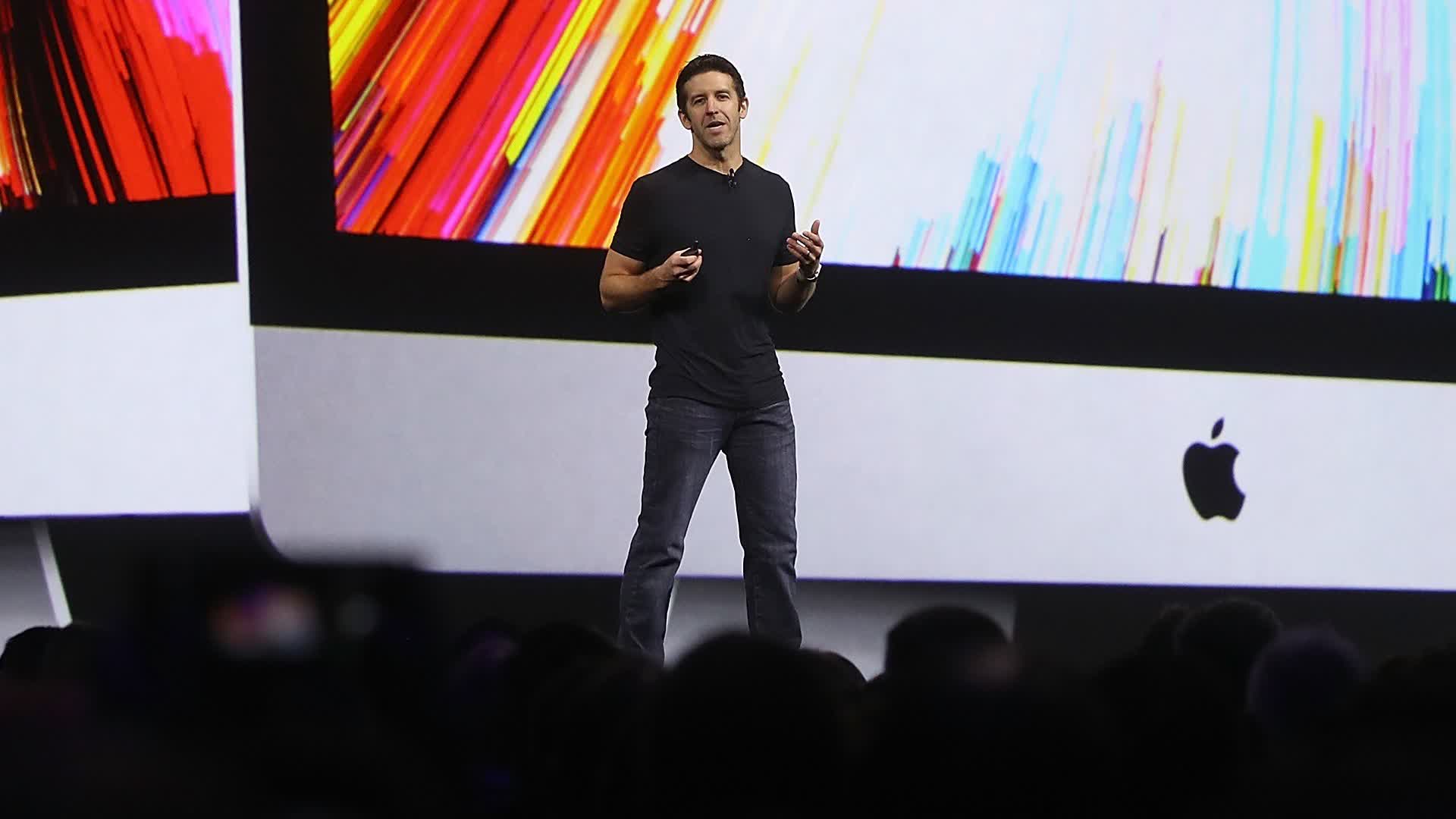
John Ternus is the successor because he is the personification of Apple’s physical reality in an era drifting toward the abstract. On September 1, 2026, he will officially take the helm as CEO, moving Tim Cook to the role of Executive Chairman. This is not just a change in letterhead. It is a strategic pivot back to the "product person" archetype that defined the company’s golden age, but with a mechanical engineer's discipline rather than a founder's mercurial whims.
While the market spent years obsessed with services and invisible software, Ternus was the one making sure the actual glass and aluminum held together. He didn't just climb the ladder; he built it, overseeing everything from the first iPad to the high-stakes divorce from Intel. His rise signals that Apple is finished with its transition into a services-first company and is now returning to its roots as a hardware powerhouse that happens to sell subscriptions.
The Engineering of a Succession
The selection of Ternus over the long-presumed heir, Chief Operating Officer Jeff Williams, tells the real story of Apple’s internal power shift. For a decade, the narrative was that Apple needed another supply-chain wizard to keep the trains running on time. Williams was the logical "Cook 2.0." But in July 2025, Williams stepped back from operational duties, clearing a path that the board had been quietly paving for Ternus.
Ternus represents a different kind of stability. He joined the product design team in 2001, meaning he has been at the table for every major hardware triumph and failure of the 21st century. Unlike Cook, who came from the world of logistics and procurement, Ternus is a mechanical engineer by trade. He understands how a hinge feels and why a thermal envelope matters.
The board’s unanimous vote reflects a desire for a leader who can speak the language of the lab as fluently as the language of the quarterly earnings call. In an industry currently obsessed with generative AI and virtual "metaverses," Apple is betting on the man who understands the physical constraints of reality.
The Apple Silicon Coup
If you want to know why Ternus got the job, look at the Mac. For years, the Mac was a neglected legacy product, thermal-throttled by Intel chips and trapped in a design dead-end. Ternus was the executive who drove the transition to Apple Silicon. This wasn't just a technical upgrade; it was a declaration of independence.
By bringing chip design in-house, Apple regained control over its own destiny. The M-series chips allowed for the rebirth of the MacBook as a performance leader rather than a lifestyle accessory. Ternus managed this transition with a surgical precision that avoided the "Osborne Effect"—where announcing a future product kills current sales. Instead, Mac revenue hit historic highs under his watch.
Breaking the Intel Addiction
The risk of the silicon transition cannot be overstated. It required a total reimagining of how hardware and software interacted. Ternus had to bridge the gap between Johny Srouji’s chip team and Craig Federighi’s software engineers. His ability to act as the "connective tissue" between these warring silos of brilliance is what convinced the board he could handle the CEO role.
The Quiet Style of Leadership
Inside Cupertino, Ternus is described as "remarkably normal" and "unflappable." In a company known for high-ego executives and "Screamer" cultures of the past, his calm demeanor is his greatest weapon. He is known for asking deeply technical questions that reveal a lack of preparation in subordinates, but doing so without the theatrical cruelty of previous eras.
This temperament is crucial because the Apple of 2026 is a massive, $4 trillion bureaucracy. It no longer needs a tyrant; it needs a conductor. Ternus has shown he can manage the sprawling complexity of the iPhone supply chain while still obsessing over the curve of a Vision Pro lens. He is a "details person" who doesn't lose sight of the horizon.
The Invisible Challenges Ahead
Ternus is not inheriting a perfect machine. He takes over at a moment when Apple is perceived as lagging behind in the consumer AI race. While rivals have launched flashy, often broken, generative AI features, Apple has been characteristically slow and deliberate. Ternus must now prove that "Apple Intelligence" is more than just a marketing slogan to catch up with competitors.
Then there is the geopolitical minefield. Tim Cook’s greatest achievement was the masterful navigation of the U.S.-China relationship. As Executive Chairman, Cook will still handle policy, but the day-to-day pressure of moving manufacturing out of China and into India and Vietnam will eventually fall on Ternus. A mechanical engineer knows that friction creates heat; Ternus will have to find a way to move the world’s largest supply chain without causing a meltdown.
The Vision Pro Gamble
The Vision Pro remains the most polarizing product in the Ternus portfolio. It is a technical marvel that lacks a "killer app." As the hardware chief who oversaw its development, Ternus is tethered to its success or failure. If the headset remains a niche toy for enthusiasts, it will be the first stain on his legacy. If he can shrink it down to the size of a pair of Ray-Bans, he becomes the next Jobs.
The $20 Million Question
Critics argue that Ternus is a "safe" pick—a company man who won't rock the boat. His estimated $20 million annual compensation package reflects a leader being paid to maintain the status quo. But "staying the course" for a company with $100 billion in annual profit is an incredibly complex engineering feat in itself.
The reality of Apple in 2026 is that it is too big to be "disrupted" by outsiders. The only thing that can kill Apple is internal rot or a loss of focus on the physical objects that people touch, hold, and wear every day. By choosing Ternus, the board has signaled that they are done with the era of the "Operations CEO" and are ready for the "Product CEO" to return.
The transition doesn't just change who sits in the corner office. It changes the priority of the company. Hardware is no longer just a vessel for services; it is once again the star of the show. Ternus has spent twenty years preparing for this moment, and the world is about to find out if a mechanical engineer can maintain the magic of a company built on a combination of art and technology.
Success for Ternus won't be measured in stock price alone. It will be measured in the next device that makes us forget the world around us. He has the blueprints. Now he has to build the future.