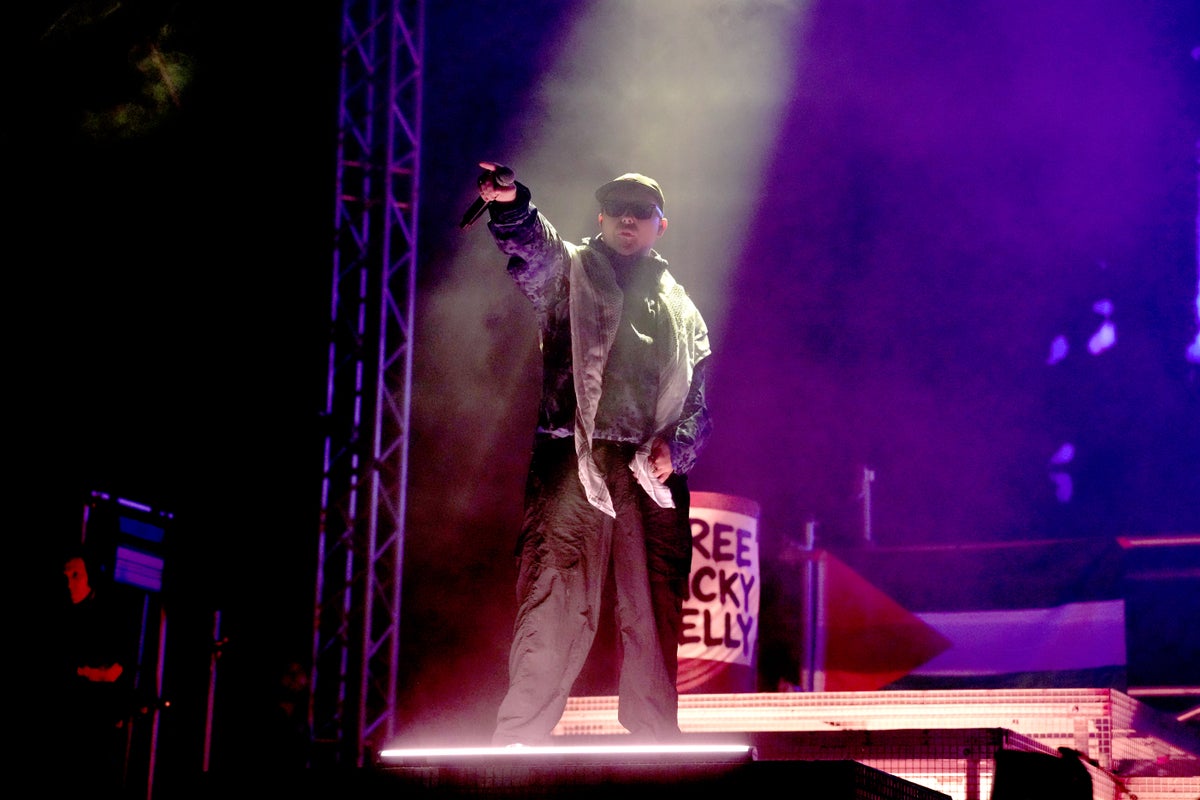
Hasan Piker is not a politician, yet he commands an audience larger than most cable news networks. He is not a traditional journalist, yet he shapes the worldview of millions of young voters every single day from a custom-built gaming chair. The central tension surrounding Piker—often referred to by his handle, HasanAbi—isn't just the friction between his socialist rhetoric and his multimillion-dollar lifestyle. That is a surface-level distraction. The deeper, more systemic issue is how his brand of "react-driven" politics turns complex global crises into high-octane entertainment, creating a feedback loop where ideological purity is sacrificed for the sake of the algorithmic "content grind."
The Architecture of the Streamer State
To understand the Piker phenomenon, you have to look past the person and at the platform. Twitch is designed for endurance. The more hours you spend live, the more the algorithm rewards you. Piker has mastered this better than almost anyone else in the political sphere. He stays live for eight to ten hours a day, effectively colonizing the mental space of his viewers.
This isn't just about sharing information. It’s about companionship. When you watch a streamer for forty hours a week, they stop being a commentator and start being a permanent fixture in your living room. This proximity creates a parasocial bond that makes objective criticism nearly impossible for the fanbase. In this environment, Piker doesn’t just report the news; he processes it for his audience, stripping away the friction of opposing viewpoints before the viewer even has a chance to form an independent thought.
The React Economy and the Death of Context
The "react" format is the engine of Piker’s success. He sits on camera, watches a video or reads an article, and pauses every few seconds to offer a critique or a joke. While this is effective for engagement, it fundamentally changes how information is consumed.
When a complex geopolitical issue is filtered through a reaction stream, it is broken down into bite-sized, emotionally charged segments. The nuance of a three-thousand-word investigative piece is lost when the person presenting it is incentivized to find a "gotcha" moment every sixty seconds. This process prioritizes the punchline over the policy. It turns the heavy lifting of political engagement into a passive spectator sport.
The Champagne Socialist Trap
The most frequent criticism leveled at Piker involves his wealth. His purchase of a multi-million dollar West Hollywood home and his affinity for designer clothing are often cited as evidence of hypocrisy. Critics argue that a man who advocates for the redistribution of wealth should not be living the life of the one percent.
However, focusing on the house misses the point entirely. The real problem isn't that Piker has money; it’s that his business model is inherently tied to the very systems he rails against. He is a top-tier performer in a hyper-capitalist attention economy owned by Amazon. Every "sub" he receives and every ad he runs enriches one of the largest corporations on the planet.
He is a cog in the machine he claims to want to dismantle. This creates a strange ideological dissonance. To keep the machine running, he must maintain a level of controversy and high-energy rhetoric that keeps viewers coming back. If he became too moderate or too focused on incremental change, the views would drop. The platform demands radicalism as a form of aesthetic, even if the actual material conditions of the streamer remain elite.
The Echo Chamber as a Business Model
Piker’s chat is a vital part of the broadcast. It moves at a lightning pace, a blur of colorful icons and repeated slogans. This is where the community's "vibe" is enforced.
Anyone who has spent time in the stream knows how quickly the tide can turn against a dissenting voice. Piker frequently "stuns" or bans users who challenge his narrative, often mocking them in front of tens of thousands of people. This isn't just moderation; it’s a public execution of the counter-argument. It reinforces the idea that there is one correct way to view the world and that anyone who disagrees is either a "bad actor" or simply uneducated.
This creates an environment where nuance goes to die. Complex problems like the housing crisis or international trade agreements are boiled down to "good guys" versus "bad guys." In the world of the stream, there are no trade-offs, only moral failures.
The Problem of Accountability in New Media
Traditional newsrooms, for all their faults, have layers of editorial oversight. There are fact-checkers, legal departments, and standards editors. Piker has himself.
When he makes a mistake or spreads misinformation—which has happened during fast-moving breaking news events—there is no formal correction process. He might address it in the next stream, but by then, the original clip has already traveled across TikTok and Twitter, cementing a false narrative in the minds of millions.
The speed of the internet demands immediate takes. Piker provides them. But speed is the enemy of accuracy. By prioritizing being first and being the loudest, he risks becoming a megaphone for half-truths.
Content Consumption vs Material Action
There is a growing concern among political organizers that the "HasanAbi" model of engagement leads to political apathy rather than action. If you feel like you’ve done your part for the day by watching eight hours of a socialist streamer and typing a few slogans in a chat box, are you actually going to show up at a local city council meeting?
This is the "slacktivism" of the 2020s. The stream provides a sense of catharsis. It makes viewers feel like they are part of a movement without requiring them to do anything uncomfortable or difficult in the real world. The revolution will not be televised; it will be streamed, and there will be a "Prime Gaming" button in the corner of the screen.
The Intellectual Purity Test
One of the most exhausting aspects of Piker’s brand is the constant need to prove one's ideological purity. This is a trait shared by many online political communities, but it is amplified by Piker’s massive reach.
He often engages in "leftist infighting," spending hours arguing with other creators who agree with him on 90% of issues but differ on the remaining 10%. This behavior signals to his audience that compromise is a form of betrayal. It fosters a culture where purity is valued over progress.
In the real world, politics is the art of the possible. It requires building broad coalitions and working with people you might not like. The streamer model, however, thrives on conflict and division. It’s much more entertaining to watch a "bridge-burning" argument than a productive policy discussion.
The Algorithmic Incentive to Polarize
Social media algorithms are not neutral. They are designed to maximize time on site. Content that triggers anger, outrage, or a sense of "us versus them" performs significantly better than content that explores the gray areas of a topic.
Piker is a product of this environment. He didn't invent the algorithm, but he is a master at playing it. He knows that a clip of him "destroying" a conservative caller will get ten times the views of a clip of him explaining the intricacies of a tax bill. Over time, this shifts the content toward the sensational.
This creates a distorted view of reality for the viewer. They begin to believe that the world is as polarized as their computer screen, making genuine dialogue in their everyday lives even harder to achieve.
The Power of the Pivot
Despite the criticisms, Piker’s influence is undeniable. He has raised hundreds of thousands of dollars for charitable causes and has brought political awareness to a generation that felt completely abandoned by mainstream media.
But as he grows in power, the contradictions of his position become harder to ignore. He is a multi-millionaire influencer who has become the face of American socialism. He is a critic of the media who has become the media. He is a voice for the voiceless who can silence any critic with a click of a button.
The real problem with Hasan Piker isn't his personality or his bank account. It’s the fact that he has built a massive, centralized platform on a foundation of decentralized ideals. He has created a "Great Man" theory of politics for the digital age, where the movement is synonymous with the man in the chair.
As long as the political discourse is treated as a form of lifestyle content, it will remain vulnerable to the whims of the people behind the microphones. The danger isn't that Piker is wrong about everything; it’s that he has made the pursuit of truth secondary to the pursuit of the "W."
Move the focus away from the screen and back toward the local community, where the consequences of policy are felt in the flesh rather than seen in the pixels.