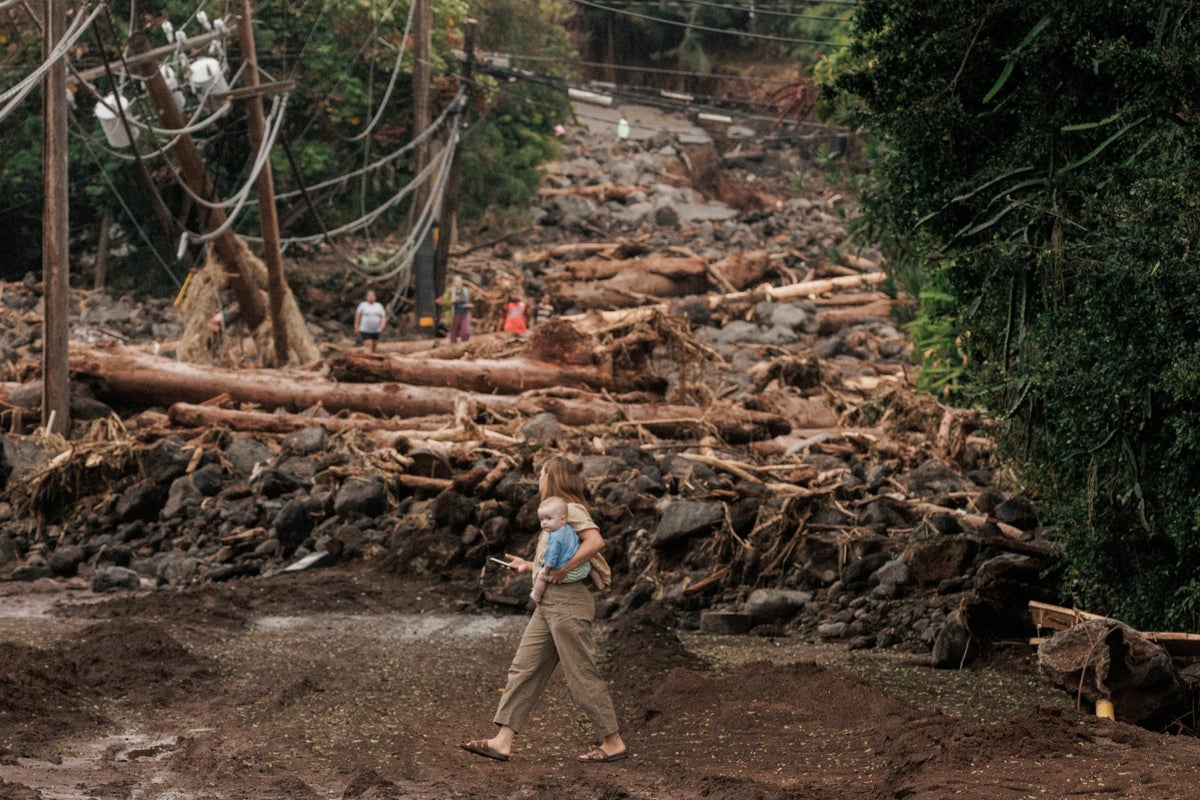
Tropical Storm Moke is tracking dangerously close to Hawaii, threatening to dump up to 15 inches of rain on communities already shattered by Hurricane Lala. With the Big Island still struggling under widespread power outages, washed-out bridges, and saturated earth from a storm that dropped over 43 inches of rain, Moke's arrival introduces an unforgiving compound crisis. Instead of a standard weather report, understanding this moment requires looking closely at how sequential tropical systems stress local infrastructure, exhaust emergency response systems, and push island ecosystems past their absolute limits.
The Mechanics of Soil Saturation
Water does not care how recently it rained. When Hurricane Lala battered the northeast coast of the Big Island, it left behind terrain that can no longer absorb moisture.
Soil functions like a sponge. Once every pore fills with water, additional precipitation sits entirely on the surface, turning hillsides into sliding masses of mud and transforming dry gullies into raging torrents.
Meteorologists predict Moke will drop an additional 5 to 10 inches widely across windward and southeast slopes, with isolated maximums hitting 15 inches. Because Lala already destabilized slopes and compromised the structural integrity of local roads, even modest rainfall from Moke carries a disproportionate punch. When the ground is completely filled to capacity, the threshold for life-threatening flash floods drops essentially to zero.
Infrastructure Under Siege
Recovery operations move slowly when the bridges are missing. Across the Big Island, thousands of residents remain without electricity, utility crews are working around active hazards, and local government agencies face severe operational fatigue.
When a second storm arrives on the heels of the first, emergency management shifts from proactive mitigation to reactive triage. Shelters must stay open, supply chains remain fractured, and fuel reserves dwindle.
Governor Josh Green's administration has pressed the federal government for emergency declarations, recognizing that local municipal budgets cannot absorb the compounding costs of back-to-back disasters. Electrical grid repairs get pushed back when high winds and heavy downpours prevent line workers from going aloft or accessing remote substations.
The Broader Oceanic Context
Sequential storms do not happen by accident. The Central Pacific is currently experiencing environmental conditions supercharged by warmer ocean water temperatures, a signature of active El Niño patterns.
Warm water serves as the primary engine for tropical cyclones. As baseline ocean temperatures climb, the atmosphere above holds more moisture, increasing the frequency of high-precipitation events.
Communities across the Hawaiian chain are finding that historical flood maps no longer reflect reality. A storm path that might have caused minor puddling a decade ago now triggers catastrophic structural damage because the baseline atmosphere holds significantly more energy.
Emergency responders are no longer just dealing with the storm of the season. They are managing a continuous loop of recovery where the next threat materializes before the debris from the last one is cleared.