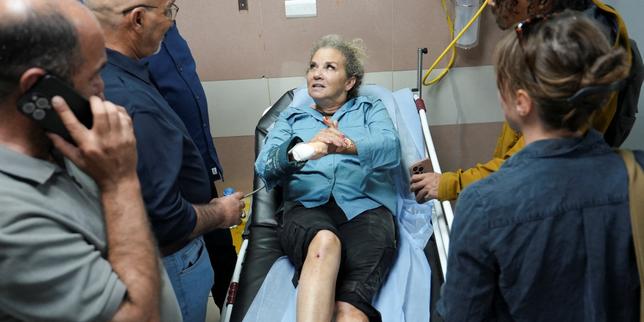
Read a standard wire report on settler violence in the occupied West Bank and you will find a predictable script. Brutal clip. Charred trunks. Bruised press badge. Outrage at the top, condemnation at the bottom, and zero explanation of why the same pattern repeats every harvest season.
That lazy consensus treats an assault on a journalist and a fire in an olive grove as isolated moral outrages. Moral outrage matters. Human bodies and centuries-old trees are not abstractions. Yet treating these incidents solely as episodic flashes of extremism blinds readers to the structural mechanics keeping them alive. Also making waves in related news: Flightlessness in Early Avialans Why The Linear Evolution Myth Fails.
When headlines frame settler violence as rogue fringe behavior or a simple clash between "settlers" and "Palestinians," they miss the institutional incentives, legal architecture, and press dynamics that turn local terror into long-term territorial leverage.
The Lazy Consensus Around Headlines Like These
Conventional coverage usually rests on three assumptions. First, that violence spikes randomly whenever tempers flare. Second, that harming a journalist is primarily an attack on free speech in the abstract. Third, that burning olive trees is just spiteful vandalism aimed at ruining a family's afternoon. Further information regarding the matter are covered by USA Today.
None of those assumptions holds up under scrutiny.
Olive harvesting in the West Bank happens on a strict agricultural calendar, typically between October and November. Settler attacks against farmers and journalists cluster around access roads, hilltop outposts, and contested boundaries right when labor and visibility peak. Calling that random ignores timing that anyone tracking agricultural cycles can predict months in advance.
Attacking a reporter in that setting does more than silence one story. It raises the physical and logistical cost of documentation. A camera lens near a burning grove creates evidence that diplomats, human rights groups, and international courts can cite. Driving the reporter away protects the narrative vacuum.
And torching an olive tree is never mere petty arson. In Palestinian rural economy and cultural memory, an olive grove is multi-generational capital. Replacing a mature tree takes years of care and investment that many households cannot absorb. Destroying productive trees erodes economic independence while making daily access to land feel too costly to defend.
What "Settler Violence" Actually Conceals
The phrase "settler violence" sounds clear on the surface. In practice, it blurs distinct actors and overlapping authorities.
Reporting on conflict zones requires precision, starting with terms that newsrooms routinely flatten. "Settlers" is not a single uniform group. It includes long-established suburban communities integrated into state infrastructure, ideological hilltop youth establishing unauthorized outposts, and armed militants operating with varying degrees of coordination. Conflating every resident of a settlement with those committing assaults obscures accountability; pretending the assaults happen in a vacuum ignores how state power operates on the ground.
In the West Bank, authority is divided under the Oslo Accords into Areas A, B, and C, with Area C—comprising roughly 60 percent of the territory—under full Israeli military and administrative control. Access to farmland, movement checkpoints, permits, and law enforcement enforcement in these areas are shaped by military orders and civil administration decisions rather than normal civilian policing.
Years of covering conflict zones and watching how observers misread local dynamics teach a hard lesson. I have seen seasoned analysts, diplomats, and media teams burn credibility because they treated every viral clip as a complete explanation while ignoring the legal and logistical ground underneath it. When outside observers mistake surface drama for the whole machine, they misdiagnose what changes behavior on the ground.
International bodies such as the United Nations Office for the Coordination of Humanitarian Affairs (OCHA) and Israeli human rights organizations like Yesh Din have documented for years how low indictment and conviction rates shape impunity in cases involving harm to Palestinians and their property. You do not need to invent statistics to see the mechanism: when enforcement is uneven, selective, or slow, the risk-reward calculation for perpetrators shifts dramatically.
Why People Ask the Wrong Questions
Open any search engine or social feed after an incident like this and the same "People Also Ask" questions pop up. Most of them start from a flawed premise.
"Why do settlers burn olive trees?"
Ask that question and you invite answers focused on hatred or provocation. Both exist, yet focusing only on motive misses function.
An olive grove is both a livelihood and a physical claim to presence. When farmers cannot reach their trees—or watch them burn without effective protection—two things happen simultaneously. Immediate harvest income disappears, and long-term land use becomes harder to sustain. Over time, economic attrition does work that a single standoff cannot finish.
A better question is: what incentives, enforcement gaps, and territorial strategies allow repeated property destruction to continue without decisive deterrence?
"Why are journalists targeted during West Bank protests and harvests?"
Another common question treats press injuries as accidental collateral damage or mere hostility toward media. Sometimes chaos does create stray hazards. Often, journalists are in the exact spot where accountability becomes visible.
Reporters with cameras, livestreams, and international press credentials act as witnesses. If an incident happens out of sight, it becomes a he-said-she-said dispute. If it is filmed clearly, with timestamps and locations, it enters diplomatic briefings and legal files. Injuring or intimidating a reporter is a direct attempt to control who gets to witness what happens on contested land.
"Can international condemnation stop these attacks?"
Condemnation is easy to issue and cheap to ignore unless paired with concrete leverage. Statements from foreign ministries rarely alter local calculations on their own.
What shifts behavior is tangible consequence: visa restrictions, financial sanctions, diplomatic pressure tied to specific enforcement benchmarks, and domestic legal accountability. Until the cost of inaction outweighs the political cost of friction, diplomatic statements remain background noise.
The Information Trap Around Viral Clips
Modern news cycles reward speed and emotional shock. A short video of smoke rising over olive branches or a reporter bleeding by a roadside travels fast, gets shared millions of times, and fades within forty-eight hours.
That cycle creates two opposing distortions. One side treats every clip as proof of total moral collapse on the opposing side, ignoring context, sequence, or broader political strategy. The other side dismisses distressing footage reflexively as staged, selective, or biased without checking verification standards.
Both reactions let the underlying system off the hook. Outrage without structural analysis burns hot and cools fast. Reflexive skepticism without verification hides real harm behind cynicism.
A Thought Experiment in Incentives
Imagine a scenario where every incident of property destruction or assault against a farmer or journalist in Area C triggered automatic, transparent law enforcement investigation, rapid protective escort during harvest windows, and public prosecution updates within a fixed timeline.
No new treaties would be needed for that thought experiment to show what changes. If perpetrators expected swift, predictable legal consequences rather than delays, closed files, or routine friction, the calculus around staging intimidation would shift immediately. Conversely, as long as enforcement feels sporadic or asymmetric, intimidation remains low-cost and high-leverage.
What Actually Works When You Stop Playing Along
If you want to understand—or respond effectively to—reporting on West Bank attacks, stop treating every headline as a standalone tragedy and start tracking patterns over time.
| Common Habit | Why It Fails | Better Move |
|---|---|---|
| Reacting to single viral clips in isolation | Misses seasonal patterns, prior incidents, and local geography | Track incident clusters across harvest cycles and specific villages |
| Treating all settlers or all state actors as one block | Blurs distinctions between policy, outpost militants, and local enforcement | Separate actors, legal jurisdictions (such as Area C), and enforcement outcomes |
| Relying on outrage posts as action | Produces zero material change on the ground | Support verified documentation, legal aid, and accountable policy pressure |
| Ignoring press safety until a reporter is hurt | Treats journalist protection as an afterthought | Monitor press access restrictions and physical intimidation continuously |
For readers, analysts, and advocates, three practical steps cut through the noise:
- Follow the calendar, not just the breaking alert. Watch harvest periods, settlement expansion announcements, and access closures together. Patterns reveal strategy far better than isolated alerts.
- Verify before amplifying. Check multiple independent sources, timestamps, and geographic markers before sharing dramatic footage. Bad information hands critics an easy excuse to ignore real abuses.
- Demand institutional follow-through. Whether you read news, fund civil society, or press elected officials, ask what happened to investigations, access permits, and legal accountability weeks after the cameras leave.
The Catch With Taking a Hard Structural Look
Going contrarian against lazy headlines carries real risks, and pretending otherwise would be dishonest.
Focusing heavily on structures, incentives, and legal mechanics can make writing feel cold or overly clinical. Human pain is not a spreadsheet. A farmer watching trees burn and a journalist taking a blow to the head experience immediate, visceral harm that system analysis alone cannot capture.
There is also the risk of over-correcting into rigid determinism—seeing grand strategy behind every rock thrown or every argument that spirals out of control. Local flashpoints can ignite fast from fear, rumor, or bad tempers without a master plan behind every second.
Good analysis holds both truths at once: real human suffering on the ground, and real political structures shaping where that suffering happens.
Stop mourning the headline and start watching the map.