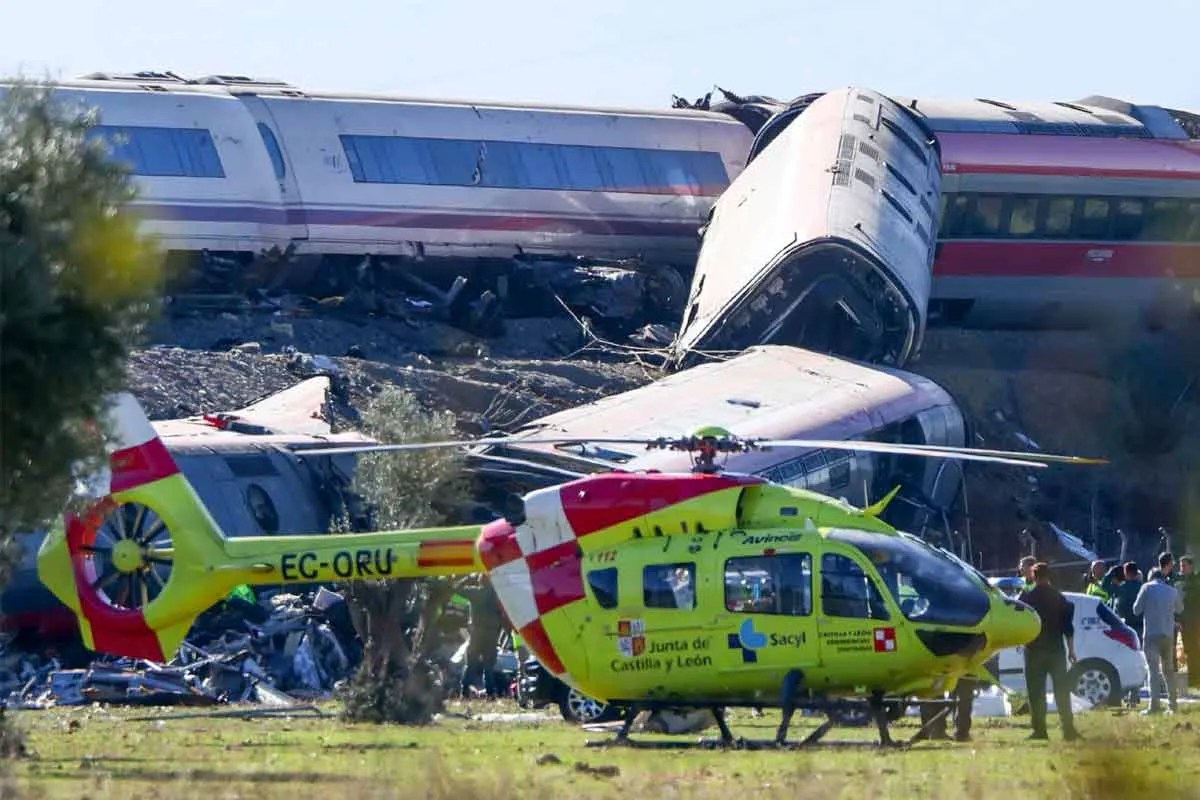
A passenger embraces a loved one in the final seconds of impact, and the entire feed stops scrolling. Emotional stories from a Spain train accident capture raw human grief in a way engineering reports never will, yet focusing solely on last embraces obscures the mechanical, operational, and regulatory failures that put those trains on a collision course.
After three decades covering transport disasters, regulatory hearings, and infrastructure audits, I have watched the same media reflex play out on every continent. Grief is immediate. Grief is shareable. A final moment of devotion between two people trapped in twisted steel speaks to a universal fear that transcends timetables and track gauges. Nobody wants to read about track circuit occupancy or braking curves while tears are still fresh.
Still, emotional headlines carry a quiet cost. When coverage centers almost entirely on poignant last moments, public pressure drifts away from the uncomfortable questions that prevent the next wreck. A grieving family deserves compassion, not exploitation, and the public deserves an honest accounting of why steel left the rails or met another train head-on.
The Pull of Intimate Grief After a Crash
Human beings are wired for faces, voices, and final gestures, not spreadsheets. When a Spain train accident makes international headlines, intimate vignettes spread faster than technical briefings because sorrow requires no background knowledge. You do not need to understand signaling blocks or axle loads to feel the weight of two people holding onto each other in the dark.
Sensationalized coverage often leans into that instinct. Headlines promise tears before they offer facts. Over years of sitting in press briefings beside exhausted investigators and relatives, I have seen how quickly raw tragedy gets packaged into melodrama. A real person's final breath becomes click fuel, stripped of context and turned into a fleeting emotional spike before tomorrow's news cycle moves on.
There is a real tension here between empathy and clarity. Ignoring the human toll makes reporting feel cold, clinical, and detached from the people whose lives shattered in a fraction of a second. Yet treating a catastrophe purely as a tearjerker leaves readers emotionally drained and factually blind. You walk away feeling sad, not informed, and none the wiser about what went wrong on the line.
Consider a hypothetical example to see how framing shapes public memory. Suppose a passenger train derails on a curve after a routine maintenance window ends early. One report leads with a touching account of a stranger comforting a terrified child in the carriage. Another examines whether speed restrictions were properly transmitted to the cab and whether track geometry sensors were overdue for calibration. Both describe the same event, yet only one equips citizens and lawmakers to demand real accountability.
What Investigators Actually Look For First
Once the sirens fade and emergency crews finish triage, rail investigators step into a world governed by physics, logs, and strict procedural timelines. A Spain train accident is never explained by a single dramatic detail; it is reconstructed piece by piece from data recorders, physical marks on ballast and wheels, maintenance records, and radio transcripts.
Event recorders sit near the top of the list. Modern trains log throttle positions, brake applications, speed profiles, cab alarms, and system faults with millisecond precision. Those files tell investigators whether the driver braked early, braked late, or never received a warning that a danger lay ahead.
Equally critical is the infrastructure side of the ledger. Investigators inspect track geometry, rail welds, switches, and embankments to see if the permanent way itself failed under stress. A rail can look ordinary to the naked eye yet harbor internal rolling-contact fatigue or thermal distortion after extreme weather.
Signaling and Human Factors Under the Microscope
Railways are systems of overlapping protections, and serious crashes usually happen when multiple layers fail in sequence. Automatic train protection systems are designed to intervene if a train exceeds a safe speed or passes a signal at danger. When an accident occurs, investigators ask whether those systems were active, properly configured for that specific line class, or bypassed during work or transitions.
Human factors are never simple blame games in a serious inquiry. Fatigue, shift patterns, ambiguous rulebooks, sudden weather changes, and interface design all shape how a driver or dispatcher reacts under pressure. A seasoned analyst looks for latent conditions—flaws built into schedules, training, or maintenance routines long before the day of the crash.
The most dangerous assumption in transport safety is that a system will behave in reality the way it looks on a wall chart.
Spain's Rail Network and High-Speed Expectations
Spain occupies a distinct place in European rail history. Over recent decades, the country built one of Europe's most extensive high-speed rail networks while simultaneously operating conventional and commuter corridors that carry dense daily traffic. That dual identity creates real operational complexity.
High-speed lines earn praise for speed, punctuality, and shifting travelers away from short-haul flights and highways. Yet high velocities compress reaction times to almost nothing. At two hundred fifty or three hundred kilometers per hour, a train covers dozens of meters every second; a problem that allows a leisurely response on a slow branch line leaves fractions of a second on a main corridor.
Mixed operations add another layer of scrutiny. Where high-speed, regional, and freight services share approaches, junctions, or legacy segments, scheduling pressure rises. Every delay ripples outward, creating temptations to recover time and placing heavier demands on dispatchers, signallers, and rolling stock.
Infrastructure Investment Versus Everyday Wear
Shiny stations and flagship corridors often get the ribbon-cutting photos. Routine upkeep gets less applause, even though preventive maintenance is the backbone of rail safety. Ballast tamping, catenary tension checks, switch inspections, and wheel-profile monitoring have to happen relentlessly across thousands of kilometers of track.
Budgets and priorities shift over time across every rail administration. When capital goes toward expansion or commercial competition, maintenance teams can feel stretched thin, especially on aging conventional lines that serve commuters every morning. Even when safety metrics look strong on paper, small deferred tasks can accumulate until a severe stressor exposes the gap.
No rail network is immune to risk, regardless of how modern its rolling stock looks. Engineering reduces probability; it does not repeal the laws of motion. A Spain train accident, like any major rail disaster anywhere in the world, forces a reckoning with whether daily operations match the engineering standards claimed on paper.
Why Emotional Clickbait Distorts Public Accountability
When viral stories around a Spain train accident focus almost exclusively on heart-wrenching moments, they quietly reshape what the public remembers. Years later, people may recall a tearful headline about a final embrace while forgetting whether speed limits were lowered, whether signaling upgrades were delayed, or whether safety recommendations were enacted.
Attention is a finite currency. Every hour spent circulating unverified emotional snippets or recycled tragedy tropes is attention not spent tracking the official investigation, reading safety board interim findings, or pressing transport authorities for transparent answers.
Worse still, emotionally charged posts often blur timelines and facts in the heat of the moment. Photos from unrelated incidents or exaggerated claims easily slip into viral threads when speed beats verification. Readers who care about the victims should demand accuracy first, because distortion insults the dead and misleads the living.
There is no contradiction between honoring human grief and demanding hard answers. A society can mourn those lost on the tracks while insisting that every engineering, operational, and regulatory failure be brought into harsh daylight.
Practical Ways to Read Crash Coverage Critically
You do not need a degree in railway engineering to read accident coverage with a sharper eye. A few habits separate serious reporting from noise whenever a major transport incident breaks.
- Check the source of emotional details: Distinguish verified accounts from families or eyewitnesses from secondhand social media posts chasing engagement.
- Look for system context early: Notice whether the coverage mentions track conditions, signaling, weather, speed, or rolling stock alongside human stories.
- Separate immediate reaction from final cause: Early statements after a crash are preliminary; real root causes usually take months of technical testing to establish.
- Track follow-up investigations: Official accident investigation bodies publish detailed findings long after the viral headlines fade, and that is where real reform is tested.
Each of these steps takes only a minute, yet together they shift you from passive spectator to informed citizen.
The Gray Areas Nobody Likes to Admit
Honest rail analysis requires admitting gray areas rather than pretending every crash has a neat villain. Sometimes equipment functions within specification, rules are followed, and an extraordinary combination of weather, terrain, or sudden mechanical failure still overwhelms the system. Calling every tragedy a simple cover-up is just as lazy as calling every tragedy an unavoidable act of fate.
Cost and convenience also sit in the background of every debate. Faster trains, more frequent departures, and affordable tickets are popular with passengers. Building in wider safety margins, stricter speed buffers, or longer maintenance windows can mean higher fares, longer journey times, or tighter schedules.
Public policy lives inside those trade-offs. Citizens rarely object to safety in the abstract, yet they frequently push back against higher ticket prices or service disruptions. Anyone writing or arguing about rail safety has to confront that reality squarely instead of pretending safety comes free.
When the cameras move on and the emotional headlines cool, the rails remain in daily service, carrying millions of ordinary people who trust the machine to hold together until the final stop.