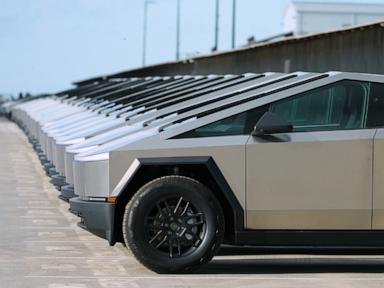
The reflection hits you first.
Not the sleek, curated gleam of a showroom floor, nor the sharp, aggressive angles rendered on a glowing screen in 2019, but the raw, slightly distorted glare of brushed stainless steel under a harsh Tuesday morning sun. Imagine a hypothetical buyer—let’s call him Marcus, a structural engineer from Austin—standing in his driveway, holding a microfiber cloth and a bottle of glass cleaner, staring at a faint smudge on the door panel of his 6,800-pound electric pickup. When he placed his hundred-dollar deposit years ago, he wasn't just buying a vehicle to haul lumber or navigate gravel roads; he was buying a ticket to the future, a defiant middle finger to a century of rounded, predictable automotive design. Now, as reports circulate in late 2026 that Tesla is winding down the Cybertruck’s ambitious run and preparing the polarizing machine for a quiet exit, Marcus isn't feeling anger. He is feeling the strange, hollow quiet that follows a loud, exhausting party.
For seven years, the Cybertruck wasn't merely a truck. It was a cultural litmus test. You didn't just drive it; you wore it like a political statement, an architectural manifesto, or a dare. When Franz von Holzhausen stepped onto that stage in Hawthorne, California, in November 2019 and threw a steel ball at the armored glass—shattering it twice in front of millions of live viewers—the crack didn't ruin the spectacle. It cemented it. That flawed, unscripted moment became the ultimate metaphor for the entire project: audacious, bulletproof in theory, surprisingly fragile in practice, and impossible to look away from.
Yet automotive history rarely bends to sheer force of will forever. Physics, manufacturing economics, and the stubborn realities of human habit eventually collect their debts. The quiet exit of the Cybertruck isn't just a corporate footnote about a discontinued model; it is the end of an era in which silicon-valley bravado believed it could brute-force its way past a hundred years of industrial wisdom.
The Anatomy of an Audacious Gamble
To understand why the Cybertruck captured the collective imagination—and why it ultimately struggled to sustain its own weight—you have to remember what electric vehicles looked like before 2019. They were polite. They were aerodynamic teardrops designed to whisper softly about carbon footprints and tax credits. Pickup trucks, meanwhile, were sacred territory in North America, dominated by the Ford F-150, the Chevrolet Silverado, and the Ram 1500—machines built on evolutionary loyalty, where changing the shape of a cupholder could spark a customer revolt.
Tesla looked at that traditional market and decided not to compete with it, but to detonate it.
Instead of stamping painted sheet metal over a traditional body-on-frame chassis, the company opted for an exoskeleton made of ultra-hard 30X cold-rolled stainless steel. Think of it like trying to tailor a suit out of medieval plate armor instead of wool. Standard automotive steel is soft enough to be pressed into gentle curves by massive hydraulic dies in seconds. Cold-rolled stainless steel resists bending. It fights the machinery. It wears down cutting tools, demands laser welding with sub-millimeter tolerances, and refuses to hide even the tiniest manufacturing imperfection because there is no primer or paint to smooth over the surface.
At the time, Elon Musk boasted of more than a million reservations—some estimates climbed closer to two million—fueled by a refundable hundred-dollar fee that functioned more like a viral crowdfunding campaign than a traditional order book. On paper, demand looked infinite. In reality, a hundred dollars is the price of a dinner out, not a commitment to spend eighty or a hundred thousand dollars on an experimental geometry project.
When deliveries finally began in late 2023—two years behind the original schedule—the arithmetic had shifted violently. The promised $39,900 base model had vanished into the inflation-heavy air of the post-pandemic economy, replaced by real-world transaction prices hovering near six figures for the Foundation Series trims. The promised 500-mile range shrank to roughly 320 to 340 miles in real-world configurations, requiring an optional, bed-eating range extender battery pack that became a symbol of compromise rather than triumph.
Living Inside the Spectacle
If you have ever ridden inside a Cybertruck, the sensory contradiction is immediate and disorienting. From the outside, it looks like a low-polygon rendering from a 1990s video game or a brutalist bunker dropped onto asphalt. Inside, it is eerily serene. The massive acoustic windshield stretches forward like the nose of a bullet train, creating a dashboard so deep you couldn't touch the base of the glass if you stretched your arms out completely.
The steer-by-wire system—genuinely one of the vehicle's greatest engineering triumphs—turns a three-and-a-half-ton behemoth with the flick of a wrist, aided by rear-wheel steering that makes tight parking lots feel manageable. For a brief moment behind the wheel, you understand the obsession. You feel why engineers poured their nights and weekends into solving the 48-volt architecture and the gigacasting challenges.
But vehicles do not live on test tracks. They live in grocery store parking lots, school drop-off lanes, and winter slush.
Consider another hypothetical owner—let’s call her Elena, a contractor in Colorado who genuinely wanted an electric work truck with onboard power outlets and an indestructible bed. Within months, the daily friction of living with the Cybertruck began to wear down the novelty. In the winter, snow packed into the recessed LED headlight bar, blocking the beam entirely because LEDs don't generate enough heat to melt the accumulation. The massive, four-foot-long single windshield wiper struggled to clear slush cleanly across the vast expanse of glass. Fingerprints and road salt left ghostly blooms across the raw steel doors, turning a vehicle meant to look invincible into something that required constant cosmetic babysitting.
More importantly, the Cybertruck never cracked the code of actual truck utility. Traditional pickup buyers care deeply about bed access from the side, towing range under heavy loads, and predictable repairability. When you hook a 7,000-pound trailer to a heavy electric truck, physics takes over immediately: aerodynamic drag and rolling resistance slice effective range nearly in half, turning a cross-state haul into a meticulous choreography of unhitching at charging stations. And if someone backed into a stainless steel quarter panel at a job site, you couldn't simply bondo and repaint it at a local body shop; you were looking at specialized panel replacements and months of waiting.
The Weight of Division
By 2025 and into 2026, the Cybertruck’s biggest obstacle wasn't engineering. It was exhaustion.
Every product carries an emotional charge, and the Cybertruck’s voltage was turned up too high for too long. On social media, every recall—whether for an accelerator pedal pad that could slip loose, trim pieces detaching at highway speeds, or inverter glitches—became front-page news, dissected with glee by critics and defended fiercely by loyalists. On city streets, drivers reported everything from enthusiastic thumbs-up to hostile gestures, flipped middle fingers, and deliberate brake-checking.
Most people, when they spend ninety thousand dollars on transportation, want their vehicle to solve problems, not start arguments at red lights.
Meanwhile, the broader automotive market was moving quietly past the shock value. Ford, Rivian, Chevrolet, and GMC were building electric trucks that looked, functioned, and loaded like actual trucks—vehicles with traditional beds, intuitive interiors, and styling that didn't scream for attention every time you pulled into a coffee shop. Even inside Tesla’s own ecosystem, the numbers told a sobering story. While the Model Y and Model 3 remained global volume engines, Cybertruck production at Gigafactory Texas plateaued far below the 250,000-unit annual capacity once projected. Discounts, inventory builds, and shifting corporate priorities toward autonomous robotaxis and humanoid robotics began to squeeze the angular pickup into a corner.
It is easy, looking back from the vantage point of late 2026, to treat the Cybertruck’s wind-down as a simple failure. That misses the deeper truth.
What Remains After the Noise
History is crowded with machines that broke the mold only to be discarded when the industry moved on. Think of the original Honda Insight with its covered rear wheel wells, or the General Motors EV1, or the early, ungainly smartphones that looked like miniature brick calculators before glass rectangles standardized the world. Breakthroughs rarely arrive in their final, polite form. Often, they show up loud, awkward, and deeply flawed, kicking open a door that more practical successors eventually walk through.
The Cybertruck forced legacy automakers to take 48-volt electrical systems seriously, slashing miles of heavy copper wiring out of modern vehicles. It proved that steer-by-wire wasn't a futuristic gimmick, but a superior way to control heavy machinery. It pushed battery structural integration and massive single-piece aluminum castings forward at a pace traditional manufacturers would have taken a decade to match.
And yet, standing there on the asphalt, the Cybertruck remains a monument to a very specific moment in modern culture—a time when we mistook disruption for permanence, and assumed that making something radically different was the same thing as making it better.
Marcus eventually folds his microfiber cloth and tosses it into the front trunk. The smudge on the stainless steel door is gone, replaced by the crisp, mirror-sharp reflection of the afternoon clouds drifting overhead. Tomorrow, the trucks on the assembly line in Austin will begin giving way to quieter, rounder, more profitable machines built for an autonomous future, while this sharp-edged experiment slowly becomes a collector's curiosity on the open road. He climbs into the cabin, touches the glass screen to wake the motors, and pulls out onto the street—driving a relic from a future that never quite arrived.