There is a specific kind of cold that lives inside a hockey arena at three o’clock on a Tuesday morning. It does not bite your nose like winter wind off Lake Ontario. It settles into your shins. It smells of melted rubber, old sweat dried into leather, and the sharp, chemical tang of fresh ice-resurfacer exhaust hanging low under the rafters.
Nobody is watching when the real work happens.
In that silence, a stick blade catches the arena lights just right. Black tape, perfectly overlapped, ridge by ridge, smelling of pine tar and friction. A puck sits on the red line, lonely against acres of white.
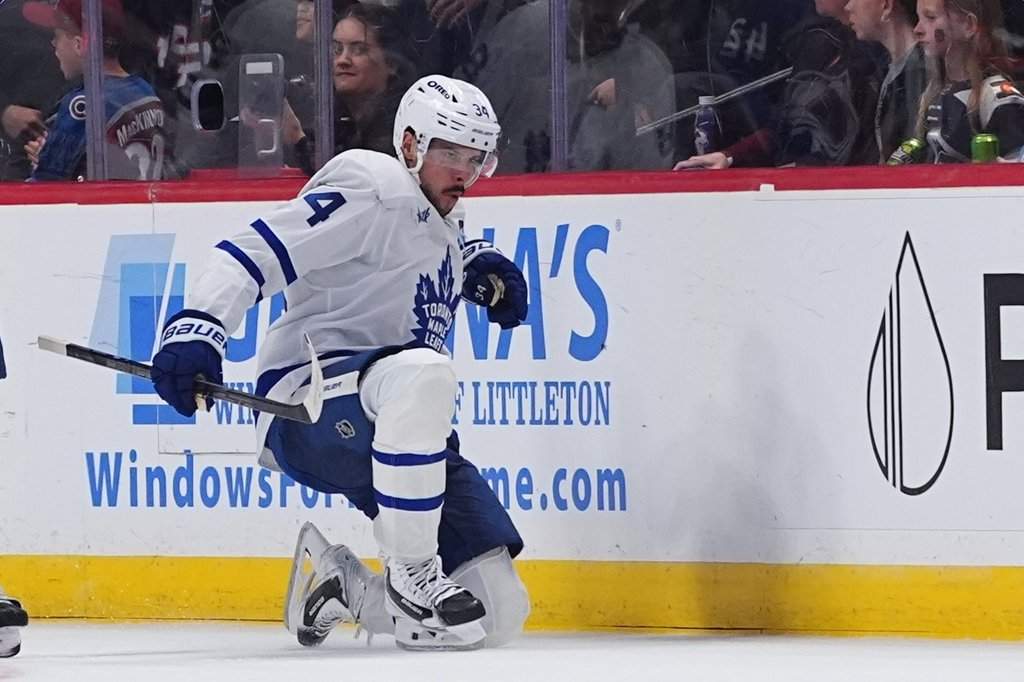
When Auston Matthews was named the National Hockey League’s first star of the week, the headline flashed across sports tickers in millions of homes like a quick pulse of neon. It was a digital artifact. A sentence on a screen. Numbers stacked neatly in columns: goals, assists, shooting percentage, ice time.
Numbers lie because they are quiet. They cannot tell you about the sound of a wrist shot leaving the blade at eighty miles an hour—a sound that is less of a crack and more of a dry whip, a sudden tearing of the air that makes the goal judge flinch behind thick plexiglass.
To understand what it means to be the best player on the planet for seven days, you have to understand the burden of expectation in a city that treats a Tuesday night game in November like a constitutional referendum.
Toronto is not a place that watches hockey; it consumes it, digests it, and sweats it out through millions of pores every single day. Every shift is an audition. Every missed assignment is a national debate. When you wear the blue and white with a letter stitched over your heart, the air in the room feels different. It is heavier. It presses against your collarbones.
And yet, watching Matthews glide across the ice during a dominant stretch feels entirely weightless.
Physics tells us that mass times acceleration equals force. Watch him enter the offensive zone, and you will see something closer to poetry. He does not skate like a freight train. He skates like oil on water. His crossovers are silent, his edges cutting deep into the ice without a wasted shudder of energy. Defenders lean into him, bracing for impact, only to find their shoulder checking empty air because Matthews has already shifted his weight three inches to the left, pulling the puck into a pocket where human limbs simply cannot reach.
That is the secret. Reach.
Long arms, sure. But more than that—reach of thought. He is playing a chess match three moves ahead while everyone else is still reacting to the clatter of skates.
When a player hits that kind of form, hockey stops being a sport and becomes a trance. Teammates feel it from the bench. You can see it in the way their posture changes when he steps over the boards. Shoulders drop an inch. Sticks tap the ice a little louder. There is a collective exhale, the kind you experience when someone opens a window in a stuffy room.
During his stellar week, the goals piled up not through frantic scrambles in front of the net, but through inevitable geometry. A pass delivered precisely where it needed to be, milliseconds before the defender could rotate. A snapshot from the top of the circle that defied the goaltender's angles, fired through a screen of towering bodies with the precise calculation of an artillery shell.
Fans in the lower bowl see the celebration—the quick hug, the fist bump, the subtle nod to the crowd. But they do not see the ice packs strapped to knees in the training room twenty minutes after the final horn. They do not see the endless video sessions, the thousands of identical wrist shots taken in empty practice rinks in Scottsdale years before anyone knew his name, back when the desert sun beat down on concrete while he chased a bouncing black disc against a garage door.
That is where greatness is actually forged. Not under the blinding glare of Scotiabank Arena, but in the anonymous quiet of the pursuit.
The league handed him a crystal plaque for his week’s work. A nice gesture for the mantelpiece. But the real reward was much simpler. It was the brief, fleeting moment when the noise of the city stopped arguing about him, stopped analyzing his contract, stopped holding its collective breath, and simply sat back in wonder.
On the ice, the lights go down. The Zamboni finishes its final sweep, leaving the surface glassy and dark. Tomorrow, the skates will lace up again. The pressure will return, heavy and relentless, waiting at the blue line.
And Matthews will step out onto the ice, ready to write the next line.