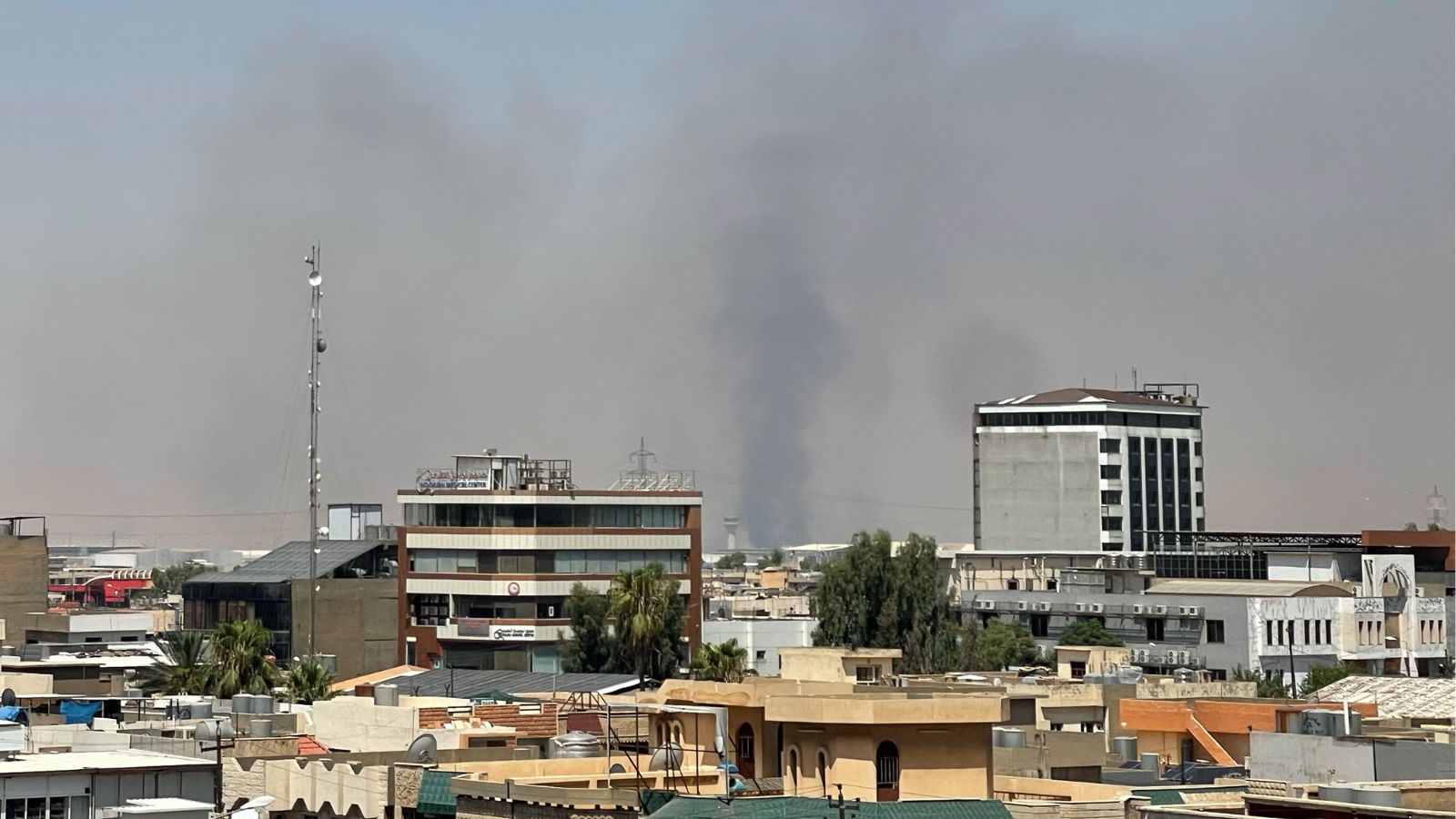
The expansion of United States military strikes against Iranian-backed forces and Houthi positions in Yemen marks a critical threshold in modern maritime conflict. Washington has significantly broadened its operational scope, moving well beyond defensive countermeasures to actively target supply lines, missile storage facilities, and command structures. This escalation follows relentless threats from Washington warning Tehran and its regional proxies over ongoing Red Sea shipping disruptions. Behind the breaking news ticker updates, a complex web of economic attrition, military logistics, and geopolitical miscalculation dictates the pace of this unfolding crisis.
Anatomy of an Expanding Conflict
Decades of covering military interventions teach a simple truth. Operational scope expands because containment fails. When the United States and its allies initially deployed naval assets to protect commercial transit through the Bab el-Mandeb strait, the objective appeared straightforward. Intercept incoming drones, shoot down anti-ship ballistic missiles, and escort container vessels safely past Yemeni shores.
That defensive posture proved unsustainable. The economics heavily favor the aggressor. A coalition warship firing a multi-million-dollar interceptor missile to destroy a low-cost, mass-produced drone creates an unsustainable fiscal asymmetry.
Washington realized that defending every commercial vessel reactive-style was a losing formula. The shift toward offensive strikes inside Houthi-controlled territory and broader warnings directed at Tehran represent an attempt to alter that math. By striking the launchers, radars, and assembly hubs before munitions leave the ground, the Pentagon aims to degrade operational capacity at the source.
Yet, military analysts often underestimate the resilience of decentralized insurgent networks. Years of civil conflict forged the Houthi movement into an organization uniquely adapted to asymmetric warfare. Underground depots, mobile launchers, and hidden command nodes do not vanish under the weight of airstrikes.
The Red Sea Chokepoint Economics
Global supply chains feel the immediate shockwaves of these developments. The Red Sea and the Suez Canal handle roughly twelve percent of global trade. When maritime insurers spike premiums or shipping lines reroute vessels around the Cape of Good Hope, the financial impact ripples across international markets.
Energy shipments face similar disruptions. Tankers carrying crude oil and liquefied natural gas must choose between the high risk of a missile strike or the prolonged transit times of the southern African detour. That extra mileage burns thousands of additional metric tons of bunker fuel and strains global shipping capacity.
Industry executives often speak of supply chain flexibility, but physical ships and crew availability remain finite. Every week added to a voyage reduces the total number of active cargo vessels available to move manufactured goods from Asian factories to Western markets.
Prices rise. Delivery timelines stretch. Inflationary pressures return to sectors that spent years trying to stabilize after pandemic-era disruptions. The kinetic action in the Middle East directly influences the grocery bill and manufacturing costs thousands of miles away.
The Iranian Calculus and Plausible Deniability
Tehran operates through a doctrine of forward defense executed by the Axis of Resistance. This network includes the Houthis in Yemen, Hezbollah in Lebanon, and various militias across Iraq and Syria. By distributing the friction points, Iran project power across the Middle East while maintaining a thin layer of plausible deniability.
When Washington warns Tehran over Red Sea strikes, American diplomats and military planners are drawing a direct line of accountability. The weapon systems, targeting data, and financial support flow from the Islamic Revolutionary Guard Corps.
However, direct confrontation between Washington and Tehran remains a scenario both capitals wish to avoid, even as they edge closer to it. Total war would devastate Iranian infrastructure and trigger severe domestic instability, while a protracted regional conflict drains American political capital and military readiness.
Iran calculates that it can maintain a pressure campaign just below the threshold that triggers a full-scale conventional war. Washington calculates that targeted punitive strikes can reestablish deterrence without drawing the United States into another quagmire in the Middle East. Both sides are playing a dangerous game of threshold management.
The Limits of Air Power
Air campaigns alone rarely achieve decisive political outcomes against entrenched irregular forces. Decades of doctrine emphasize the seductive appeal of precision munitions striking targets from twenty thousand feet.
Air superiority gives commanders total freedom of movement in the skies, but it does not translate into control on the ground. Houthi fighters do not rely on large stationary headquarters, heavy armor, or conventional supply depots that invite destruction from the air.
If Washington intends to fully neutralize the threat to Red Sea navigation through military means, airstrikes will prove insufficient. A sustained campaign requires actionable human intelligence on the ground in Yemen, comprehensive electronic warfare suppression, and potentially regional partner forces willing to conduct ground operations.
None of those ingredients are readily available in the quantities required. Regional allies remain wary of getting bogged down in the Yemeni interior, and intelligence gaps regarding deep subterranean facilities remain vast.
The Long-Term Strategic Realignment
The current escalation points toward a permanent alteration of Middle Eastern security architecture. Shipping lanes are no longer viewed merely as commercial corridors governed by international maritime law. They are contested geopolitical zones where economic security and military strategy merge.
Asian economies dependent on Middle Eastern energy imports watch these developments with intense anxiety. European nations, whose trade routes run directly through the targeted waters, find their economic stability tied to American military decisions over which they exercise limited control.
A new normal takes shape. Navies will maintain permanent combat patrols in waters that were once routine commercial highways. Insurance rates for transit near the Arabian Peninsula will reflect permanent risk premiums. The world economy adjusts to a fragmented, adversarial maritime order where chokepoints serve as leverage points for regional actors with global reach.