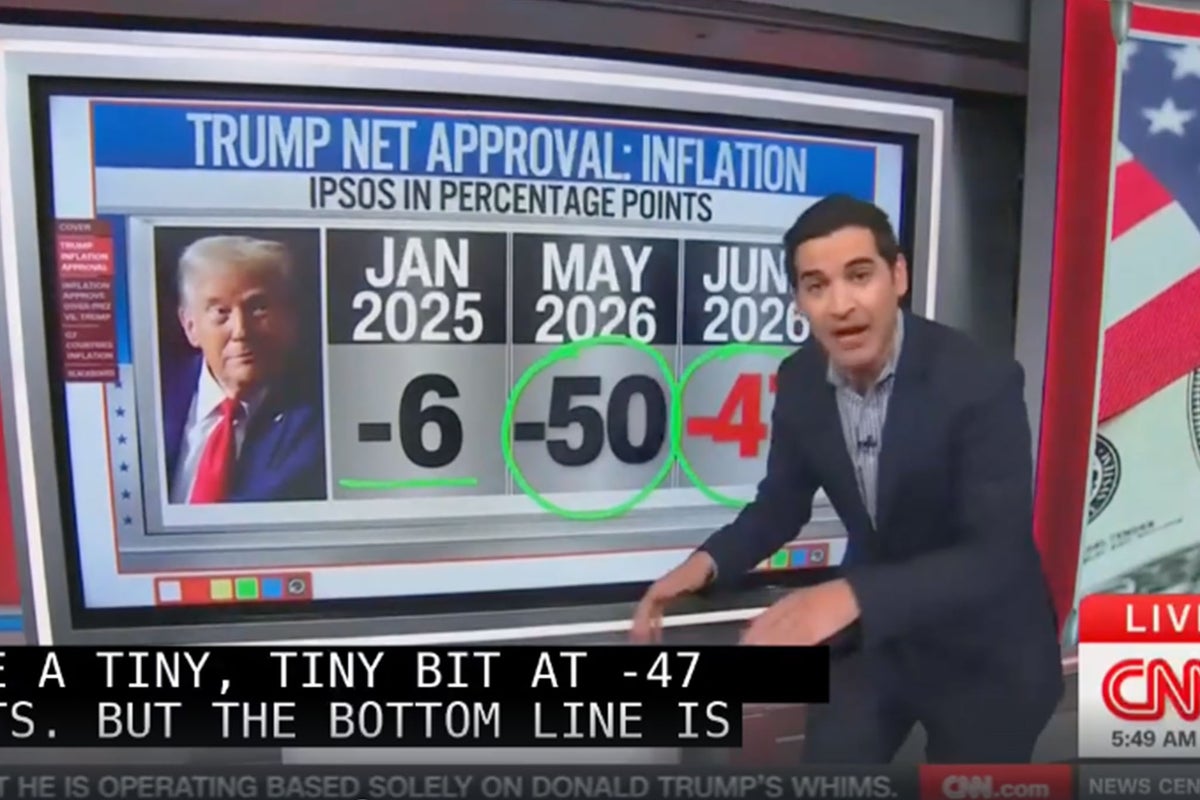
Donald Trump has entered a historically perilous political territory, joining Jimmy Carter and Joe Biden as the only modern presidents to sustain a net public approval rating below forty percent at a critical juncture of their political life. Historically, crossing this line of sustained public rejection has spelt disaster for a leader’s survival. It indicates that the electorate has ceased merely criticizing policy and has instead entered a phase of deep, systemic exhaustion. While partisan defenders routinely dismiss polling as white noise, the hard math of presidential history suggests otherwise.
Once a political figure falls below this threshold, the fundamental mechanics of campaigning warp. The objective shifts from persuasion to survival. This is the story of how three vastly different politicians ended up in the same structural trap, and why the current political environment makes escaping it more difficult than ever before.
The Math of Public Rejection
Modern polling is often criticized for its volatility, but long-term averages remain remarkably predictive. A president whose approval rating consistently hovers below forty percent is not merely unpopular. They are actively toxic to a large segment of the swing electorate.
In the postwar era, a sub-forty approval rating has served as an almost infallible indicator of political mortality. Jimmy Carter spent the final year of his presidency languishing in the thirties as inflation and the Iran hostage crisis ground down national morale. Joe Biden saw his numbers slip into the high thirties in late 2023 and early 2024, a decline driven by persistent cost-of-living concerns and voter anxiety over his age, which eventually forced his exit from the presidential race.
Trump has now sustained these exact same underwater figures.
The political cost of this status is severe. When a candidate's approval is this low, they lose the ability to set the agenda. Every policy proposal is viewed through a lens of suspicion. Every public appearance becomes an exercise in damage control rather than an opportunity to build a broader coalition. For Trump, this ceiling has proven remarkably rigid, resisting both favorable news cycles and aggressive campaign spending.
The Carter Parallel and the Ghost of Malaise
To understand how a candidate reaches this point, one must look back to 1980. Jimmy Carter did not lose the presidency because of a single bad debate or a sole policy misstep. He lost because he became the living symbol of a national decline that voters felt in their daily lives.
Carter’s internal pollster, Patrick Caddell, famously warned the president that he was facing a crisis of confidence that went far deeper than inflation numbers. The public had simply stopped listening to the administration’s explanations. When a leader's approval rating drops below forty percent, the electorate stops giving them the benefit of the doubt. Every economic setback is seen as proof of incompetence, while every success is dismissed as a fluke or a political stunt.
The parallel to Trump lies in the persistent sense of national dysfunction that defines his public standing. While his core supporters remain intensely loyal, the broader public associates his brand with perpetual chaos. Just as Carter became synonymous with gas lines and stagflation, Trump remains tethered to a reputation for institutional disruption that exhausts moderate voters. The actual details of the economy or foreign policy become secondary to this overwhelming sense of fatigue.
The Biden Precedent and the Strategy of Denial
The more recent point of comparison is Joe Biden, whose political team spent months insisting that public polls were failing to capture the reality on the ground. They argued that the consumer economy was strong, that job growth was historic, and that voters would eventually come around once the choice became clear.
They were wrong.
The public’s perception of its own financial well-being is incredibly stubborn. When voters feel that their purchasing power is eroding, no amount of white papers or statistical lecturing from Washington will convince them otherwise. Biden’s team failed to realize that once a president’s approval rating drops into the thirties, the message is no longer received by the audience. The channel is muted.
Trump’s campaign currently exhibits a similar brand of denial. His advisers frequently point to the intensity of his rallies and the devotion of his base as evidence of hidden strength. But this is a fundamental misreading of modern polling dynamics. Base intensity cannot compensate for a lack of breadth. A candidate who possesses a highly motivated forty percent of the electorate will still lose to a candidate who commands a lukewarm but determined fifty-one percent.
The Polarized Floor and the Low Ceiling
Why does Trump remain competitive despite sharing these historically fatal numbers with Carter and Biden? The answer lies in the structural polarization of the modern electorate.
In 1980, Carter's approval ratings could plunge into the twenties because partisan loyalty was far more fluid. Democrats were willing to abandon their own candidate if they felt he was failing. Today, that level of defection is virtually impossible. The partisan sorting of the American voter means that both major parties have a floor below which their candidates cannot easily fall.
| Candidate | Lowest Sustained Approval Floor | Electoral Outcome |
|---|---|---|
| Jimmy Carter (1980) | 28% | Defeated in landslide |
| Joe Biden (2024) | 36% | Withdrew from campaign |
| Donald Trump (2026) | 38% | Highly polarized deadlock |
This polarized floor acts as a safety net, keeping Trump from the historic depths that Carter reached. However, it also acts as a hard ceiling. The same forces that prevent his numbers from collapsing also prevent them from rising. The slice of the electorate that remains genuinely open to persuasion has shrunk to a razor-thin margin, and those voters are precisely the ones most alienated by his rhetoric and legal entanglements.
This creates an unprecedented situation. A candidate with historically disqualifying approval ratings remains competitive simply because the opposition is viewed with nearly equal hostility.
The Grim Strategy of Negative Mobilization
When a campaign realizes it cannot raise its own candidate’s approval ratings, it has only one viable path forward. It must systematically destroy the opponent's standing.
This is not a strategy designed to inspire. It is a campaign of negative mobilization. The goal is not to convince voters that your candidate is good, but rather to convince them that the alternative is an existential threat. If both candidates are viewed as unacceptable, the election becomes a test of which candidate's base is more motivated by fear and resentment.
This approach explains the relentless focus on personal attacks and apocalyptic rhetoric that dominates the current political arena. It is a rational response to a structural reality. If you are operating with a sub-forty approval rating, you cannot win a conventional campaign based on achievements or optimism. You must drag your opponent down into the mud with you and hope that your supporters are more willing to vote through their anger than the other side is.
This reliance on negative mobilization has profound consequences for governance. A president who wins under these circumstances enters office without a mandate. They have not built a coalition; they have merely survived an execution. The resulting administration is almost guaranteed to face immediate gridlock, deep public skepticism, and a continuation of the same toxic polling cycle that defined the campaign.
The numbers do not lie. While the modern political environment allows a candidate to remain competitive with approval ratings that would have doomed a campaign forty years ago, it does not exempt them from the laws of political gravity. A leader who cannot command the support of a clear majority of the country cannot govern effectively. They are perpetually playing defense, operating on a knife-edge where the slightest shift in voter turnout or economic conditions can lead to sudden collapse.