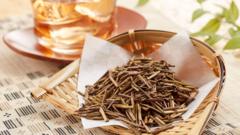
Matcha had a good run. For the last decade, that vibrant green powder sat on every cafe counter from Tokyo to New York. But honestly, it's exhausting. It’s finicky to whisk, often tastes like expensive grass if you buy the wrong grade, and the caffeine crash can still bite. If you've noticed a toasted, woody aroma drifting through your favorite coffee shop lately, you’re smelling the future of Japanese tea. It’s called hojicha.
Hojicha isn't just a "new" trend. It’s actually a clever solution to a century-old problem. While matcha is made from young, shade-grown leaves ground into a fine powder, hojicha takes a different path. It’s made by roasting green tea leaves, stems, and stalks over charcoal at high temperatures. This heat changes everything. It turns the tea from green to a deep, earthy brown. More importantly, it fundamentally alters the chemical makeup of the leaf.
The chemistry of the roast
Most people think all green tea is high in caffeine. That’s a mistake. The roasting process for hojicha performs a bit of molecular magic. When you hit tea leaves with that level of heat, the caffeine undergoes sublimation—it basically turns into a gas and leaves the leaf. What’s left behind is a drink with significantly lower caffeine content than almost any other tea.
It’s the perfect choice for anyone who loves the ritual of a warm latte but hates the jitters. Because it’s low-acid and low-caffeine, you can drink it at 8:00 PM without staring at your ceiling at 2:00 AM. In Japan, it’s so gentle that it’s often the first tea given to children or served in hospitals. It’s functional. It’s practical. It doesn't demand the high-maintenance ceremony that matcha requires.
Why the flavor beats the green stuff
Matcha is an acquired taste. There, I said it. If it’s not ceremonial grade, it can be bitter and astringent. Hojicha is the opposite. The roasting triggers the Maillard reaction—the same chemical process that makes toasted bread or seared steak taste savory and complex.
You’ll pick up notes of cocoa, toasted nuts, and even a hint of caramel. It has a natural sweetness that doesn’t require three pumps of vanilla syrup to be drinkable. This makes it a dream for baristas. While matcha can sometimes get lost when you add milk, hojicha’s bold, smoky profile cuts right through. It creates a latte that tastes like a campfire marshmallow in the best way possible.
The stem factor
Many hojicha varieties, specifically Kukicha or Karigane hojicha, use the stems and twigs of the tea plant. Don't let that fool you into thinking it's a "trash" tea. Stems actually contain high concentrations of L-theanine. This amino acid is the holy grail of relaxation. It promotes a calm, focused state without the sedative effect of herbal teas like chamomile. When you combine low caffeine with high L-theanine, you get a drink that actually helps you de-stress.
How to spot the good stuff
If you’re ready to ditch the green powder, don’t just grab the first brown bag you see on a shelf. Quality varies wildly. In Japan, the roasting process is an art form. Some producers do a light roast to keep some of the floral green tea notes. Others go for a deep, dark roast that mimics the intensity of a dark roast coffee.
Look for Kaga-bocha. This is a specialty from Ishikawa Prefecture. They use only the stems of high-quality tea, and the result is incredibly aromatic. It was famously a favorite of Emperor Showa. If it’s good enough for royalty, it’s probably better than that dusty matcha tin in your pantry.
Making the perfect hojicha latte at home
You don't need a bamboo whisk or a degree in tea science. If you have hojicha powder, it’s as simple as stirring it into hot water or milk. If you have loose-leaf hojicha, use boiling water. Unlike green tea, which gets bitter if the water is too hot, hojicha is tough. It likes the heat.
- Use about two teaspoons of leaves for every cup of water.
- Pour boiling water ($100^{\circ}C$) directly over the leaves.
- Let it steep for only 30 to 60 seconds.
- If you’re making a latte, steep it extra strong and top with frothed oat milk. The nuttiness of oat milk is a perfect match for the toasted tea.
The move away from green aesthetics
We’ve lived through the era of "everything must be green for Instagram." We had matcha cakes, matcha pancakes, and matcha soap. It was a visual trend as much as a culinary one. Hojicha represents a shift toward more grounded, earthy aesthetics. Its sepia tones and warm brown hues feel more authentic and less manufactured.
Chefs are catching on fast. You’re starting to see hojicha-infused panna cotta, chocolate truffles, and even savory glazes for meats. Its smoky profile works in places where matcha’s grassiness would feel weird. It’s more versatile than its green cousin will ever be.
Stop overthinking your tea cabinet
If you want a drink that offers a massive antioxidant hit without making your heart race, hojicha is the answer. It’s cheaper than high-grade matcha. It’s easier to prepare. It’s better for your stomach.
Check your local Japanese market or a specialized online tea retailer. Look for "roasted green tea" or "hojicha powder." Buy a small bag first. Start with a simple steep at 100°C for 30 seconds and smell the difference. You'll probably realize you should've made the switch years ago. Go find a bag of Kaga-bocha and see for yourself why the green tea era is fading.