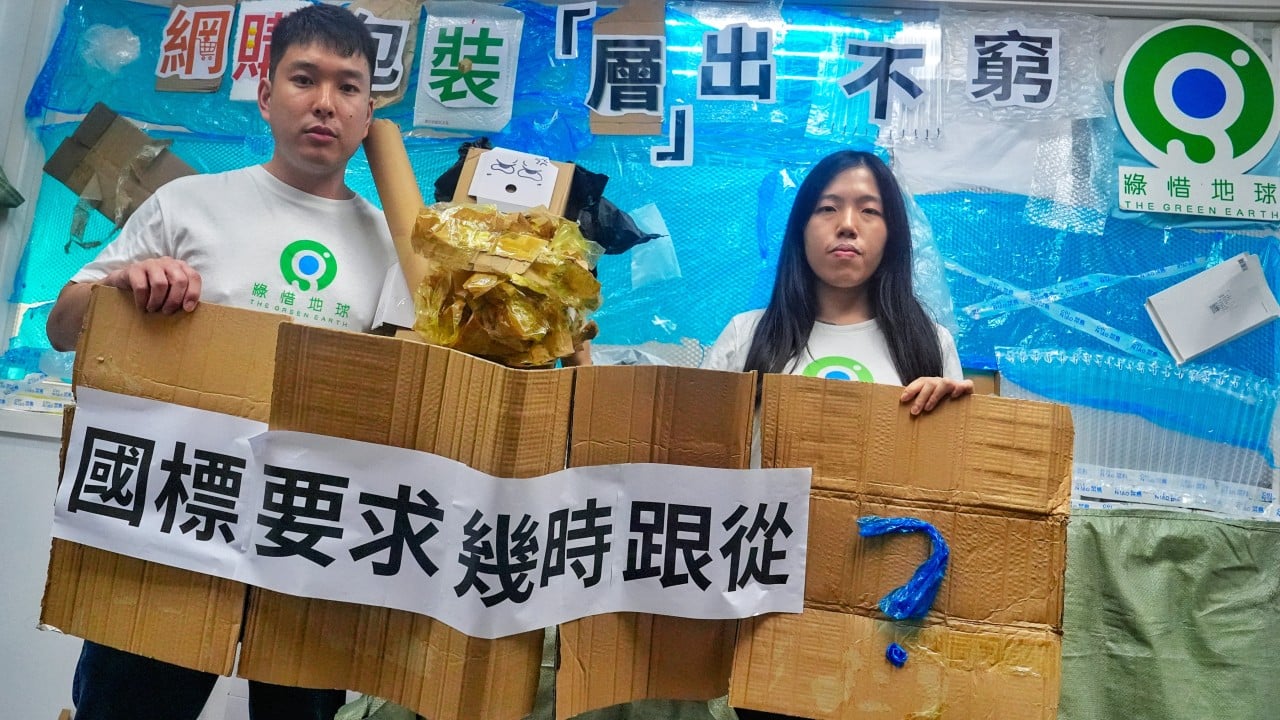
Open an online shopping parcel in Hong Kong and you will likely find a masterclass in structural overkill. A pair of tiny earrings arrives nestled inside layers of bubble wrap, stuffed into a cardboard box, and sealed shut with enough non-recyclable plastic tape to secure a bank vault.
We buy things online for convenience, but the environmental toll has become impossible to ignore. Local green groups like Green Sense and Green Power have long warned that our obsession with digital convenience is creating a literal mountain of trash. On average, a single e-commerce purchase in Hong Kong uses 2.32 pieces of packaging. In worst-case scenarios, individual items come wrapped in up to nine layers of plastic, paper, and foam. In similar updates, we also covered: The Public Bathroom Dilemma Facing Every Girl Dad.
Hong Kong landfills handle over 15,000 tonnes of municipal solid waste daily. We simply do not have the spatial luxury to treat e-commerce packaging as single-use disposable garbage.
The Logistics of Over-Packing
E-commerce delivery operates on a model of absolute damage prevention. Courier companies and fulfillment warehouses add layer upon layer of secondary packaging because a broken item results in customer complaints and financial refunds. For them, plastic film and tape are cheap; customer dissatisfaction is expensive. Glamour has also covered this fascinating issue in extensive detail.
This logic completely breaks the recycling system. Cardboard boxes are perfectly recyclable, but when they are completely coated in heavy plastic adhesive tape, paper recycling facilities cannot process them without intensive, manual labor. Most of these boxes end up buried or burned.
Then there are nylon bulk bags and stretch wrap used by logistics forwarders to bundle shipments. These are made from synthetic polymers that almost never make it to a recycling bin. According to data from environmental studies, nearly 99% of express delivery plastic packaging ends up mixed with domestic waste. It is a one-way ticket to the landfill.
Where Hong Kong Falls Behind
While other jurisdictions are turning to legislation, Hong Kong relies heavily on voluntary measures. The Environmental Protection Department launched a voluntary Packaging Reduction Charter, encouraging businesses to sign up and minimize their footprint. Voluntary compliance looks good on a corporate social responsibility report, but it rarely changes systemic industry habits.
Look at how other regions handle the exact same problem:
- Mainland China revised its Interim Regulations on Express Delivery, promoting direct shipment in primary packaging and setting clear targets for businesses to report their plastic usage and takeback rates.
- The European Union adopted strict packaging regulations setting a maximum empty space ratio of 50% for e-commerce shipments, effectively banning giant boxes for tiny items.
- Taiwan and South Korea implemented legally binding rules that regulate the specific materials allowed in e-commerce fulfillment.
Hong Kong's cross-border logistics structure makes regulation tricky. Because a huge portion of parcels originate from merchants outside local jurisdiction, local authorities cannot easily penalize the original shipper. However, the regulatory focus could easily shift to local freight forwarders and distribution centers, prohibiting add-on packaging and forcing a switch to reusable transit bags.
The Citizen Recycling Disconnect
Our collective mindset needs a reality check. Surveys reveal a strange gap in public perception: only about 35% of local shoppers think Hong Kong has a serious problem with excess packaging, even as the city generates hundreds of millions of pieces of delivery waste annually.
Worse, less than half of consumers actually sort and recycle the delivery materials they receive. The rest goes straight into the household trash bin.
Hong Kong Delivery Waste Statistics
-----------------------------------------
Average packaging pieces per parcel: 2.32
Maximum layers found in single test: 9.00
Consumers who actively recycle bags: 46%
Consumers who toss packaging in trash: 43%
Even well-intentioned citizens get tripped up by the sheer variety of materials. When a box contains cardboard, brown paper, plastic tape, air pillows, and metallic bubble envelopes, figuring out clean separation becomes a chore. Most people simply give up and throw it away.
Practical Steps to Stop the Waste
If you want to reduce your personal e-commerce footprint, stop waiting for the logistics industry to change its business model overnight. You can alter how you buy and discard right now.
First, utilize the digitized GREEN$ Electronic Participation Incentive Scheme. The Environmental Protection Department recently linked GREEN$ points with local electronic payment platforms like AlipayHK. This means your recycling efforts turn into actual cash points that you can use for daily expenses, online shopping, or dining. Clean your delivery boxes, rip off the plastic tape, drop them at a GREEN@COMMUNITY station, and get paid to recycle.
Second, choose consolidated shipping whenever you buy from cross-border platforms. Shipping items individually forces the warehouse to generate separate boxes, separate labels, and separate layers of wrap. Consolidation groups your purchases into a single larger container, dramatically cutting down on total volumetric waste.
Third, call out the brands you buy from. Businesses respond to customer friction. If a retailer sends you a tiny item floating in an ocean of plastic foam beads, take a photo, send it to their customer service team, and let them know that over-packaging will make you take your business elsewhere.