Nostalgia is a terrible urban planner.
Every time a city retires a dated tourist trap, travel writers reach for the tissues and declare the "end of an era." We are seeing that exact reflex right now following the retirement of Hong Kong’s A Symphony of Lights. The consensus narrative is predictable: a beloved nightly ritual has vanished from Victoria Harbour, leaving a dark void in the city's cultural identity.
That narrative is wrong.
The retirement of A Symphony of Lights is not a tragedy. It is a mercy killing for a municipal asset that stopped pulling its weight years ago. If you actually look at how modern destination marketing, architectural lighting, and the night-time economy function, keeping that show running was an anchor dragging down Hong Kong’s visual brand.
The Economics of Stale Spectacle
To understand why retiring this show is smart business, you have to strip away the sentimental fog and look at the mechanics of municipal tourism.
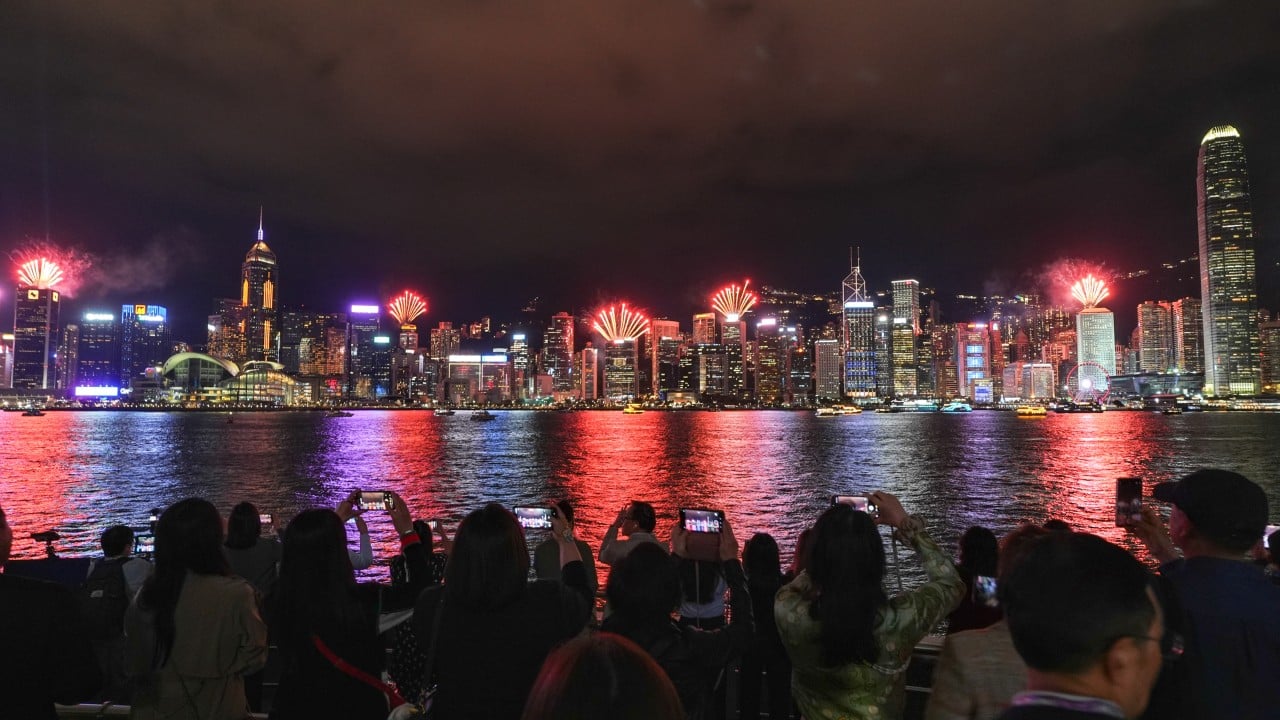
When A Symphony of Lights launched in 2004, synchronized architectural lighting across dozens of skyscrapers was a novelty. Smartphone cameras barely existed. Social media did not dictate travel itineraries. Back then, standing on the Tsim Sha Tsui promenade at 8:00 PM to watch lasers bounce off the Bank of China Tower felt futuristic.
Fast forward two decades. The global baseline for urban light installations has moved lightyears ahead, while the harbour show remained trapped in amber.
I have spent years advising destination marketing organizations and commercial real estate groups on public realm activations. I have seen municipalities and private developers blow millions maintaining legacy attractions simply because nobody in the boardroom had the nerve to pull the plug. They confuse longevity with equity. Just because tourists show up to look at a harbour does not mean the light show is why they came.
The Attribution Trap in Harbour Tourism
Most coverage of the show’s retirement falls into a classic attribution trap. Analysts point to the millions of visitors who stood along the waterfront over the years and credit the light show for the foot traffic.
That confuses correlation with causation.
Victoria Harbour is one of the most dramatic natural and architectural amphitheaters on earth. People walk the Avenue of Stars at night because the breeze is cool, the skyline is towering, and the ferries look like floating lanterns. When 8:00 PM rolled around, tourists stopped walking, stared across the water for roughly ten minutes, and—more often than not—asked each other if the show had actually started yet.
In destination management, we measure dwell time and secondary spend. A successful night-time activation does not just make people stop; it makes them stay, eat, drink, and explore adjacent neighborhoods. A static, passive ten-minute laser display scheduled at a rigid hour accomplishes the exact opposite:
- It creates artificial crowd bottlenecks along a narrow strip of waterfront for fifteen minutes, followed by an immediate mass exodus toward the MTR stations.
- It fails the organic social test. Modern travelers are ruthless editors. If an experience looks underwhelming on a phone screen, it becomes negative brand equity. Faint green lasers lost in humid harbour air do not compete with projection mapping in Tokyo or drone choreography in Shenzhen.
- It imposes coordination paralysis. Getting dozens of competing corporate landlords to synchronize hardware upgrades, electrical loads, and maintenance schedules across private towers is a governance nightmare. The result is always a lowest-common-denominator display.
What Travelers Actually Want From Hong Kong at Night
If you look at search behavior around Hong Kong’s evening attractions, travelers routinely ask whether the harbour show is worth waiting around for, or what time it starts. The underlying question they are really asking is: How do I experience Hong Kong’s skyline at its best?
For twenty years, the official answer was to stand in a crowd and watch a synchronized light-and-music routine. That answer misunderstood the asset entirely.
Hong Kong’s skyline does not need choreography. It is the choreography.
Consider the architectural heavyweights framing the water. You have I.M. Pei’s geometric Bank of China Tower, Norman Foster’s structural exoskeleton at the HSBC Building, and the sheer vertical mass of the International Commerce Centre. Their permanent architectural facade lighting—designed by world-class lighting engineers to highlight structural lines and curtain walls—is vastly superior to the strobing, disco-style overlays used during the show.
When you overlay synchronized flashing lights onto masterpieces of structural modernism, you do not elevate the architecture. You cheapen it. You turn a world-class financial skyline into a giant equalizer bar.
The Shift From Broadcast to Immersion
Urban theorists and placemaking experts—from Jan Gehl’s work on human-scale cities to contemporary night-time economy researchers—have hammered home one consistent truth: modern visitors reject passive "broadcast" entertainment in favor of immersive, human-scale environments.
People do not want to stand behind a railing watching a distant spectacle across a kilometer of water. They want to be inside the energy.
Think about what actually drives night-time magnetism in Asian megacities right now:
- Street-level sensory density. Night markets, illuminated alleyway dining, and neon-drenched pedestrian corridors where the light is six feet away, not six hundred meters across a channel.
- Dynamic, temporary interventions. Seasonal art installations, pop-up drone shows tied to specific festivals, and interactive waterfront pavilions that give repeat visitors a reason to return.
- Unobstructed organic ambiance. Taking the Star Ferry across the water while the city hums naturally around you, without a canned orchestral soundtrack blaring from promenade loudspeakers.
The Hidden Downside of Pulling the Plug
Taking a contrarian stance does not mean pretending there are zero risks. Retiring a long-standing fixture creates an immediate vacuum, and vacuums in tourism marketing are dangerous if left unmanaged.
The biggest risk here is narrative drift. Right now, international media are framing the end of the show as a farewell without clearly articulating what replaces it in the daily visitor itinerary. When tour operators, hotel concierges, and online travel agencies lose a reliable, predictable 8:00 PM anchor, they do not automatically replace it with something better. Sometimes, they just send guests back to their hotel rooms earlier.
There is also the matter of corporate landlord inertia. Participation in the nightly show forced private building owners around the harbour to maintain a baseline standard of exterior illumination. Without a mandatory nightly broadcast schedule, some commercial towers may quietly dim their facade lighting earlier in the evening to trim electricity bills. If the skyline goes dark at 9:30 PM to save on operating costs, Hong Kong will have traded a mediocre light show for a dim waterfront.
How to Experience Victoria Harbour Now
If you are planning a trip to Hong Kong—or advising clients on how to spend an evening there—stop treating the harbour as a theater seat and start treating it as a transit corridor.
- Skip the 8:00 PM promenade crowd entirely. The Tsim Sha Tsui waterfront is infinitely more pleasant at 9:30 PM once the tour buses clear out and the humidity drops.
- Use the Star Ferry as your viewing platform. Board the lower deck from Central to Tsim Sha Tsui after dark. You get moving, unobstructed angles of both shorelines for a fraction of the cost of a tourist harbor cruise, with zero canned narration.
- Go vertical, not horizontal. Instead of staring across the water from sea level, take a seat at a high-altitude lounge in Central or West Kowloon. Looking down into the illuminated canyon of the harbour reveals the true scale of the city in a way a flat light show never could.
- Hunt for street-level light. Head inland toward Temple Street, Sham Shui Po, or the mid-levels escalators in Soho. The real visual drama of Hong Kong happens where architecture collides with street commerce.
Cities die when they become museums of their own past. Retiring a twenty-year-old light show is not the end of Hong Kong’s visual era; it is the long-overdue clearing of the stage. Turn off the lasers, kill the soundtrack, and let the buildings speak for themselves.